
At the intersection of the arts, sciences, and the humanities, The Sachs Program for Arts Innovation provides financial and programmatic support for a diverse range of creative endeavors at the University of Pennsylvania.

The Great Connector
The Sachs Program for Arts Innovation offers creative opportunities that bring campus and community together
Winter 2024
This innovative program has been awarding grants to support creative practice and to deepen engagement with the arts across Penn’s communities for over six years. Recipients range from students, staff, and faculty to departments and centers, and include partnerships with community artists and organizations. To date, The Sachs Program has distributed over $1.5 million to more than 250 projects across a wide range of disciplines and practices. Notable examples include a staff-written comic about the paradoxes of parenting; a citywide trans oral history project; a student animation studio based on global climate change research; a Penn Museum/Sayre High School partnership on food, nutrition, and urban gardening; and an MFA multimedia project on an iconic historical Philadelphia Jewish basketball team.
The Sachs Program has been making an impact on the arts community at Penn and in West Philadelphia since its launch in 2017, made possible by a $15 million founding gift from Katherine (Kathy) Sachs, CW’69, PAR’95, and her late husband, Keith L. Sachs, W’67, PAR’95.
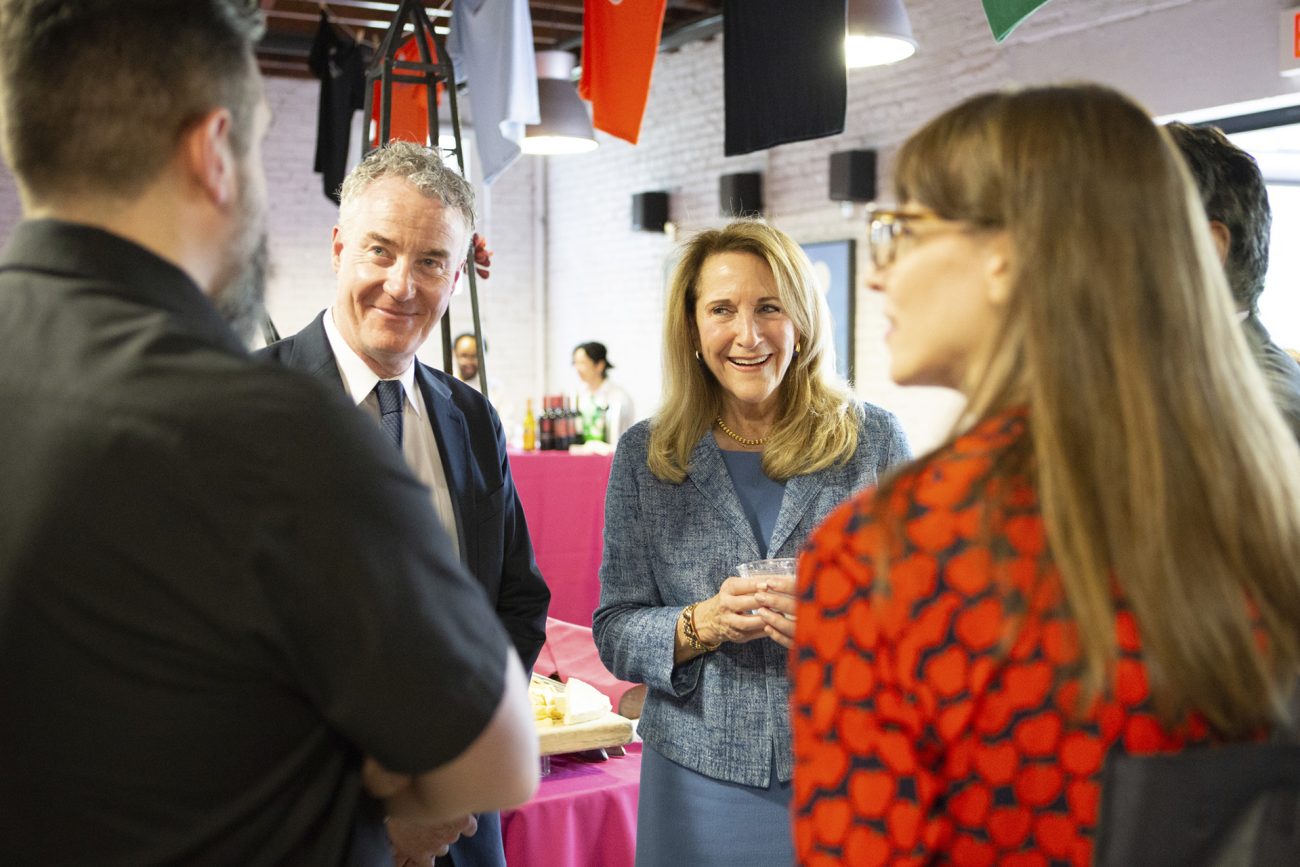
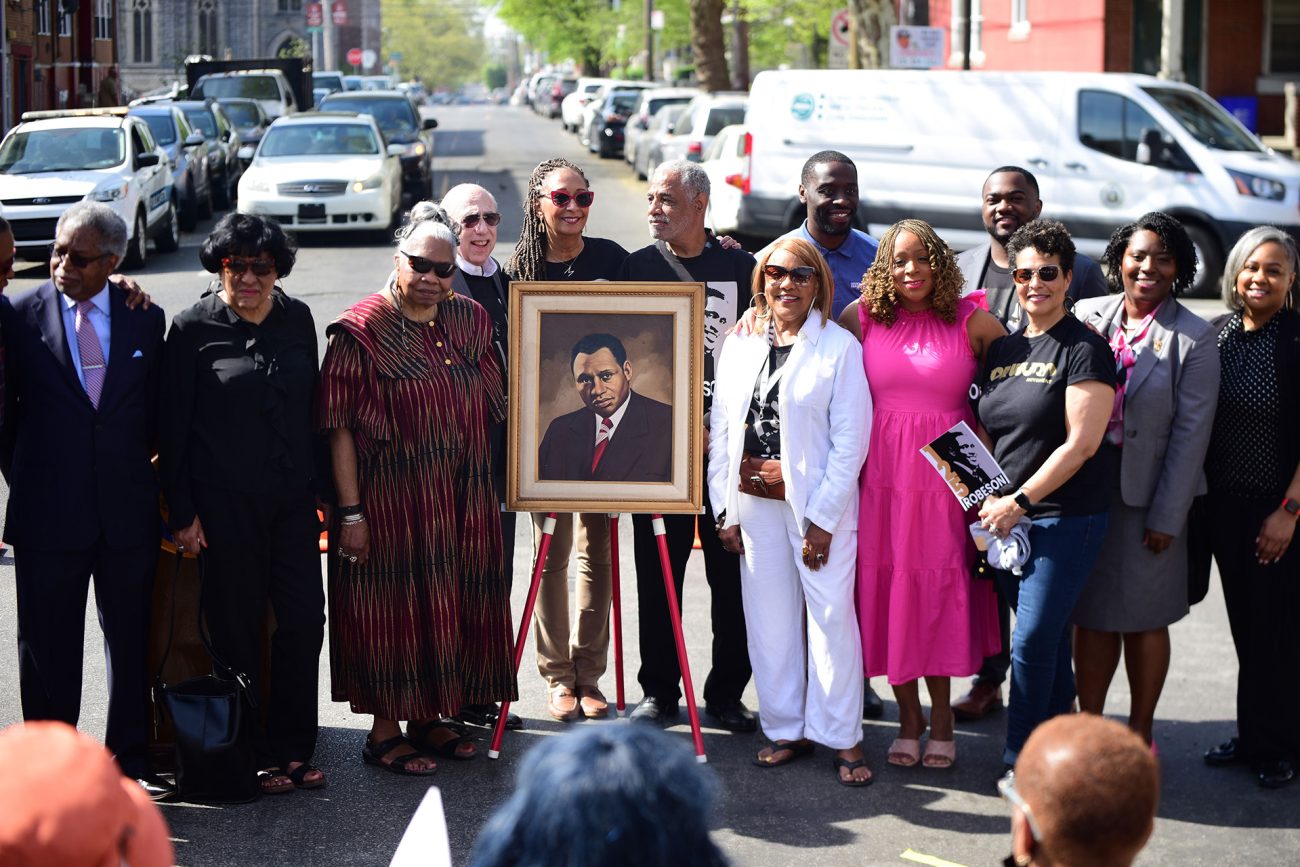
Now, a $400,000 lead grant from the William Penn Foundation will enable The Sachs Program to further deepen its community involvement through a new partnership with the Paul Robeson House and Museum in West Philadelphia. This infusion of support will create the West Philadelphia Arts Council, provide grants for West Philadelphia artists, and establish an artist residency at the Robeson House.
The Sachs Program has become an essential hub for creativity and community at Penn in just six years. Now, with the generous gift from the William Penn Foundation, it is extending its scope and impact into our Philadelphia community, with the exciting new West Philadelphia Arts Council and partnerships with the Robeson House. We are also deeply grateful to Keith and Kathy Sachs for their visionary gift, which enables us to catalyze these many opportunities for artists and community members across our campus and our city.”John L. Jackson Jr.
Provost and Richard Perry University Professor
“This collaboration allows us to deepen our commitment to creative expression, social justice, and the legacy of Paul Robeson through a direct investment in the artistic community of West Philadelphia,” says Janice Sykes-Ross, Executive Director at the Robeson House. Opportunities for dialogue and engagement are already underway. Arts-based community engagement leaders on campus have been meeting to share ideas and propose collaborations, and the Robeson Arts Council and Penn community leaders will convene twice a year starting in 2024. The Sachs Program has also established a programming and grantmaking fund to support community programs happening in the arts across the University.
This isn’t the first time The Sachs Program has engaged with the Robeson House and Museum. Earlier this year, a group of ninth-grade students from Paul Robeson High School were training with Robeson House staff to become youth docents, in a partnership with the Netter Center that was funded by The Sachs Program.
Meaningful partnerships with community groups like the Robeson House are core to Kathy Sachs’s belief in the importance of supporting arts and culture at Penn and beyond. “Art is the greatest connector,” says Sachs. “Keith and I had the idea to integrate the arts into the curriculum and life of the University by highlighting the creation, study, and exhibition of art. I believe in the power of art to spark creativity and imagination, empowering students to think in new ways—a critical skill in our ever-changing world. Every year, I’m so impressed by the creativity and ingenuity of our students and faculty.”
“We are so grateful to Kathy and Keith for their generosity and vision, particularly for their focus on supporting the arts at Penn across campus and extending into our immediate communities,” says John McInerney, Executive Director of The Sachs Program for Arts Innovation. “It has been humbling to implement this shared vision and to see the impact this holistic approach has had over our first six years. Looking to the future, we hope that others see the spark that Keith and Kathy ignited and want to build on that.”
Community Partnership Grants
In 2022 and 2023, The Sachs Program for Arts Innovation awarded Community Partnership Grants that include up to $15,000 to support collaborations between the University and community arts and civic organizations or organizers. Here are two of those awardees:
Your Food Story Program (2023 Winner)
Penn Museum, The Barbara and Edward Netter Center for Community Partnerships, and Sayre High School
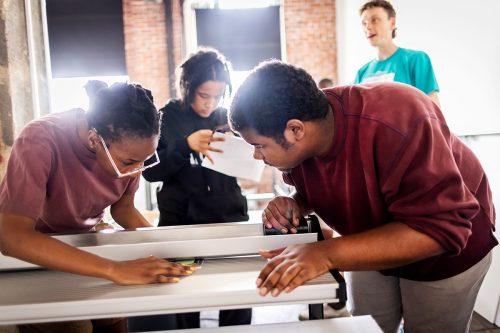
Your Food Story introduced Sayre High School students to ways that food, nutrition, urban gardening, and museum research are connected to ancient culture, and helped them highlight food stories from their families and local communities.
“Support from The Sachs Program was instrumental in our success. It allowed us to have the full number of students, to employ a full-time teaching artist to share photography techniques, to build out a nice, professional exhibit, and to provide participants with camera equipment and any other supplies they needed throughout the summer. The students had a true, well-rounded experience. They connected their personal food stories to ancient food practices and taught us so much along the way. And that was always the goal.”
–Tia Jackson-Truitt, SW’03, Chief Diversity Officer, Penn Museum
Philadelphia Jazz Legacy Map (2022 Winner)
Jay I. Kislak Center for Special Collections, Rare Books and Manuscripts with Philadelphia Jazz Legacy Project and the local jazz community
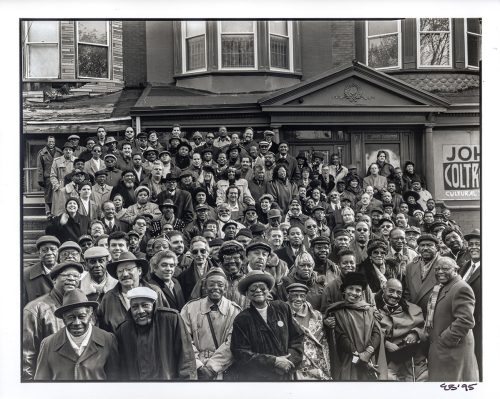
The Philadelphia Jazz Legacy Map, which is still ongoing, will be a digital interactive map of Philadelphia jazz locations built with archival contributions from the local jazz community, including oral histories, historical photographs, and jazz ephemera. This project is a partnership between the Kislak Center for Special Collections and the Philadelphia Jazz Legacy Project, which is a consortium of five jazz organizations whose mission is to explore ways to preserve and share Philadelphia jazz history. Learn more about the Philadelphia Jazz Legacy Project.
“One of the wonderful things about The Sachs Program is that it supports innovative and collaborative cultural heritage projects with Philadelphia communities. The Community Partnership Grant administers funding to obtain essential project resources while providing opportunities to develop equitable community partnerships for sharing stories about Philadelphia’s vibrant jazz history.”
–Samantha Hill, Curator of Civic Engagement, Kislak Center for Special Collections, Rare Books and Manuscripts, Penn Libraries
Top image: Photo by Eric Sucar. Bottom image: Great Day in Philadelphia by Elena Bouvier (in front of the Coltrane House).
To learn how you can support The Sachs Program for Arts Innovation, contact John McInerney, Executive Director, at mcinernj@upenn.edu or (215) 573-0874.


