Every person’s future is written, in part, by their genes—but never set in stone.

Improving Health through Inclusion
A new scholarship established by the Advisory Board at the Basser Center for BRCA seeks to broaden representation in a key medical field
Published: September 17, 2021
An estimated 1 million Americans are currently living with a BRCA1 or BRCA2 gene mutation, also called a pathogenic variant—placing them at heightened risk for developing certain cancers including those of the breast, ovary, prostate, and pancreas. Of that group, only about 10% are aware of their mutation status, leaving a significant number of people who may be unaware of lifesaving options such as increased cancer screening and risk reducing surgeries.
Additional obstacles can be disproportionately present for patients of certain racial groups. A 2017 study found Black women were 16 times less likely to have a medical provider discuss genetic testing as compared to white women. This disparity may be compounded by the lopsided demographics of genetic counselors; out of the roughly 5,000 currently practicing in the U.S., less than 2% are Black. Such underrepresentation can stifle important dialogue between genetic counselors and patients, whose health outcomes are often improved through interaction with medical professionals with whom they can relate more personally.
A new scholarship funded by members of the Advisory Board of Penn Medicine’s Basser Center for BRCA—a comprehensive center for the research, treatment, and prevention of BRCA-related cancers—is set to make a difference in this vital field of preventative medicine. Designated for underrepresented minorities pursuing a master’s degree in genetic counseling, this endowed scholarship will cover full tuition costs for Black or Latinx students enrolled in the two-year graduate program at the Perelman School of Medicine (PSOM). This vital aid will create opportunities to increase diversity by offsetting costs that, for many promising scholars, represent an insurmountable obstacle to entering careers in this field.
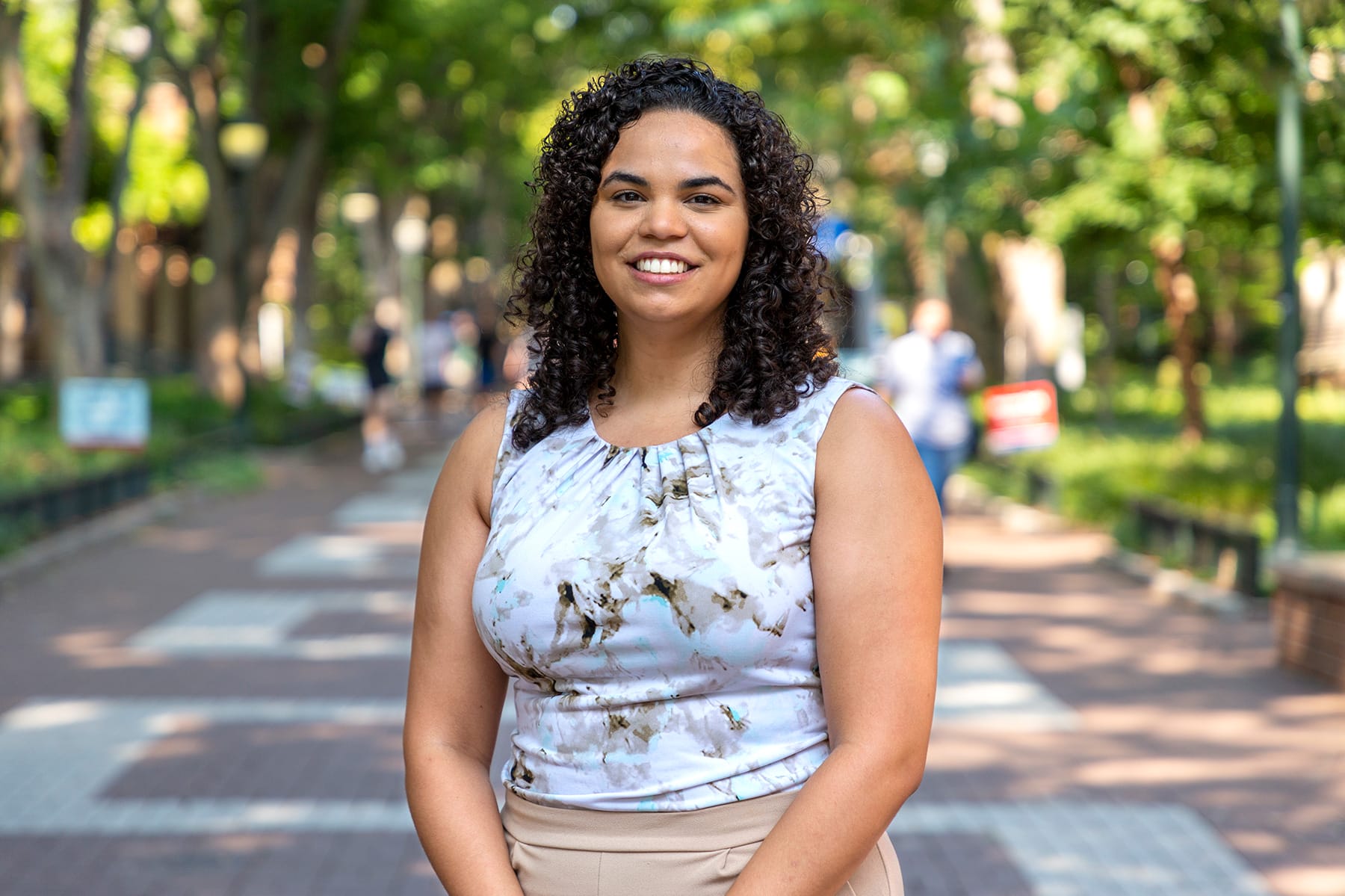
Hannah Hadgu, GM’23, the inaugural recipient of the Basser Center’s new scholarship.
Hannah Hadgu, GM’23, a Lancaster, Pa., native entering the Master’s Program in Genetic Counseling this fall, is the inaugural recipient of this new scholarship. Having gained previous experience as a Genetic Counselor Assistant at Main Line Health, Hadgu plans to focus on prenatal genetics during her time at Penn.
This scholarship ensures that I can put my focus and commitment into receiving a world-class education at Penn and accessing its network of renowned professionals. I aim to aid in increasing diversity in the field of genetic counseling and look forward to contributing to the education and recruitment of potential genetic counselors in my future career.” Hannah Hadgu, GM’23
The Basser Center’s original goal to raise $1 million in funds for this initiative was quickly met and exceeded through the support of several generous donors, providing the necessary funding to endow the scholarship in perpetuity. Four gifts of $150,000, each supplemented by $100,000 in matching funds from PSOM, were contributed by Mara Burros-Sandler; Michele and Kevah Konner, W’83; Heidi and Richard Rieger; and Helene, WG’87, and Rob Sorin. In addition, two $50,000 term gifts from Angie and Joe Campolo and Cindy and Brian Gavin provided the funds needed to make the scholarship immediately available to be awarded.
Just as patients need not allow a genetic variant to dictate their health outcomes, neither should a student’s racial background prevent them from pursuing their chosen career. Through this pivotal initiative, the Basser Center is building a better future for patients and the medical community that serves them.
The Basser Center for BRCA, founded in 2012 by Penn alumni Mindy Basser Gray, C’92, and Jon Gray, C’92, W’92, works to free the world of the devastating effects of BRCA-related cancers and, in doing so, provide a roadmap for curing genetic diseases. Visit the Basser Center website to learn more.