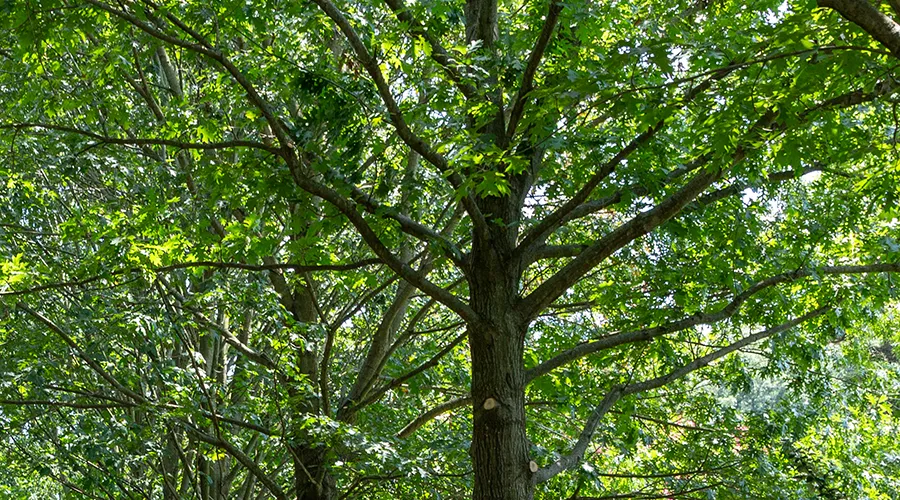
In 1896, the Penn Treaty Elm was planted on what is now College Green.

Sustainability in Sight
Capital projects on campus are a growing—and in some cases, living—classroom for approaches to sustainable design
Spring 2024
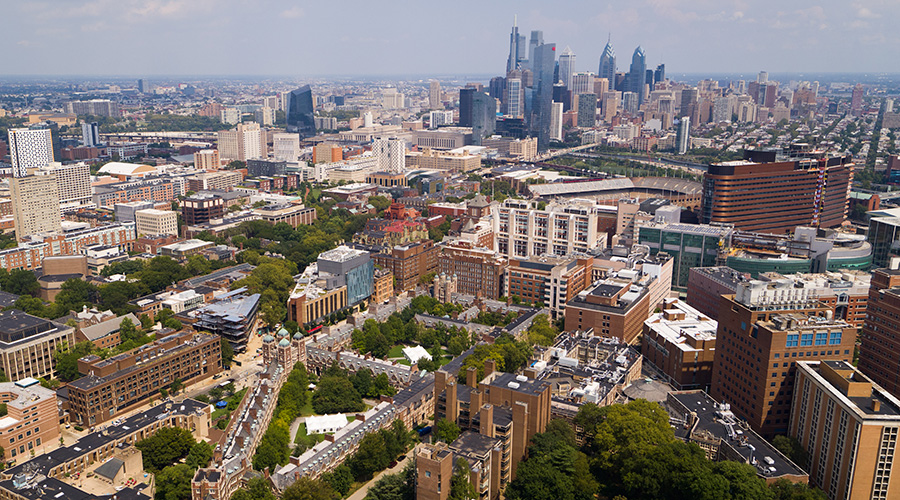
Today, it continues to grow—along with a campus that’s also been growing in response to the environment. Shaped by awareness of climate change, shifting student needs, and the evolution of innovative facilities, changes that can appear discrete to the average pedestrian are all part of a plan. A masterplan, to be precise.
Officially known as Penn Connects, the University’s masterplan serves as the blueprint that guides the evolution of Penn’s campus. It takes a village to make a campus sustainable; in 2009, Penn’s leadership committed to achieving a 100 percent carbon-neutral campus by 2042.
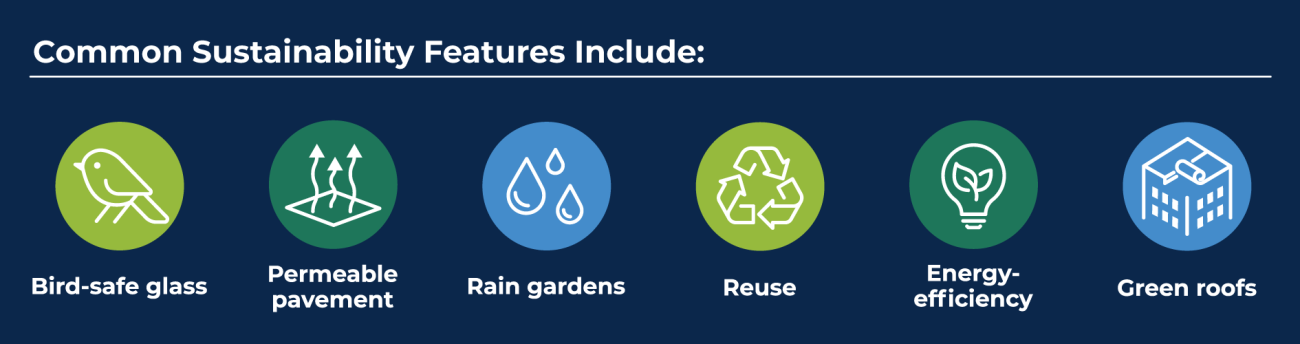
Working together, Executive Director of Design and Construction Chris Kern, University Architect Mark Kocent, and University Landscape Architect Robert Lundgren have spent years tending to the growth of the built environment; today, every new construction and major renovation project targets a Leadership in Energy and Environmental Design (LEED) Silver rating or higher, encouraging sustainable design and innovation in all building projects.
From undergraduate college houses to energy laboratories and athletics facilities, here are some of the projects Kern, Kocent, and Lundgren recommend keeping an eye out for, along with at least one familiar façade to see in a new light:
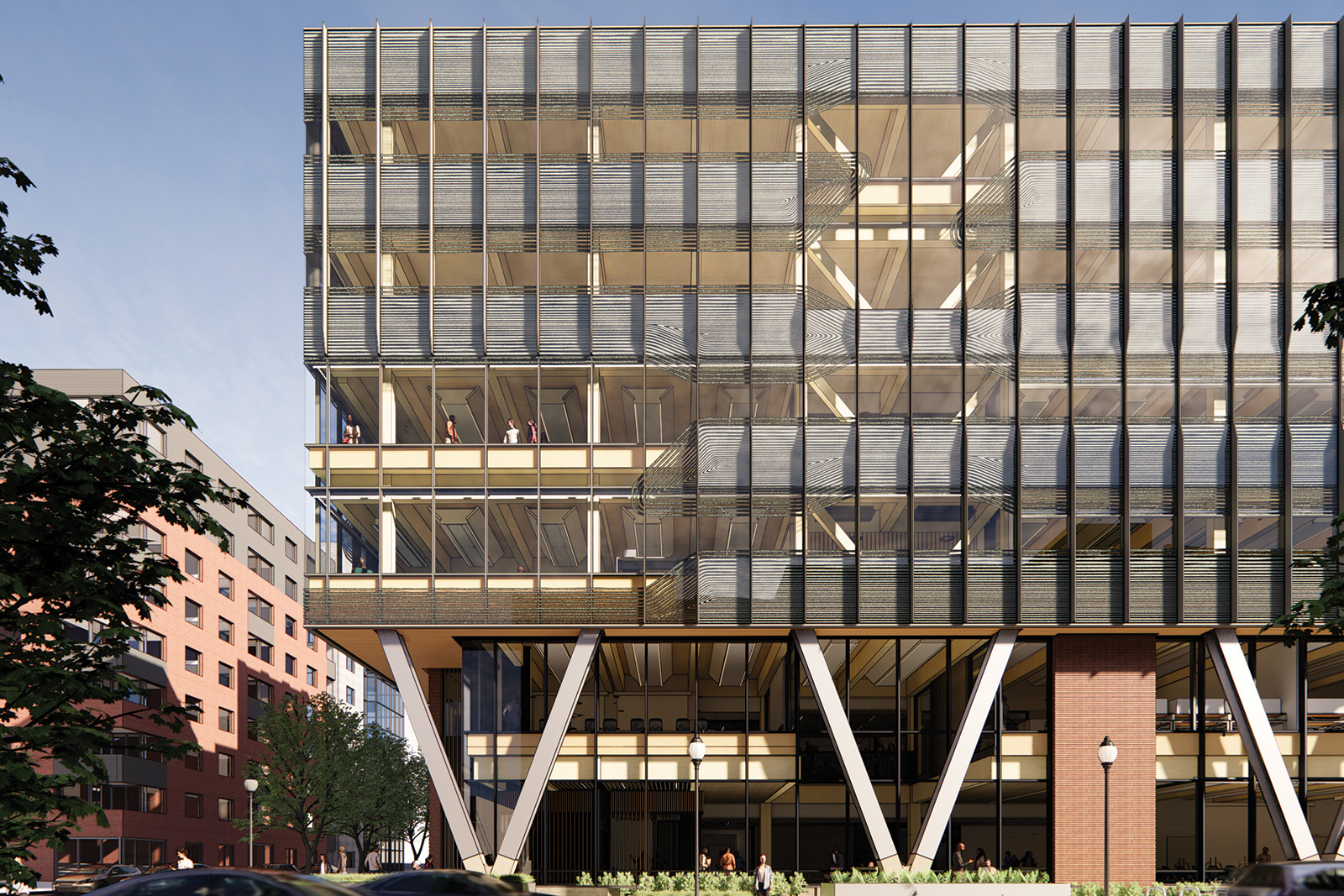
Amy Gutmann Hall
Penn Engineering, primarily data science (Coming Fall 2024)
“A good portion of this structure is mass timber made from Canadian spruce. Timber sequesters carbon as it grows—unlike steel and concrete, whose production comes with high carbon emissions.” —Mark Kocent
“Exterior fins and ceramic-embedded glass significantly mitigate solar heat gain. The frit glass creates an anthropomorphic pattern on the building, reduces roughly 30 percent of the solar gain, and acts to minimize bird strikes.” —Chris Kern
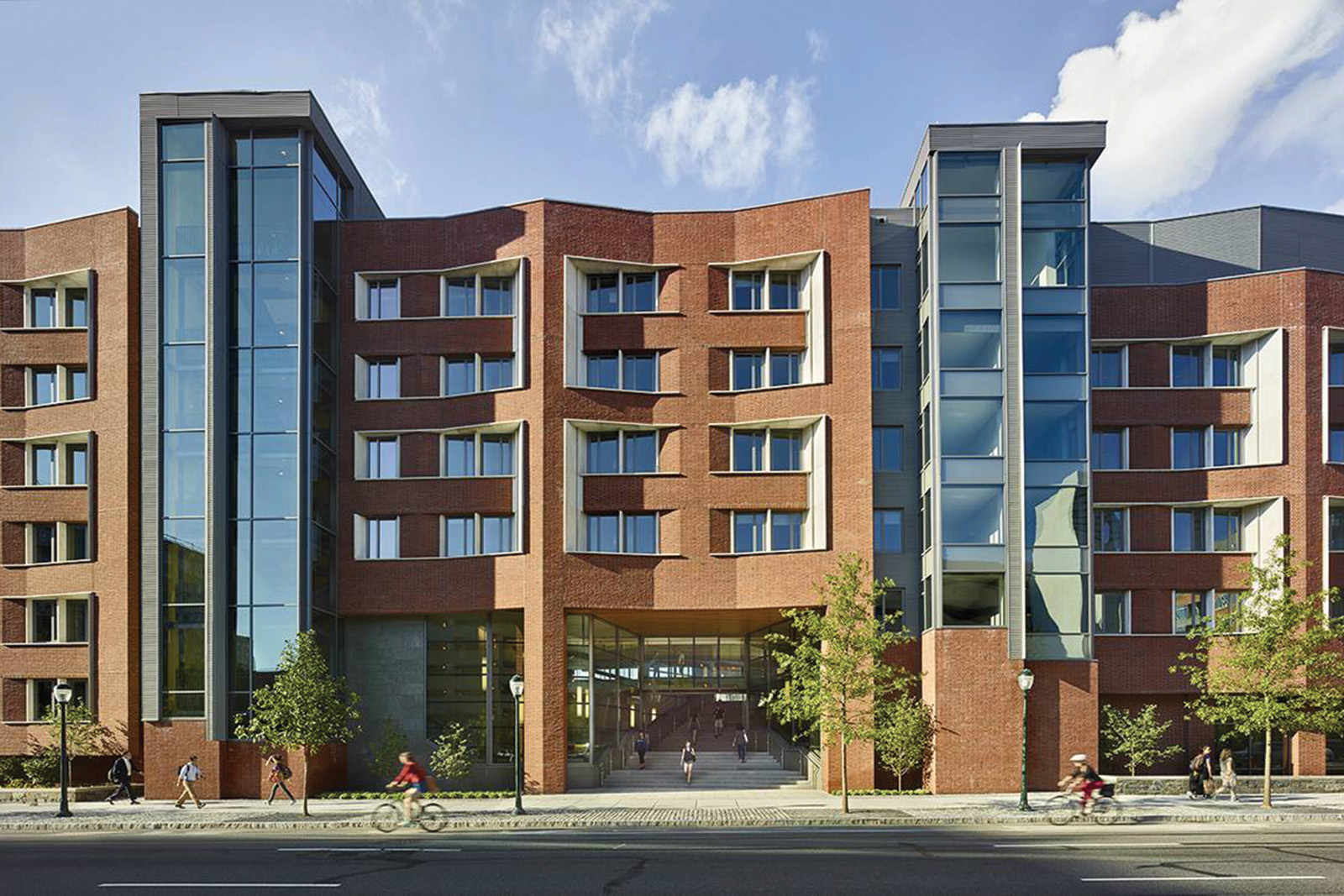
Lauder College House
Undergraduate college house (Built in 2016)
“Green roofs are one of this building’s most distinctive stormwater design features. Sedum, a type of groundcover, is planted across 10 separate roofs and helps manage runoff.” —Robert Lundgren
“The interior courtyard also has vegetative and permeable paving elements that act more like a sponge, slowly returning rainwater to the ground and the nearby Schuylkill River.” —Chris Kern

Vagelos Laboratory for Energy Science & Technology (VLEST)
Vagelos Institute for Energy Science and Technology and Vagelos Integrated Program in Energy Research (Coming Winter 2025)
“You can’t see it, but tubes of hot water run through the concrete floor slabs. That conduction provides a more efficient heat transfer and keeps the heat where occupants are. Likewise, there is chilled beam technology in the ceilings that efficiently cools the building.” —Chris Kern
“VLEST is going to be energy-intensive by nature of its program. But by design, it’s also going to be incredibly energy-efficient. The façade has over 300 sun-shading ‘sails’ made of EFTE, a lightweight and recyclable material. The upper third of each sail reflects daylight into the building, reducing electricity use, while the lower two-thirds block 40 percent of undesirable solar heat gain.” —Mark Kocent
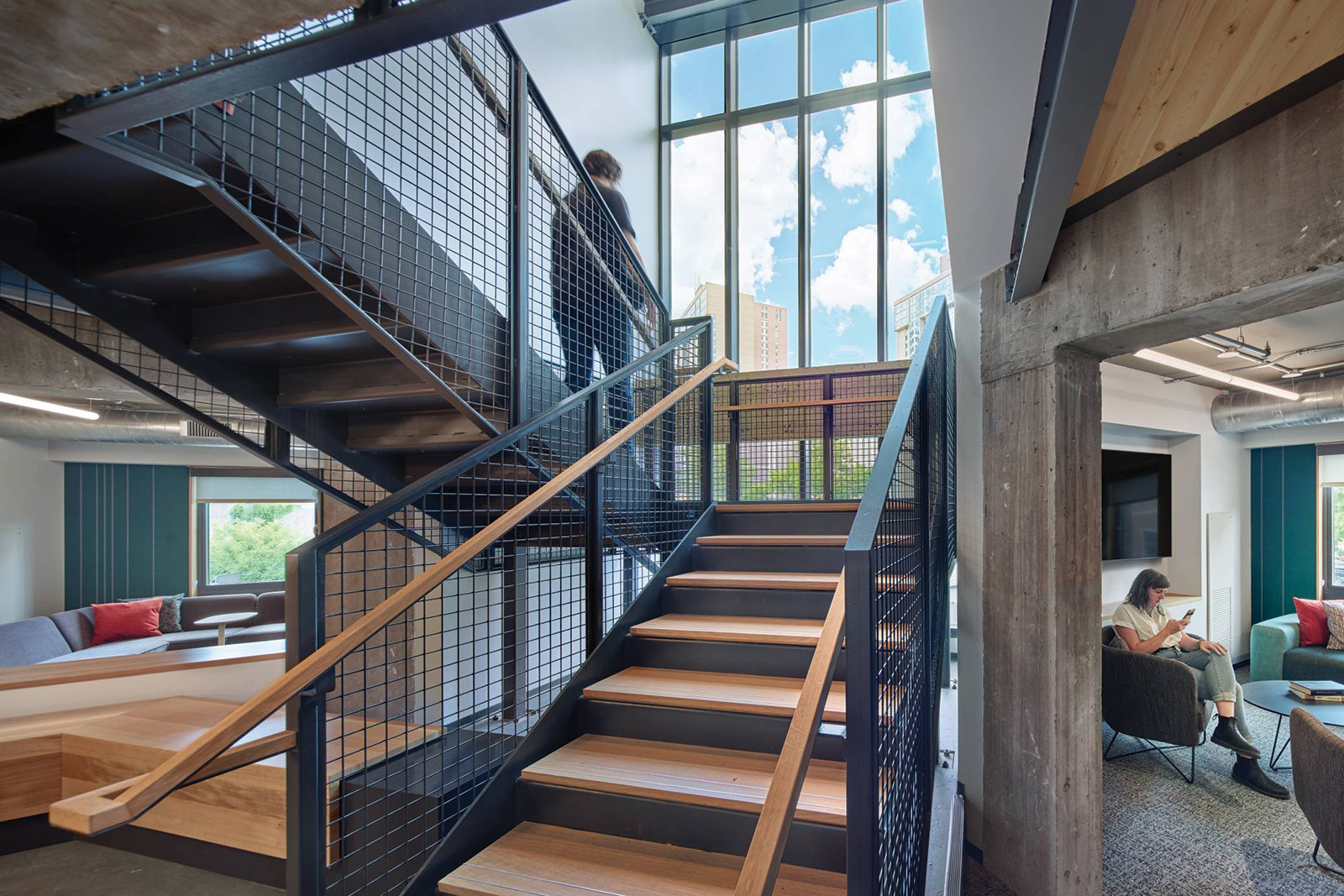
Stouffer College House
Undergraduate college house (Built in 1972, renovated in 2023)
“Renovating is usually the most sustainable construction option, simply because you’re not expending the energy and resources to demolish and rebuild.” —Chris Kern
“Systems upgrades can allow older buildings to be more sustainable—here, that included more insulation, high-performance windows, and chilled water distribution system upgrades. The timber infill flooring parallels, on a small scale, the carbon-capture approach at Amy Gutmann Hall.” —Mark Kocent
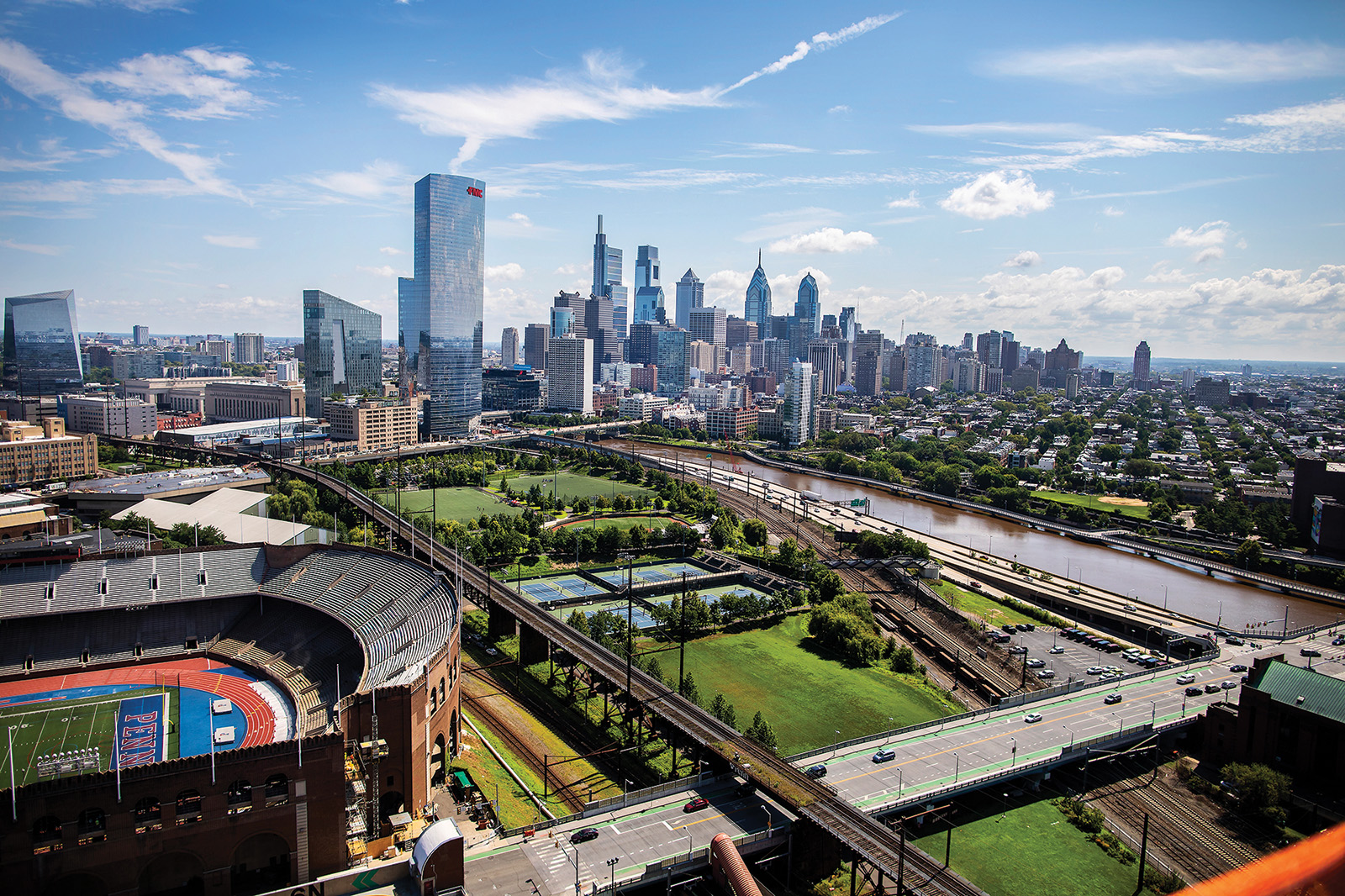
Penn Park
Active and passive recreation (Opened 2021)
“There’s a 300,000-gallon stormwater retention basin under the park that’s filled with gravel—sort of like a big gravel bathtub. It allows water to be captured for irrigation within the 24-acre park and to filter slowly into the earth rather than run off the surface.” —Robert Lundgren
“We also use a smaller, 30,000-gallon subterranean retention system in Shoemaker Green for similar purposes.” —Chris Kern