An investment in graduate and professional education is an investment in discovery itself.

Investing in Excellence
Advancing knowledge, leadership, and discovery
Winter 2026
It is also an investment in the innovators and leaders who will go on to shape our world. At Penn, donor-supported fellowships and scholarships make it possible for exceptional graduate students to pursue the research, innovation, and professional preparation that fuel progress across every field.

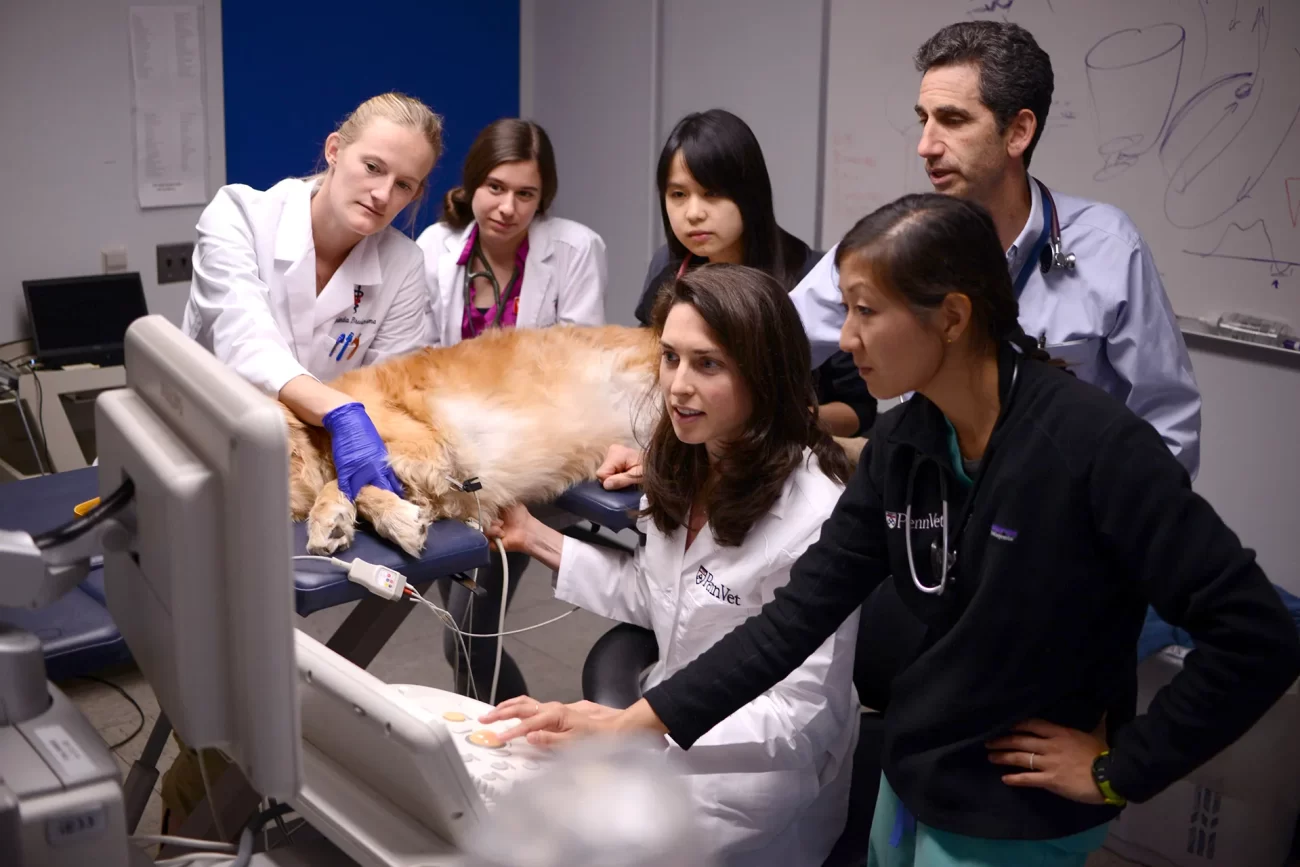
Graduate education at Penn is built on sustained conversation, shared inquiry, and close intellectual exchange.
What’s more, through the strength of their contributions, graduate students are partners in driving discoveries that benefit communities near and far. They define new avenues of inquiry, energize faculty collaborations, and generate insights that translate into real-world impact. Their work often defines the frontiers of human knowledge, which will inspire the next generation of innovators and shape the professions and industries that sustain society.
Graduate students are an essential spark driving research and discovery. Having a robust and energetic graduate program defined by excellence in scholarship is one of the highest priorities we have.”Mark Trodden
Dean of the School of Arts & Sciences and
Thomas S. Gates, Jr. Professor of Physics & Astronomy
A Leading Philanthropic Priority
Supporting graduate education is not simply about funding students—it is about cultivating leaders, creating knowledge that serves communities, and advancing society itself.
Graduate students often face difficult financial choices as they strive to balance tuition, living expenses, and future debt. Some must take on additional jobs to make ends meet, limiting the time they can devote to research, professional development, and discovery that drives societal progress.
For many others, cost is a key factor in where they decide to enroll, or whether they can attend graduate school at all. Recent federal policy changes have further raised the stakes by placing a cap on graduate student loans.
To attract and support the very best emerging scholars, Penn must remain competitive with peer institutions who have more substantial endowment resources. Philanthropy plays a key role in ensuring that Penn can recruit the most promising minds—those who will expand the boundaries of understanding and make a lasting impact in their fields.
Unlocking Potential
Financial aid unlocks potential. Freed from make-or-break calculations about cost, graduate and professional students can focus fully on the pursuit of ideas, experimentation, and innovation. The result is a vibrant intellectual community whose ideas ripple outward—benefiting the entire University and the world beyond campus.
“Supporting graduate and professional students strengthens Penn’s entire ecosystem of inquiry and impact,” says Penn’s Provost, John L. Jackson, Jr. “Philanthropy empowers students to pursue ideas that matter and fosters the interdisciplinary collaborations that move society forward.”
Powering Possibilities
Here, five graduate students share what it means to receive donor-funded fellowships.
 SP2 Scholar
 SP2 Scholar
Edgar Bruno Díaz Castro, SPP’25
School of Social Policy and Practice (SP2)
The SP2 Scholars Program, funded by a supportive group of SP2 stakeholders, is designed to attract leaders with an interest in social innovation and impact. While working as a public servant in his native Puebla, Mexico, Edgar saw how important it was for public policy to be rooted in data. As an SP2 Scholar, he gained skills that now help him drive systemic change by guiding local governments to make data-informed decisions, track resource use, and measure progress.
“By covering the financial burden of tuition, the SP2 Scholars Program has allowed me to consider a wide range of professional opportunities at the intersection of public policy and social change. Penn offered me the intellectual resources, the mentorship, and the supportive environment that I needed to take this next step in my career.”
Opportunities still remain to support the SP2 Scholars Program. Gifts made in increments of $500,000 will be matched up to $1 million. Visit the School’s Giving Opportunities page to learn more.
 Pottruck Graduate Prize Fellow
Shivanand Boddapati, Gr’28
Penn Arts & Sciences
As a PhD candidate, Shivanand researches the historiological and ethnographic elements of Indian classical music. The Pottruck Fellowship, established with a generous gift from Dave Pottruck, C’70, WG’72, has enabled Shivanand to connect these distant threads across place and time—deepening cross-cultural understanding and situating his work within a vibrant community of scholars who explore the global exchange of ideas through music.
“With such a specific field of interest, I gain a great deal by being in a community of scholars who share similar questions. There are very few programs in the U.S. or even the entire world which have the kind of interdisciplinary breadth I was seeking. Being able to study alongside the scholars I studied as an undergraduate has been a dream come true.”
 Toll Public Interest Scholar
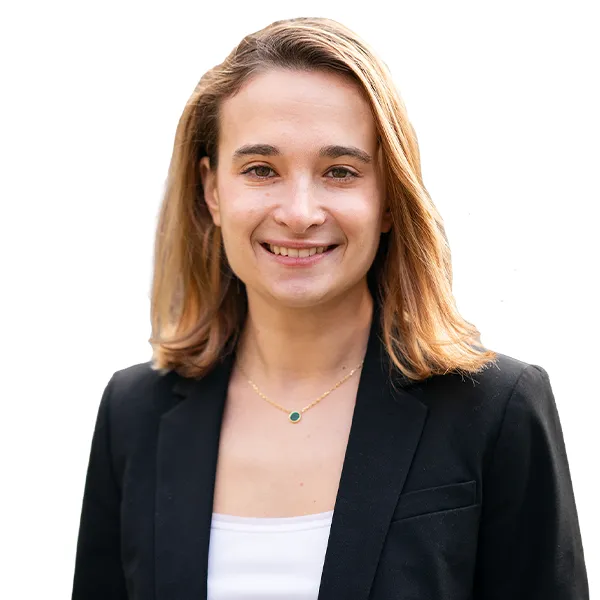
Madeline Nagler, L’27
Penn Carey Law
Thanks to a generous donation from the Robert and Jane Toll Foundation, founded by Robert Toll, L’66, and Jane Toll, GSE’66, Penn Carey Law is home to a remarkable roster of public interest scholarships and programs. As a Toll Public Interest Scholar, Madeline is using her background in documentary storytelling to help previously incarcerated youth reintegrate into society.
“The Toll Scholarship has enabled me to focus on doing meaningful work, and it has given me a community of people who are incredibly intelligent, creative, and collaborative. By supporting passionate people in doing important public interest work, the Toll Scholarship is creating a chain of good.”
 Twenty-First Century Scholar
Zoe Barinaga, M’28
Perelman School of Medicine
In 1992, Anne and the late Walter Gamble, M’57, founded the Twenty-First Century Scholars Program to ease the debt burden for talented students so that they could make a strong social impact by practicing medicine. After earning her bachelor’s in biomedical engineering from the University of Florida and her master’s in AI from the Katholieke Universiteit Leuven, Zoe enrolled at the Perelman School of Medicine, where she joined a cohort of ambitious researchers and clinicians. She has quickly added tremendous value by helping to develop a new AI-centered curriculum with the administration, driven by her goal to harness AI for more accessible and inclusive medical care.
“The financial support is a blessing. Without it, I would not have been able to focus on both clinical sciences and artificial intelligence. I can now consider a non-traditional career path beyond the typical progression of medical education, and I can explore additional technical training and research. I feel very valued at the Perelman School of Medicine and celebrated for my unique background, and I am confident that its vision aligns with my own hopes to bridge medicine and AI for good.”
 Class of 1957 Endowed Scholar
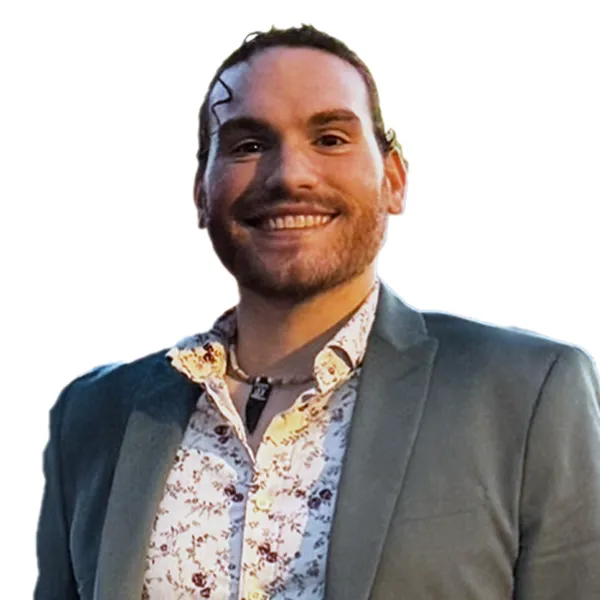
Tarek Atallah Benson, V’27
School of Veterinary Medicine
While undergoing cancer treatment earlier in life, Tarek witnessed how emotional support dogs were shut out of a hospital floor because of a human tuberculosis case. This experience revealed the link between human–animal disease transfer. After working for the Department of Defense on antibiotic resistance, Tarek decided to enroll at Penn Vet and study zoonotic and neglected tropical diseases in order to understand and prevent future outbreaks. His goals are now being realized thanks to the Class of 1957 Endowed Scholarship, which was established by the class to support future veterinary leaders.
“The Class of 1957 Scholarship has allowed me to take full advantage of amazing opportunities. I have been able to participate in wet labs—autopsies and necropsies—including gowning up and performing procedures to extract parasites. I have been able to attend symposia, do externships with the CDC and WHO, and explore on-site study with indigenous populations practicing traditional medicine. None of these opportunities would have been available if I needed to take a job to make ends meet.”
Supporting the Future of Knowledge Development
The need to invest in graduate aid has never been greater. Future cohorts of Penn graduate students will be instrumental in making scientific discoveries, addressing pressing social needs, teaching the next generation of scholars around the world, and moving our understanding of society and culture forward.
To learn more about supporting graduate fellowships at Penn, please contact Paul Mischler, Chief Philanthropy Officer, at mischler@upenn.edu.