

This story originally appeared in the Spring 2019 edition of Penn Parents magazine, a publication of the Office of Parent Outreach and Development.
“Keep an eye on the ping pong balls,” calls Jay Shah, C’19. Jay is a teaching assistant for The ABCs of Neuroscience, and today’s class has Penn students partnering with freshman at Paul Robeson High School in West Philadelphia to teach how brain damage can affect cognitive function. The current experiment: see how many times you can successfully aim a ping pong ball into a paper tube. The catch: you have to wear Vaseline-coated goggles to mimic neurological vision impairment.
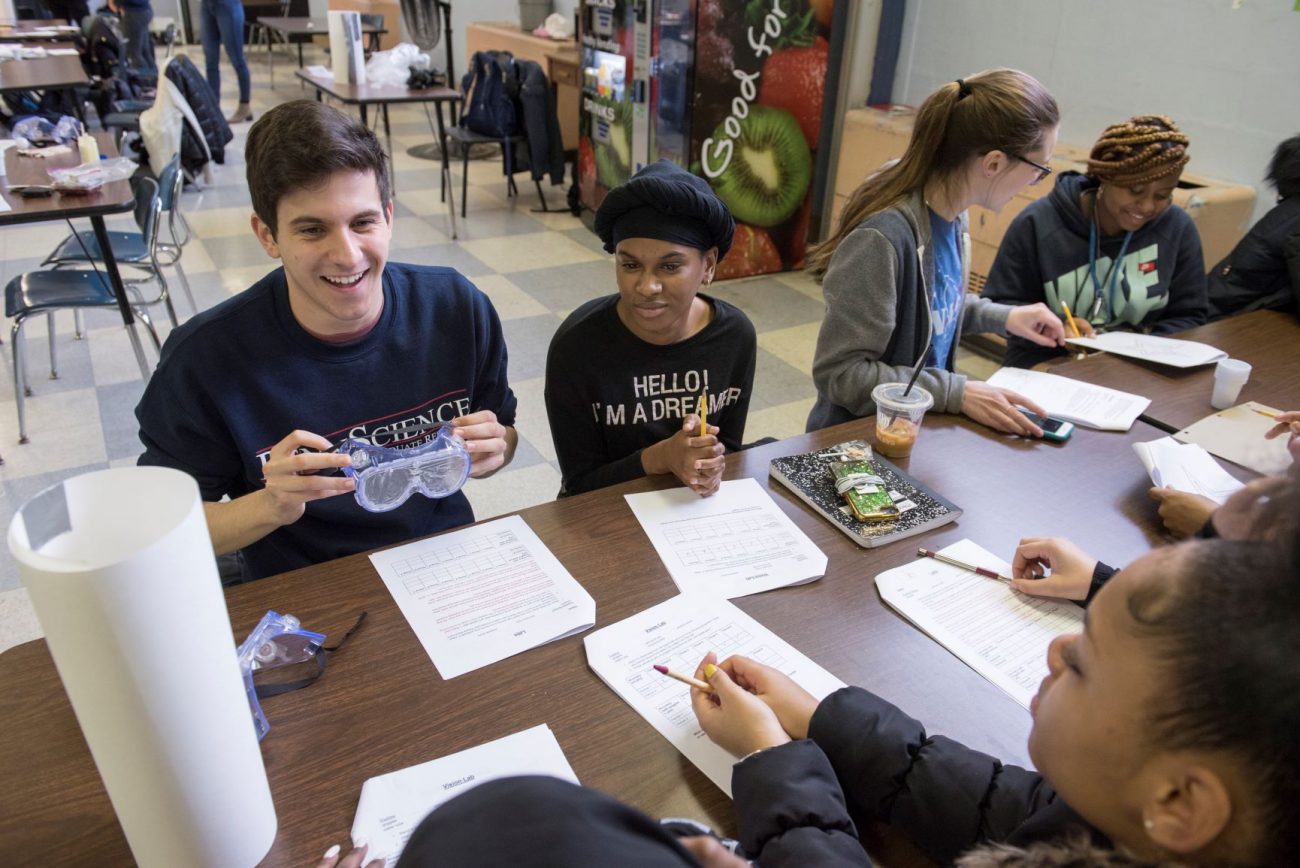
The ABCs of Neuroscience is a perennial favorite among the more than 50 Academically Based Community Service (ABCS) courses offered each academic year through the Barbara and Edward Netter Center for Community Partnerships. Spanning all four undergraduate schools and more than 20 departments, ABCS courses combine community service with course curriculum for academic credit. Students learn the theory first, then apply it in a hands-on, real-world setting.
Every student I speak to tells me that they look forward to that one day a week when they can step off Penn’s campus and engage with the community.”Faustine Sun, C’18, ABCS Coordinator
“One of the things that benefited me the most during high school was having a mentor that got me excited about the learning material,” Jay says. “ABCS courses give Penn students the opportunity to offer guidance to younger students and show them that college is a possibility.”
The reach of ABCS courses is not limited to local schools—the goal is to improve the quality of life and learning for all of Penn’s neighbors. Take Addressing Social Determinants of Health: Community Engagement Immersion, a class offered this semester by the School of Nursing that explores how students can address the social issues impacting the health of West Philly residents.
“By introducing nursing students to the surrounding community and helping them foster relationships grounded in respect, we are making them aware of their capacity to engage with health issues beyond one-time clinical encounters,” says Assistant Professor of Nursing Dalmacio Dennis Flores. “Students are challenged to go beyond the pathophysiology of a disease and instead find the causes that place patients at risk, which can include poverty, access to care, and racism.”
“We provide multiple opportunities for students to practice the central concepts of the course through meaningful, collaborative engagement with the larger community. This exemplifies the value of the ABCS program,” adds Terri Lipman, Miriam Stirl Endowed Term Professor of Nutrition and Professor of Nursing for Children, who developed the course.
Building mutually beneficial relationships is at the core of the Netter Center for Community Partnerships’ mission and a driving force behind the growing demand for ABCS courses.
“Every student I speak to tells me that they look forward to that one day a week when they can step off Penn’s campus and engage with the community, whether that be with their assigned K-12 student or a non-profit,” says Faustine Sun, C’18, who currently serves as coordinator of the ABCS program. “Many students feel like it’s a good stress reliever and they like being able to make a difference. The Netter Center is now looking into how civic engagement relates to wellness.”
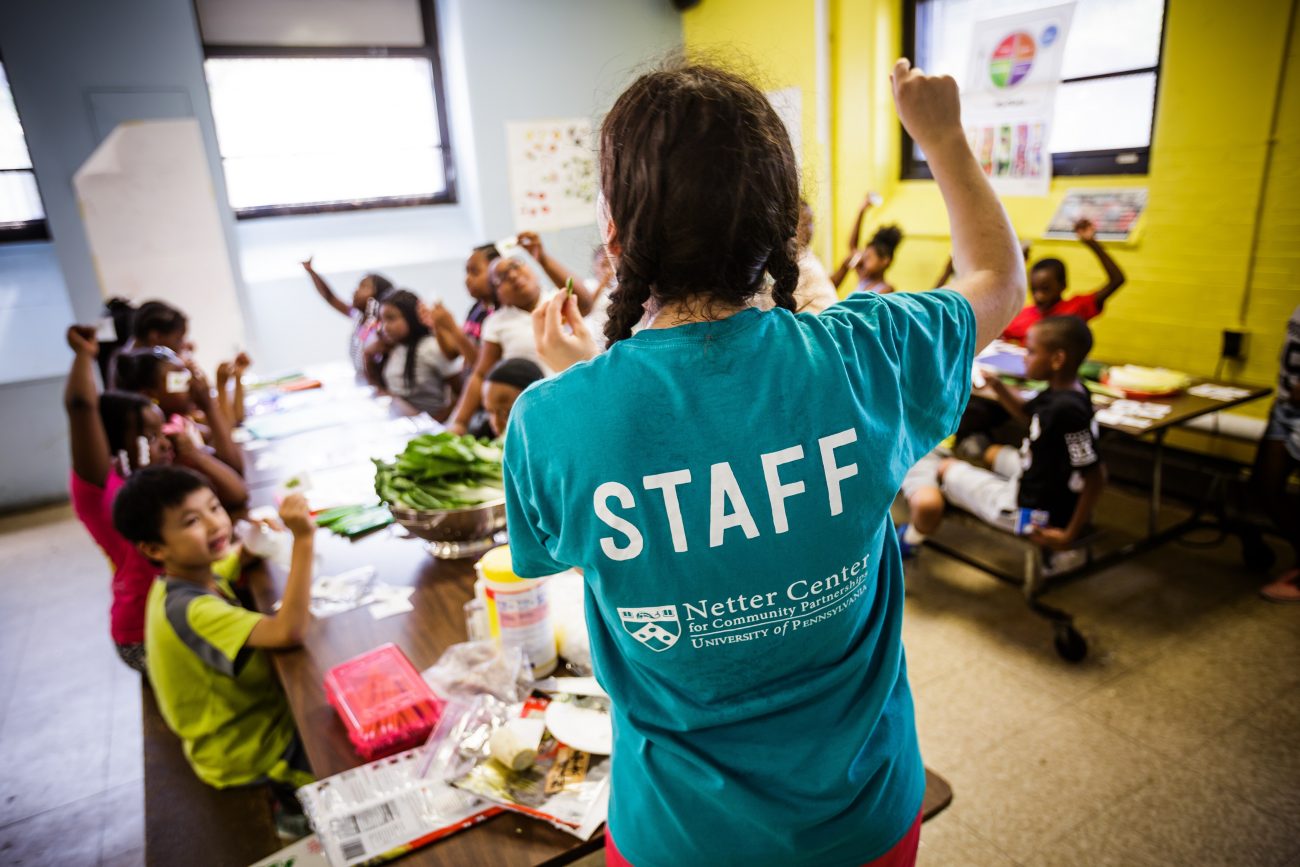
This positive influence on students’ lives extends beyond their time on campus. According to a survey of 483 Penn ABCS alumni conducted by the Netter Center, those who took two or more ABCS courses reported significantly higher gains in their critical problem-solving, interpersonal, and teamwork skills.
From Environmental Science and English to Fine Arts and Nursing, the breadth of available ABCS courses is appealing to undergraduates who possess an interest in civic engagement, but not extra space in their calendars—especially as many of them count toward foundational and sector requirements. Recognizing the important role community work plays in the University’s academic mission, most ABCS courses have service components built into their class schedules, providing students with a dedicated time slot for reaching out and giving back.
“I always hear from students about how empowering their ABCS experience was and how it taught them that they can effect change,” says Faustine. “Often followed by, ‘I really wish I’d found out about these courses sooner.’ ”




