
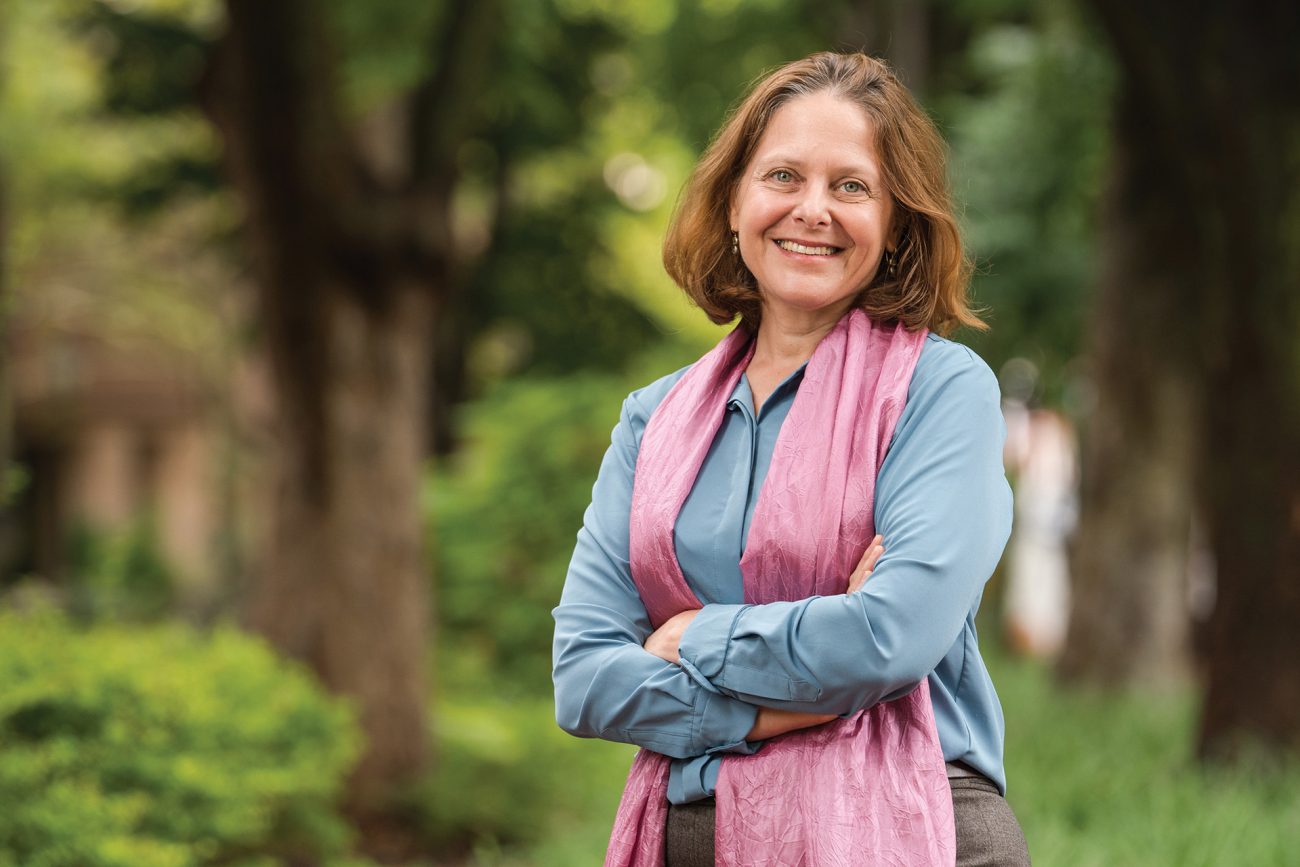
This fall, Sigal Ben-Porath was named the new faculty director of the Stavros Niarchos Foundation (SNF) Paideia Program.

Meet the Leaders
A Q&A With Sigal Ben-Porath, Faculty Director of the Stavros Niarchos Foundation Paideia Program
Spring 2024
Ben-Porath is a globally renowned scholar of the theory and practice of democracy, with an emphasis on the role of schools and colleges as democratic institutions and hubs for civil discourse. She is the MRMJJ Presidential Professor of Education at the Graduate School of Education, and she holds secondary appointments in the Department of Philosophy and the Department of Political Science in Penn Arts & Sciences. As faculty director of the SNF Paideia Program, she will continue the program’s work of teaching and encouraging civic dialogue across ideological, cultural, and demographic divides.

What drew you to this role?

My work as a scholar has been focused on the role that schools and universities play in preparing people to be engaged participants in democratic and civic life. I was drawn to the SNF Paideia Program because of its mission of promoting civic dialogue across difference, while at the same time facilitating personal and community wellness through dialogue.
Why is the SNF Paideia Program important for students and for the University?
The core of the program is our SNF Paideia Fellows—students from all four of Penn’s undergraduate schools who join us sophomore year. They spend the next three years as a cohort, taking classes specifically designed for them as fellows, along with SNF Paideia designated courses open to all Penn students. The fellows, in turn, cultivate dialogue and bridge differences in their courses, clubs, and dorms—they take their new skills beyond the program and into their various campus roles and throughout their careers.
What do you hope students take away from their experience?
One of the main things our students learn is how to engage in conversations that aren’t focused on winning an argument or persuading the other person to abandon their perspective. Instead, they acknowledge differences to find common ground, while continuing to hold their own beliefs and perspectives. Those aren’t just skills for the classroom— they can be practiced anywhere.
What is next for the program?
In response to the recent months of tension on campus, the program is exploring several new initiatives. One is developing a set of resources for instructors on how to engage in productive dialogue in classes. We also want to create more opportunities for graduate students and instructors to strengthen their skills in managing classroom discourse and inviting student voices into the classroom.
To learn more about the SNF Paideia Program, visit snfpaideia.upenn.edu.



