For University Trustee Wendy Commins Holman, W’97, giving back to Penn begins with gratitude and grows through service. In this Q&A, she reflects on her own Penn journey and how alumni and friends can strengthen the University through their thoughtful philanthropy, dedicated volunteer efforts, and continuing involvement.

Aligning Passion with Need
A conversation with Trustee Wendy Commins Holman, W’97, about philanthropy, engagement, and the many ways to advance Penn’s mission
Published: January 29, 2026

Q: What inspired you to become a Penn volunteer?
Wendy Holman: It all starts with gratitude. My Penn education opened doors and gave me an extraordinary foundation for the next chapter of my life. When graduation came, I wasn’t ready to let go; volunteering became my way to stay connected to a place that shaped me.
Q: Where did you first volunteer at Penn? And where did it go from there?
WH: The Penn Libraries was my first home. Benjamin Franklin founded our university, and he also founded the first lending library in the country. Franklin viewed libraries as the democratization of education. At the Penn Libraries, that feeling still runs through it. It’s not a place for dusty old books. It’s a place where incredible librarians support students. There’s a lot of magic happening there, and it touches every part of campus. It was a fun way to start my volunteer life because it immediately put me at the center of the University.
After a few years, I got involved with Penn Medicine’s Council for Discovery Science, a group of volunteer leaders who share Penn Med’s commitment to advancing research that improves human health. My husband Wayne is also a member. The Council established the Dean’s Innovation Fund, which helps researchers who are looking for extra investment in their projects beyond what grants provide. President Jameson played a critical role in creating this innovative fund during his days as Dean of the Perelman School of Medicine. His partner in this effort was Jon Epstein, the School’s current Dean, who continues the Council’s important work today.
Later, I became involved in the University’s Board of Trustees, where I now serve as chair of the Development Committee.
Q: Where did you decide to direct your philanthropy—and why?
WH: It’s a mix of passion and need. I care deeply about the Libraries because they sit at the heart of the University—supporting every school and student. I also listen for where Penn needs help most. For example, when leadership identified the need to transform the Biomedical Library into a modern hub for research and development, that resonated. Gratitude is my starting point; strategic need guides the follow‑through.
Find the thing at Penn that inspires you to go deeper—and then pair it with what the University needs right now.”Wendy Holman, W’97
Q: You’ve also supported Penn’s work in Africa. What drew you to that?
WH: A different kind of gratitude. My company developed an FDA‑approved Ebola therapeutic with remarkable survival outcomes, and we provided the drug at no charge in Africa. During trials, families showed profound trust in science under unimaginably difficult circumstances.
That experience moved me to invest in work done in Africa—work that honors that trust and builds capacity on the ground. That investment, the Holman Africa Initiative, is supporting a variety of initiatives, from financial aid for African STEM students to partnerships between Penn researchers and their peers in Africa.
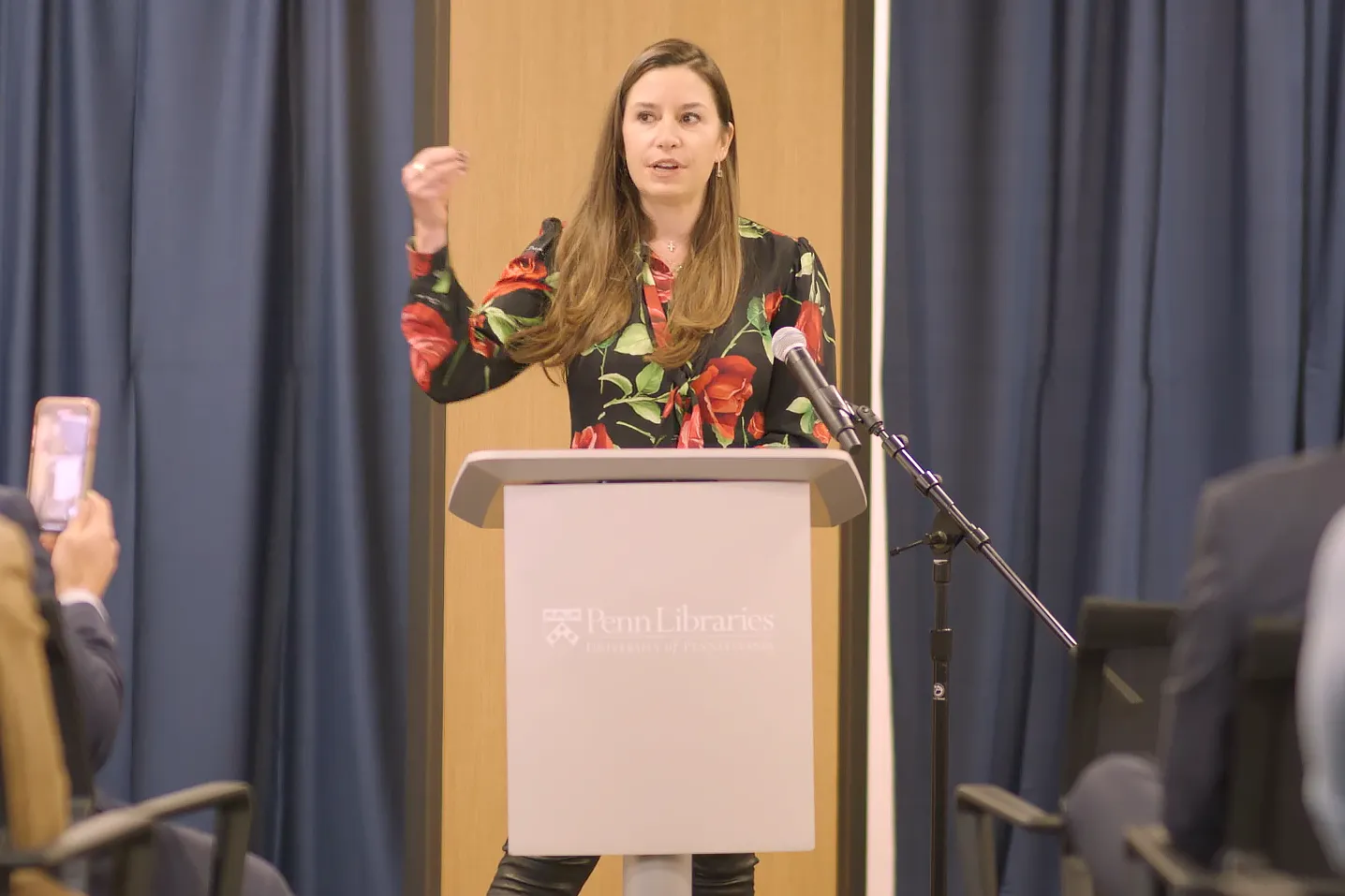
Q: As Chair of the Development Committee, how do you see the committee’s role today?
WH: We’re re‑energizing the committee as strategic partners to Development and Alumni Relations. Our mission is philanthropic, but engagement is inseparable from that mission: we want alumni to feel at home at Penn—as advocates, mentors, volunteers, and ambassadors.
We’re also supporting new directions that better use volunteer time, including expanded alumni mentoring and networking programs. Shifting from traditional alumni interviews toward high‑impact mentoring creates more meaningful touchpoints between alumni and students or fellow alumni.
It’s been a pleasure to work with Kate Griffo, our Vice President for Development and Alumni Relations (DAR), who brings new vision to the work of DAR and the Committee. We’re learning and innovating together.
Q: What do you want alumni and friends to know about giving to Penn?
WH: Unrestricted giving and The Penn Fund are vital. Gifts to these areas demonstrate confidence in Penn’s leaders and give the University the agility to meet urgent needs. Scholarships are equally powerful, opening doors for talented students across backgrounds. At any level, your gift creates an immediate, campus‑wide impact and deepens your relationship with the people and programs you care about.
Unrestricted giving and The Penn Fund are vital—they show confidence in our leaders and give Penn the agility to meet urgent needs.”
Q: What is your advice for those considering how best to support Penn?
WH: Find the thing at Penn that inspires you to go deeper—then pair it with what the University needs right now. For me, the Libraries are that ‘center of gravity,’ but your path might be financial aid, your school, a research initiative, or a cross‑campus program. Impact comes from aligning passion with need.
Q: What unexpected benefits have come from volunteering?
WH: Community. The friendships I’ve made through Penn volunteer work are as meaningful as the ones I formed as a student. Your horizons expand—you meet new people, explore new ideas, and feel part of something bigger. Recently, I hosted a Penn dinner in Miami with alumni I hadn’t known on campus; it was joyful, energizing, and reminded me how strong the Penn network is.
Q: How can alumni engage—on campus or closer to home?
WH: Come back for Alumni Weekend—it’s an easy way to reconnect with classmates and rediscover campus. And if traveling isn’t in the cards, tap into local Penn clubs and programs; there are events year‑round that keep you connected where you live. Engagement isn’t just about giving, though that is important: showing up, mentoring, and being part of the conversation all advance Penn’s mission.
Wendy Commins Holman, W’9,7 is the CEO and co-founder of Ridgeback Biotherapeutics, a leading biotechnology company focused on creating treatments for emerging infectious diseases. At Ridgeback Bio, she leads the team for EBANGA™, which received FDA approval in 2020 for the treatment of Ebola, as well as for Lagevrio™ (molnupiravir), a COVID-19 antiviral pill that received emergency use authorization from the FDA in 2021.
Ms. Holman serves on a variety of non-profit boards, including the Sabin Vaccine Institute and the Ransom Everglades School. She is a graduate of the University of Pennsylvania’s Wharton School.
At Penn, Ms. Holman serves on the Board of Trustees and is Chair of the Development Committee and a member of the Academic Policy Committee. She also is a member of the Board of Advisors for the Penn Libraries and Penn Medicine’s Council for Discovery Science. In 2022, the Holman Biotech Commons was named in recognition of a gift from Ms. Holman and her husband, Wayne.