This story was updated March 20, 2023.

Thinking Differently
Temitope Omolehinwa helps make dental care more accessible and attuned to the needs of patients with medical complexities
Published: January 20, 2023
The typical tools you find in a dental office, including drills, probes, local anesthesia, and more, make many patients understandably apprehensive. But it’s what you don’t often find—such as special accommodations for wheelchairs or specialists with experience treating individuals with special needs—that can create real anxiety for such patients and their caregivers.
“A wide range of issues arises when treating patients with special needs, including physical, mental, and emotional disabilities, and medical complexities such as autism, movement disorders, mobility issues, and more,” says Temitope Omolehinwa, Assistant Professor of Oral Medicine at Penn Dental and Associate Director of the Personalized Care Suite at the Care Center for Persons with Disabilities. “Some dentists are hesitant to take on these patients due to inadequate training, fear of potential complications, and, of course, other factors. I think that needs to change.”
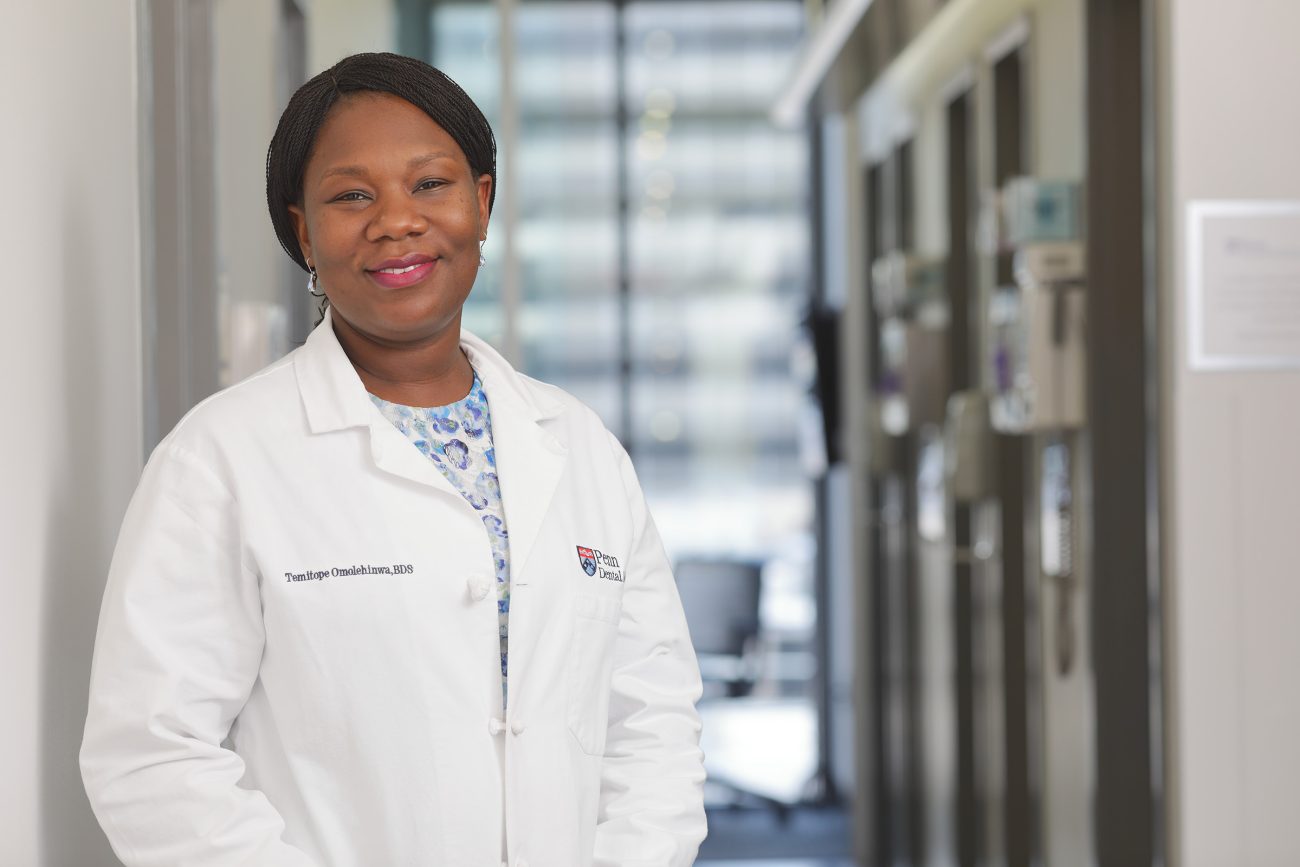
At the Care Center, Omolehinwa is part of a team dedicated to breaking down barriers for patients with special needs. “We are adamant about providing options for patients who have not been served by the current system by making accommodations around patient management, that are divergent from the ‘normal’ environment oral care providers are familiar with,” says Omolehinwa. “Our ultimate goal is to improve the quality of oral care and quality of life for these individuals.”
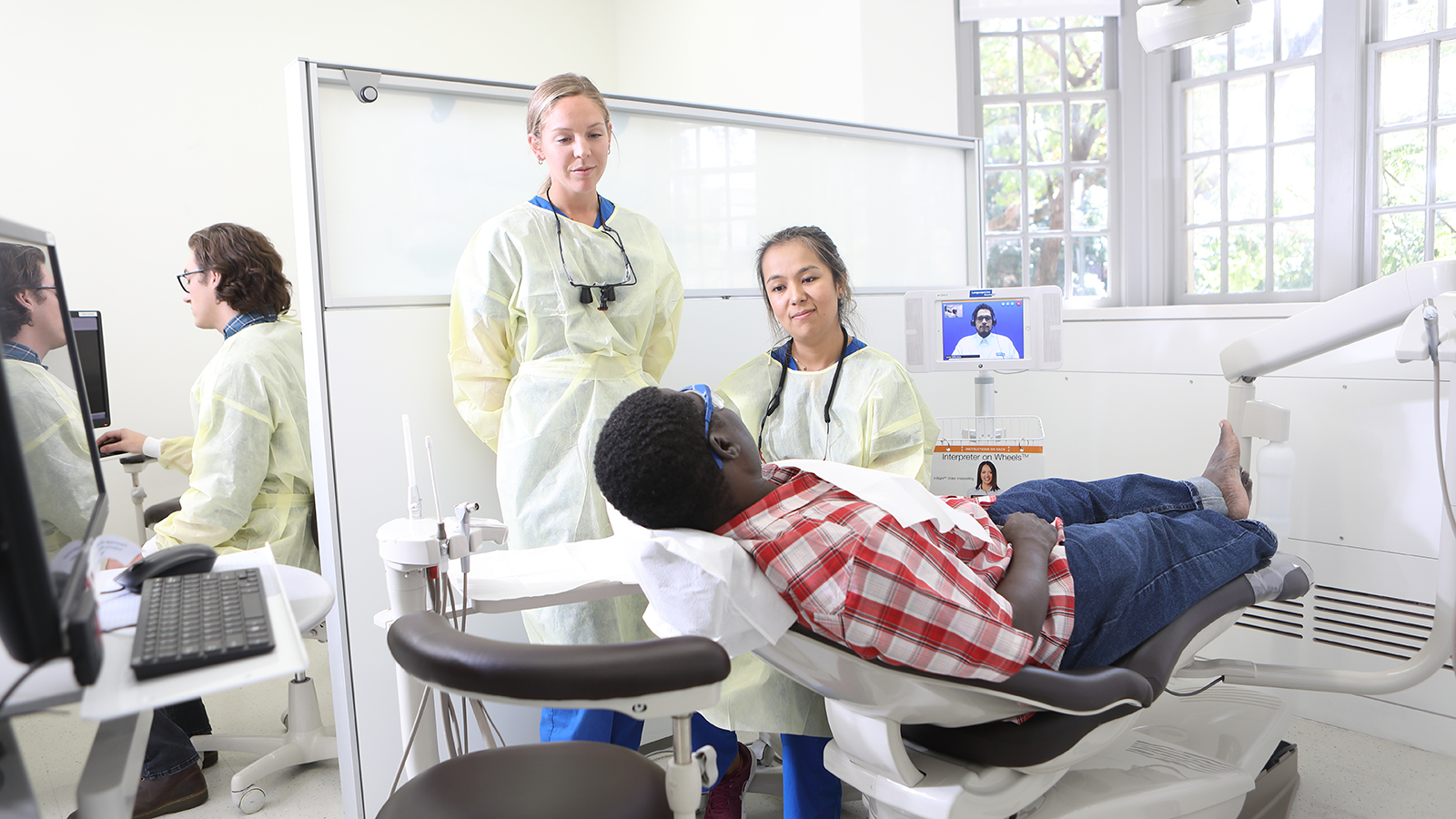
It starts with training as third-year dental students are exposed to clinical rotations and fourth-year students spend one day per week at the Center. They gain experience in managing patients with complex conditions, expertise they will take wherever they go to practice, strengthening support for these patient populations. “One of my former students who enlisted in the army came back to thank me three years after graduation,” Omolehinwa says. “He was so grateful to have the preparation needed to treat medically complex patients in an intense environment.”
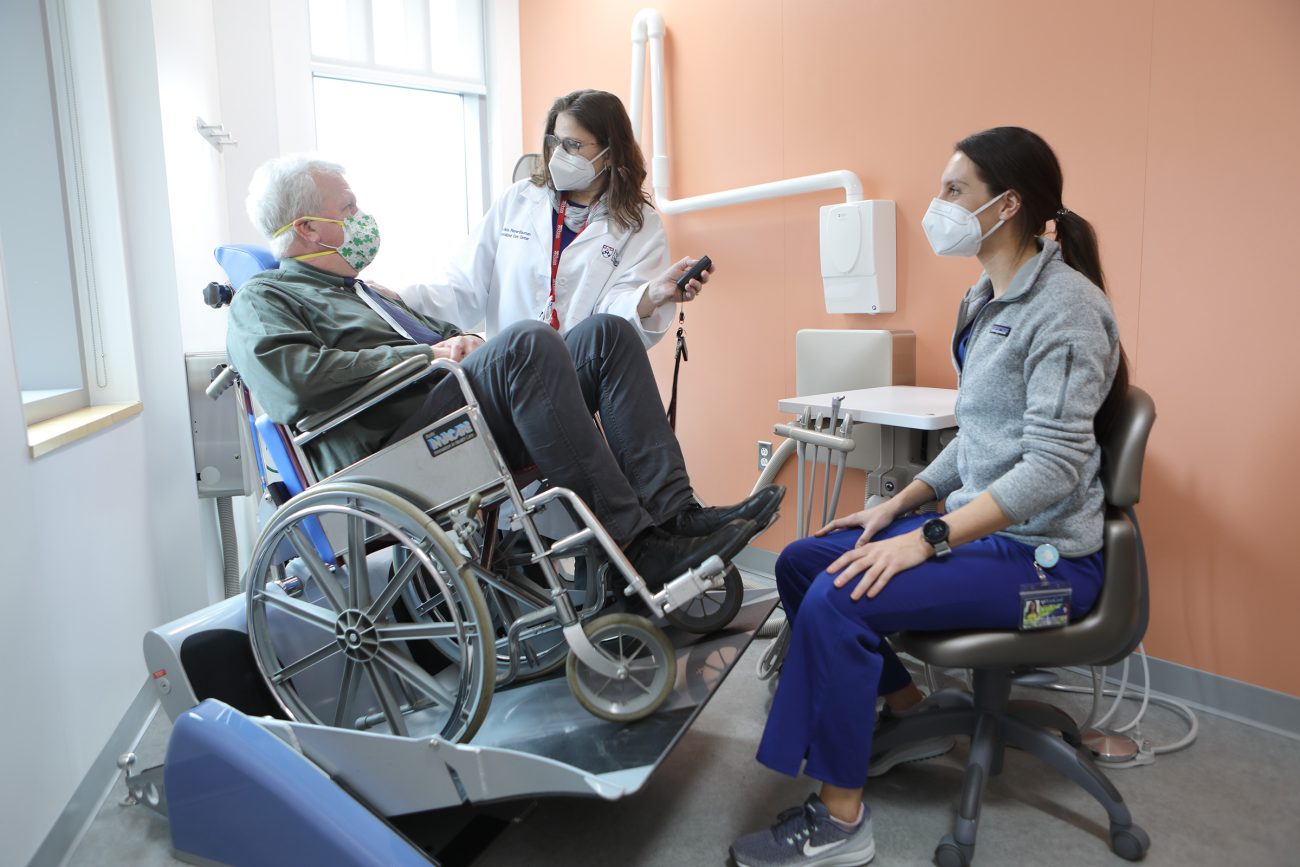
Within the clinic, patients will find special equipment to manage their comfort and care providers prepared to attend to any issues that may arise from unfamiliar and distressing situations. In addition, dental providers often consult with the patient’s medical team, as needed, as part of the overall matrix of care.
“We don’t just treat the teeth; we treat the whole patient,” Omolehinwa says.
On February 15, Omolehinwa joined Mark Wolff, Morton Amsterdam Dean at Penn Dental Medicine, Jasmine Harris, Professor of Law at Penn Carey Law, and David Mandell, Kenneth E. Appel Professor of Psychiatry at the Perelman School of Medicine, for a panel discussion titled “Thinking Differently About Difference: How to Increase Awareness and Equity.” The program was part of the Inspiring Impact Virtual Series, which invites Penn’s global community to learn about exciting work advanced by eminent faculty and content experts from Penn’s schools and centers.
Whether it’s an older person with limited mobility, a person with behavioral variances, an individual undergoing chemotherapy, or those presenting with other medical complexities, everyone can identify someone in their lives who can benefit from a center that treats them not as different, but as deserving of consideration and care.
“Many of our patients, or their caregivers, tell us they haven’t had treatment in many years,” says Omolehinwa. “Some are afraid of being hurt, stigmatized, or even just being around strangers, while others have been to numerous dental offices and can’t find someone who is comfortable enough to treat them. When I think about them, I think about how I would want my own family to be treated if they encountered the same difficulties in accessing quality care.”
“Our mission is about serving humanity,” she adds. “That’s important to Penn, and it’s important to each of us at the Center as well.“