Ornate stone panels decorate the exterior of the late-Gothic Revival building known as The Arts, Research, and Culture House (ARCH) on Locust Walk.
Reimagining Cultural Spaces
A new mural celebrating Black history showcases how Penn's cultural resource groups embrace diversity
Published: February 23, 2023
Inside, students recharge among the ARCH’s stone fireplaces and dark wood paneling. The building is home to three of Penn’s six cultural resource groups: La Casa Latina, Makuu, and the Pan-Asian American Community House.
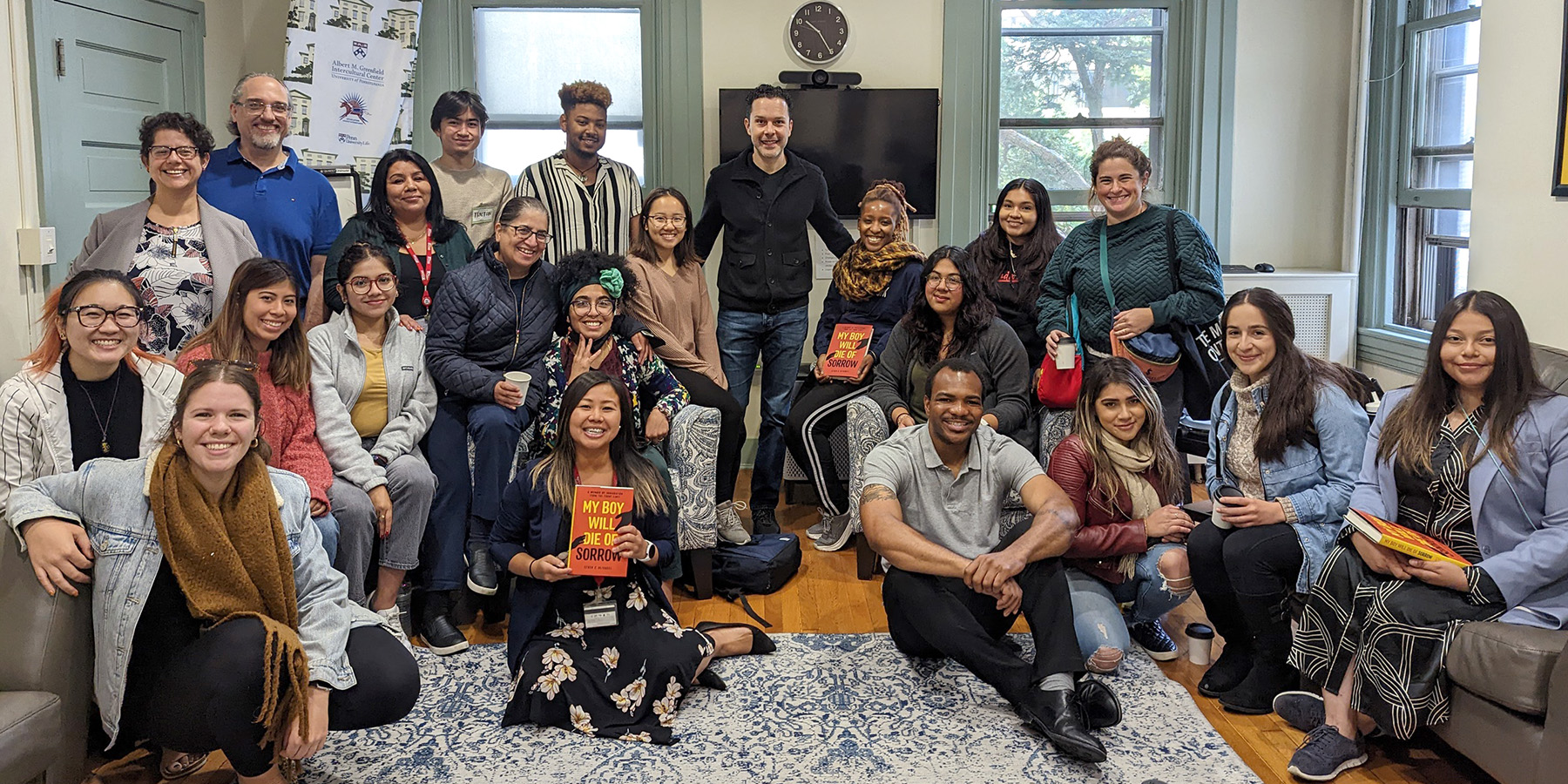
The Greenfield Intercultural Center is a resource for enhancing student’s intercultural knowledge, competency, and leadership through a variety of programs, advising, and advocacy.
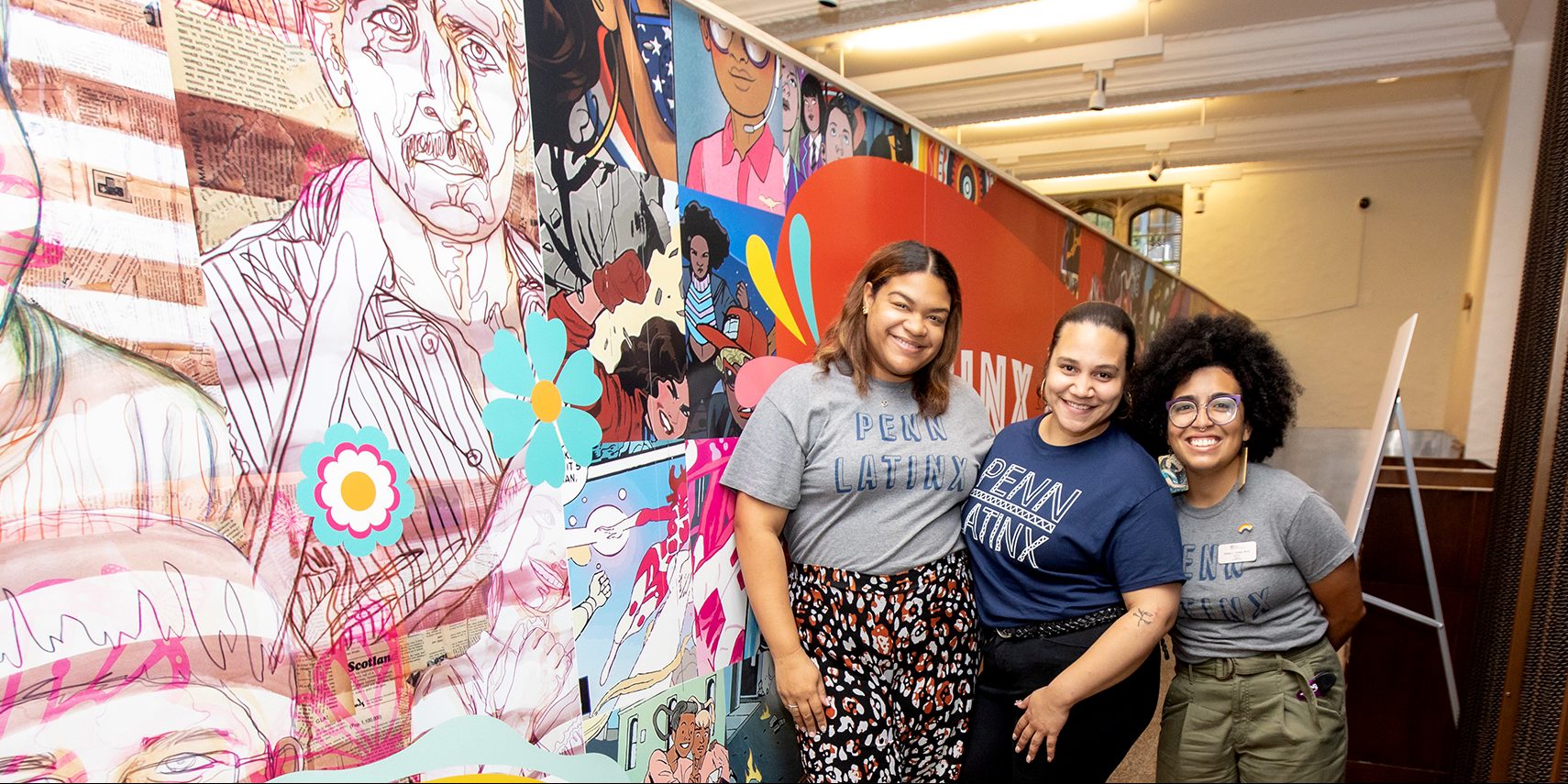
La Casa Latina, the Center for Hispanic Excellence, promotes greater awareness of Latino issues, culture, and identity at Penn.
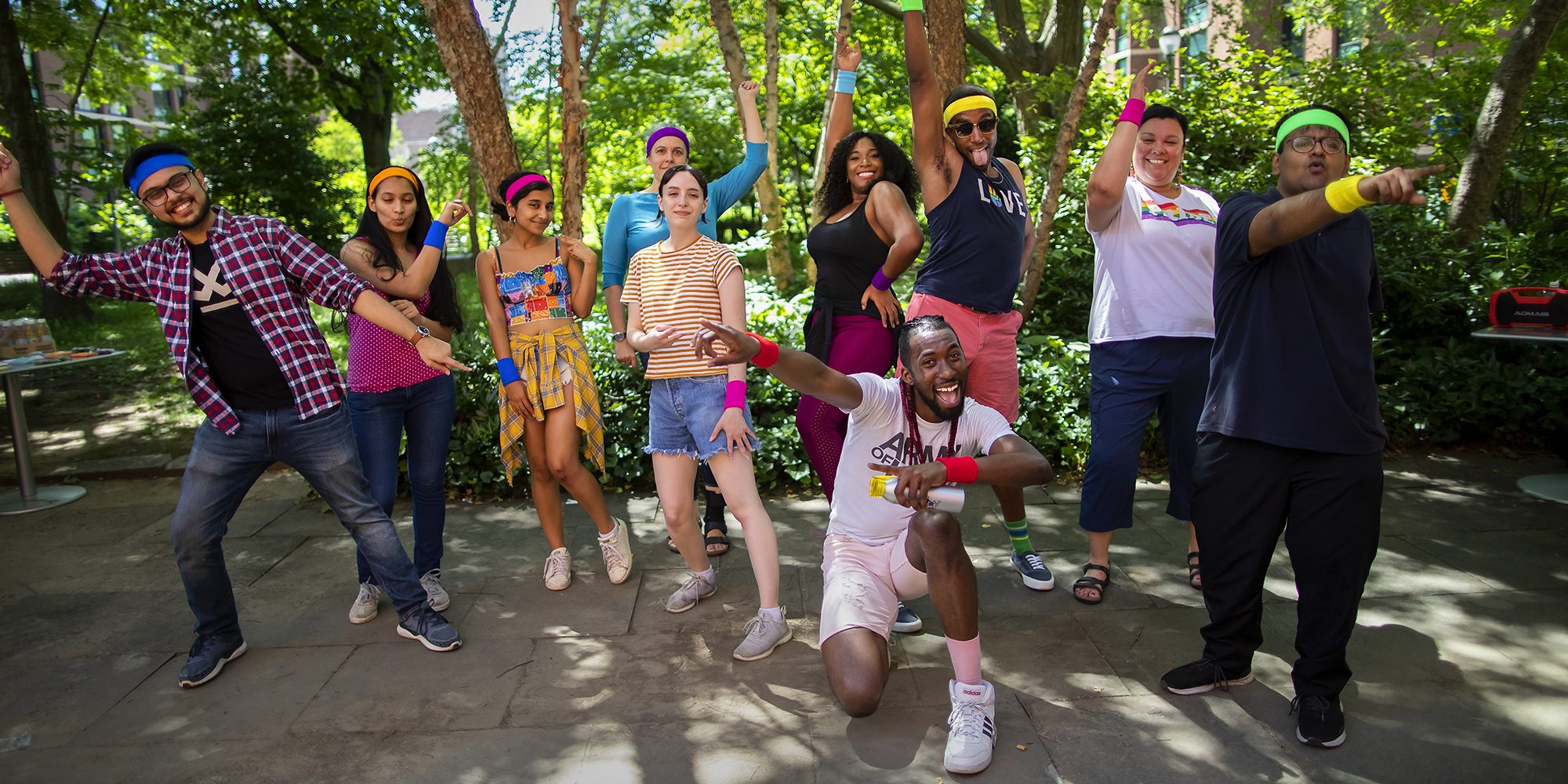
The LGBT Center is a home for LGBTQ+ people and their allies at Penn.
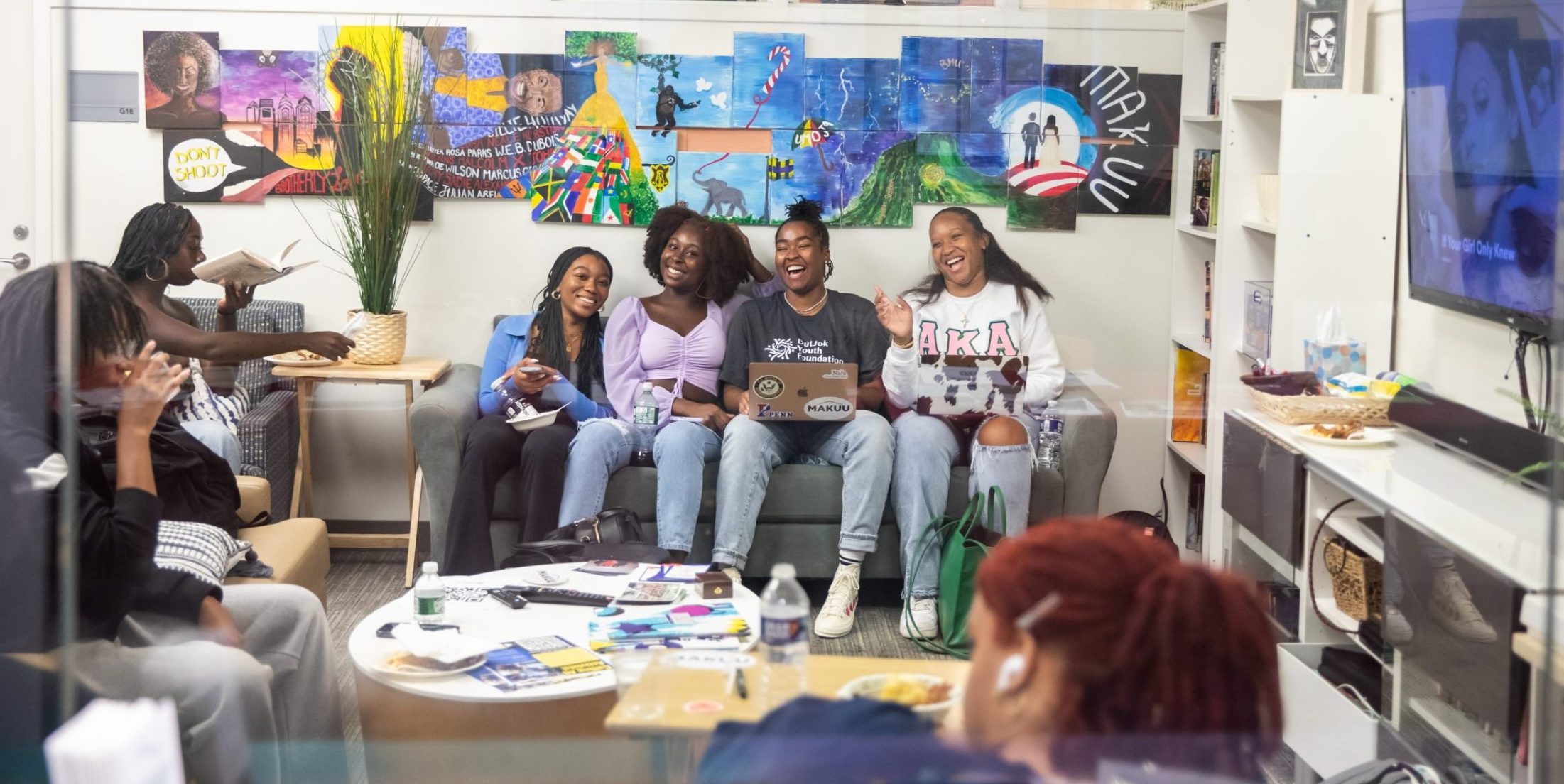
Makuu, the Black Cultural Center, is Penn’s focal point for student activities, ideas, outreach, and support linked to Black culture and the African Diaspora.
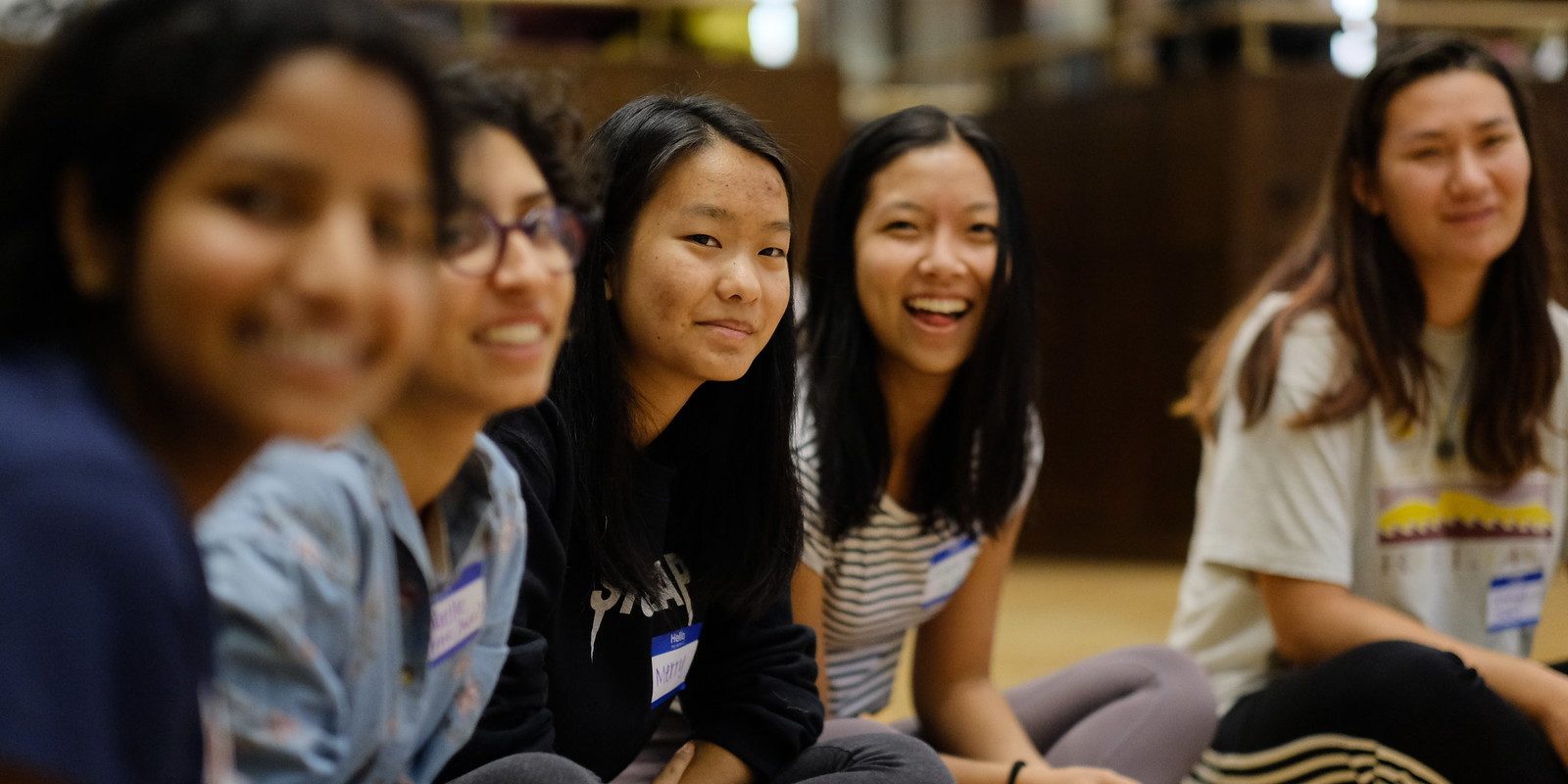
The Pan-Asian American Community House is a group where South Asian, East Asian, Southeast Asian, and Pacific Islander cultures are celebrated.

The Penn Women’s Center is a community and space that advocates on issues of gender equity, health, childcare, workplace discrimination, domestic and sexual violence, and mental health.
These groups are supported by Will Atkins, Associate Vice Provost for University Life who focuses on Diversity, Equity, Inclusion and Belonging (DEIB). Atkins works daily with support staff to learn how to create more opportunities for Penn students to connect with their own communities. He also engages with student organizations in the DEIB space. “So much of the Diversity, Equity, Inclusion, and Belonging work that takes place across campus happens at the ARCH, along with the other cultural resource centers housed at the Greenfield Intercultural Center, the LGBT Center, and the Penn Women’s Center,” says Atkins. “In these spaces, students find community, make connections, and discover more about themselves.”
At Makuu: the Black Cultural Center, Brian Peterson, ENG’93, GED’97, GR’13, PAR’24, is the Center’s director and so much more. He is a manager, role model, connector, and creative collaborator. He was also a powerful advocate for a new mural, which is currently installed on the first floor of the building.
The mural is nearly 50 feet long, wrapped onto two walls on the ARCH’s southeast corner, and features several Black Penn alumni who made notable historic contributions to society. The original sketch of notable Black figures, “Cloud of Witnesses,” was created by Abdi Farah, C’09, a 2009 College of Arts and Sciences graduate, a decorated visual artist and beloved former Makuu community member.
“We’re in Philadelphia, a city that symbolizes freedom, but we have connections to enslaved people and a difficult history,” says Peterson. “All of that is represented so well in ‘Cloud of Witnesses.’ The mural is uplifting, but it’s also a reminder of the stories that we still need to tell.”
Many of the people I drew, like Sadie Tanner Mossell Alexander, the first Black woman to practice law in Pennsylvania, or John Baxter Taylor, the first African American to win an Olympic gold medal, moved through unimaginable resistance not only aware, but rather, empowered knowing they were forerunners of this transtemporal community. I hope the accomplished Black alumni in this mural inspire the Penn community for generations to come.”Abdi Farah, C’09
For Peterson, the mural is daily motivation for the unwritten side of his job, like doling out advice and providing big picture perspective. “I’m centered on student wellness, so helping them succeed is one of the reasons I love being on campus,” he says.
One of these students is Tarah Paul, C’24, a graphic design major who considers Makuu a second home. Tarah was involved in the creation of the mural, lending her graphic design skills and overall creative direction to the project. Other key collaborators were Monolith, the student group that works to showcase and uplift Black visual art, and staff members from Makuu and University Life, including Marjan Gartland, Director of Creative Strategy & Design. “The people in this mural were mountain climbers in a sense, which is why we used design elements to visually represent mountains and clouds,” says Tarah. “I’m looking at this mural with a sense of guilt, because I don’t recognize some of the names. It makes me wonder what other names I don’t know.”
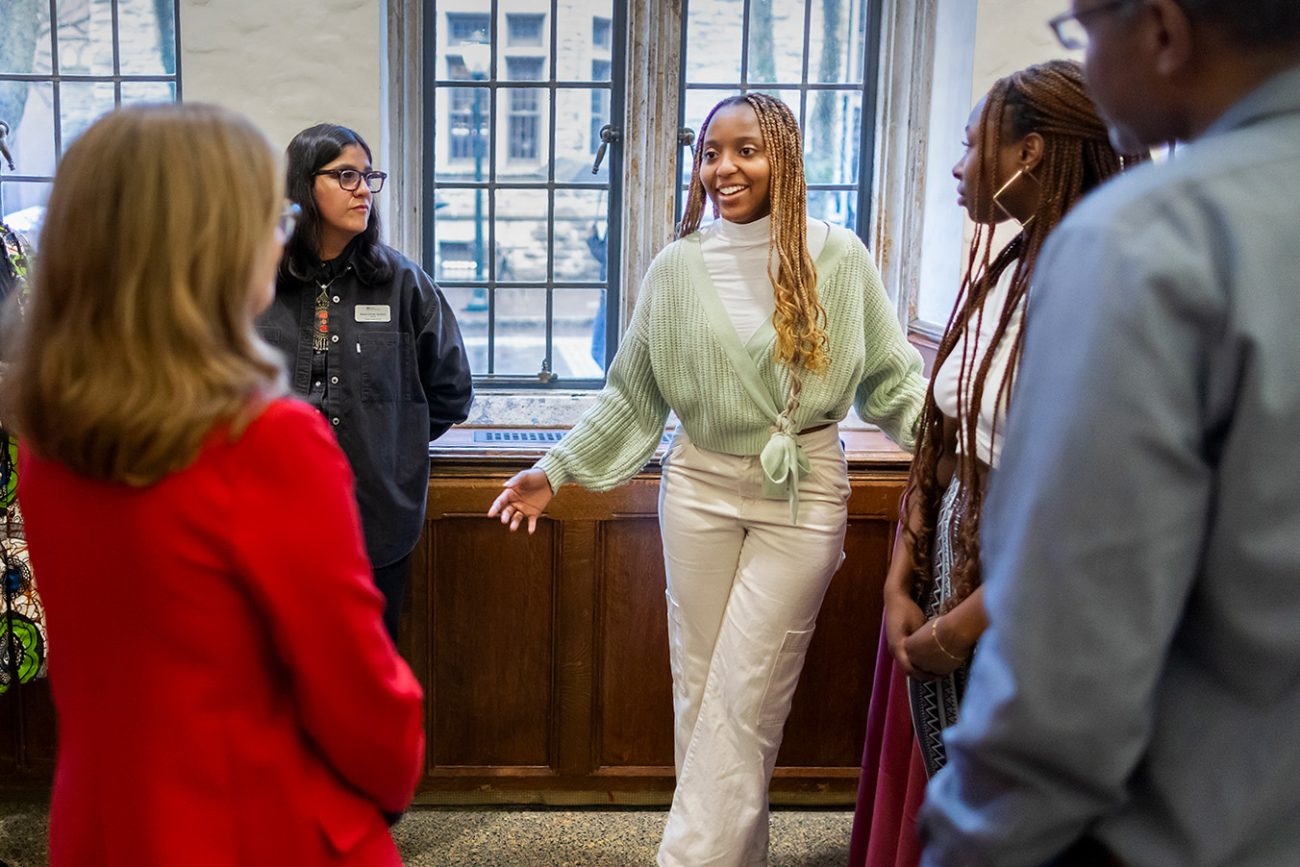
Peterson created the key that provides information about each figure pictured in the mural. “[The mural] celebrates Black history, and every day at Makuu my job is to elevate our Black students,” says Peterson. “We want to share their stories, showcase their excellence in academics, the arts, social impact, and athletics. Our students are shining stars, but we also want to acknowledge the struggle, the culture, and the lifestyle of Black students at Penn.”
Beyond Makuu, the ARCH has many purposes for students. “We have four floors of opportunities for students to engage,” says Atkins. “The entire facility is available for students, and they certainly use it to its capacity.”
The mural will be temporary, but the University’s alumni community can support Penn’s cultural resource centers all year long. “Beyond Penn Spectrum, alumni can support any of Penn’s cultural resource centers by getting involved,” says Atkins. “Mentorship, offering potential internships and job opportunities, or sharing personal stories to mirror experiences our students are having are valuable and needed ways to help.”
Contact University Life via email or by phone at (215) 898-6081 to support Penn’s cultural resource centers.