
The Wallace-Kane Wetlands are nestled to the right of the entry gate at the Morris Arboretum & Gardens in Northwest Philadelphia.

Pure Nature
The Wallace-Kane Wetlands at the Morris Arboretum & Gardens is a splendid sanctuary
Published: July 6, 2023
Easy to miss, the area encompasses nearly 35 acres of verdant habitat. Native swamp rose mallow (hibiscus) attract wild hibiscus bees; the cutleaf coneflower’s bright yellow petals invite butterflies to the meadow; sycamore, native shrubs and trees provide a fertile environment for foxes, woodchucks, eastern painted turtles, and coyotes. A birder’s delight, this area is one of Philadelphia’s hotspots for great blue herons, Baltimore orioles, wood ducks, hawks, woodpeckers, warblers, owls, and hundreds of other species.
Enjoy the sounds of a peaceful summer day at the Morris Arboretum & Gardens.
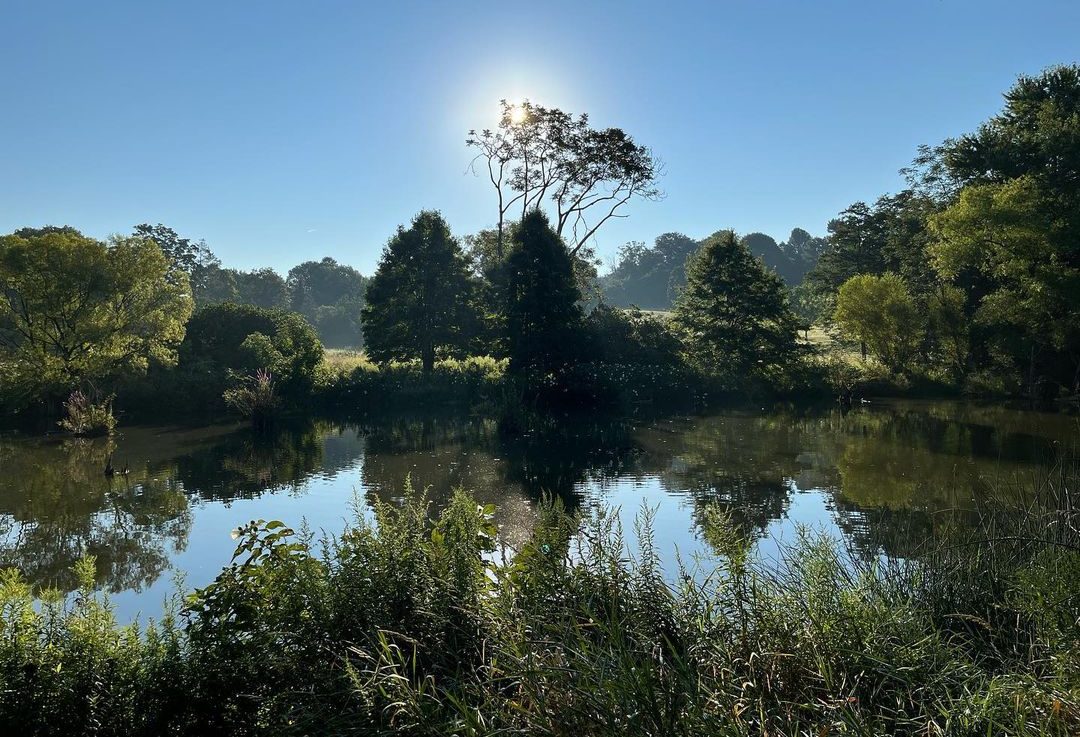
More than 20 years ago, this area was constructed as a demonstration wetland. Today, the Wallace-Kane Wetlands are a critical part of the local ecosystem, reducing flooding and filtering water during heavy rain. Wetlands are transitional areas that are covered by water throughout the year. In 2018, a $1 million endowment from Martha Wallace, PAR’06, PAR’09, member of the Board of Advisors at the Morris, and her husband Ed Kane, C’71, PAR’06, PAR’09, helped to make it a thriving example of a bionetwork that supports native plant life and year-round migratory bird populations. The Wallace-Kane family also provides ongoing gifts to support education and outreach efforts.
Managing the Wallace-Kane Wetlands is the responsibility of Ryan Drake, the McCausland Natural Areas Manager. Drake’s background is in ecological horticulture—the science and art of growing plants that enhance the surrounding environment.
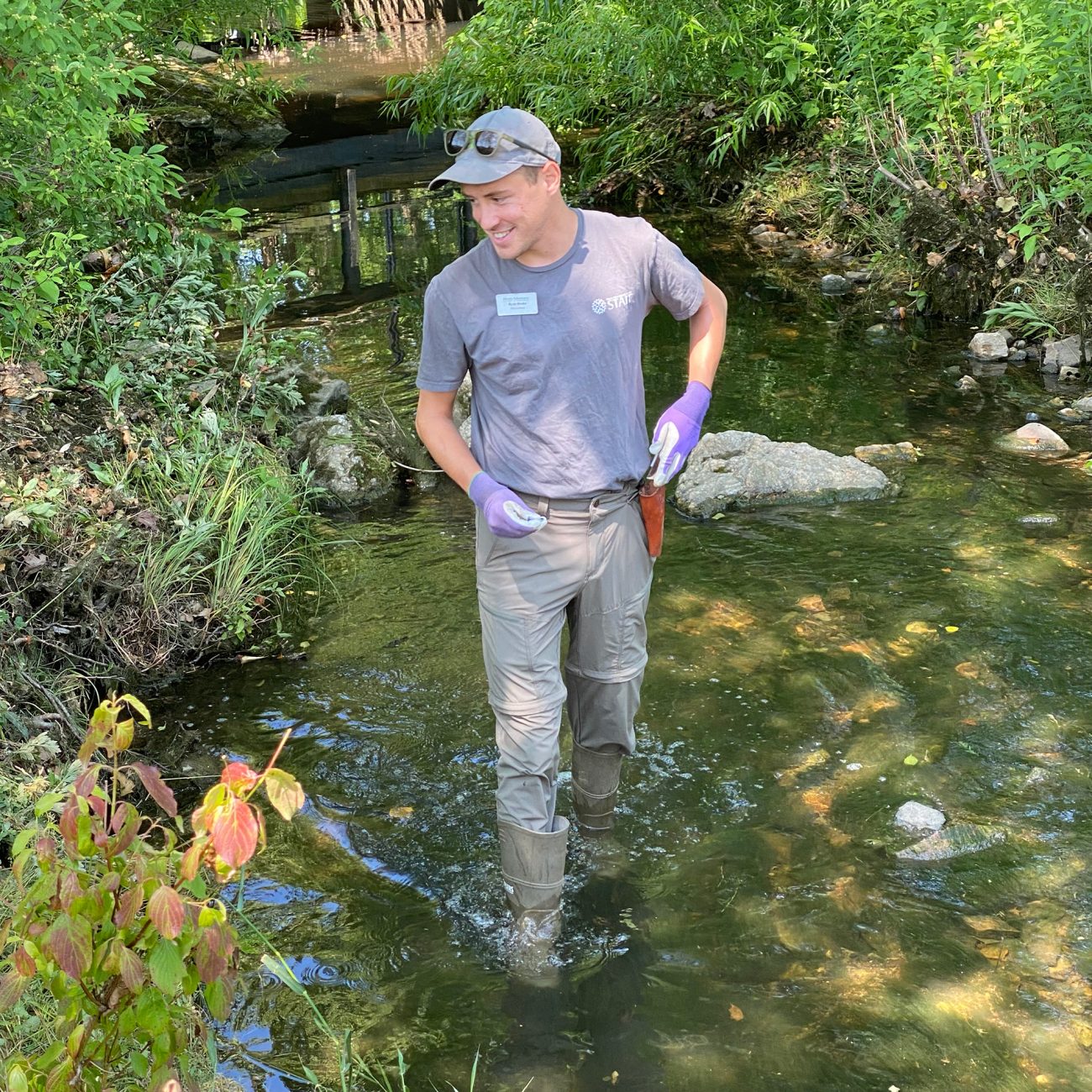
“So much of what I do is repairing areas, removing invasive species, and adding native plants,” says Drake. “Visitors may not necessarily notice, but this area is intentionally managed and curated.” He also oversees a robust group of volunteers, who help with land management and care of the natural areas at the Morris. “Our volunteers have a passion for horticulture and working outdoors that’s inspiring,” he says.
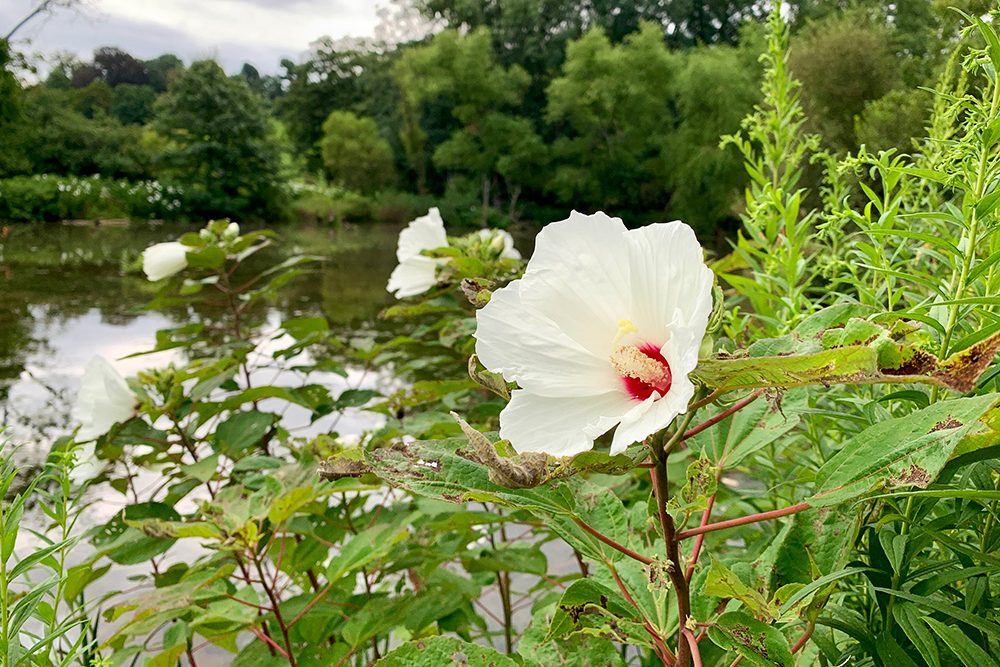
The Natural Areas at the Morris is also home to many species of wild bees. “As we get into summer, we’re trying to collect as many bee specimens as we can,” says Drake. In the past year, Drake and his team have been participating in the Pennsylvania Bee Monitoring Program. They are helping to populate a physical collection of wild bee specimens that will reveal what bees live in the state and encourage the stewardship of natural lands that are designed for thriving bee populations. “In our wetlands, plants like native loosestrife attract oil bees. Pussy willows were in bloom earlier, which appeal to early season bees, so I’m keeping an eye on certain plants throughout the year. It’s all very exciting.”
The Wallace-Kane Wetlands are idyllic in any season. On a bright June day, bullfrogs croaked in the undergrowth that surrounded the pond, providing a lazy soundtrack for the turtles sunning on fallen tree limbs. “The Natural Areas is where nature is happening spontaneously,” says Bryan Thompson-Nowak, Director of Education at the Morris Arboretum & Gardens. Visitors can take a self-guided tour of the wetlands, following the wide, mowed path, or join one of the many classes and tours that change seasonally.
On a recent visit to the Wallace-Kane Wetlands, Drake led visitors through knee-high grasses after a rainstorm to see how native plants are helping to prevent erosion along the banks of Paper Mill Run, a stream that runs through the Morris’s Natural Areas.

A group of visitors watches for birds in the Wallace-Kane Wetlands.

A firefly rests on a Aesculus parviflora, commonly called bottlebrush buckeye. Photo by Ryan Drake.

The historic stone pump house, built in 1908. Photo by Ryan Drake.

Carex crinita, commonly called fringed sedge, grows in the Wallace-Kane Wetlands. Photo by Ryan Drake.

A staff member works on pinning and cataloging specimens of native bees. Photo by Ryan Drake.
The Morris offers the Wetlands and Natural Areas Tour to school groups. Bus and admission costs are complimentary, funded by philanthropy. “These tours are geared towards kids and highlight areas of the garden they don’t usually see. Future funding could help make our natural lands even more accessible,” says Thompson-Nowak.
Support Natural Areas at the Morris
Header photo by Ryan Drake.



