Historically, incarcerated Delawarians have been able to cast their votes via absentee ballots.

Placing Public Interest First
Cozen Family Voting Rights fellow Andrew Bernstein, L’23, is advancing the democratic process
Published: May 21, 2024
But in 2022, the State Supreme Court of Delaware called that ability into question. In a unanimous ruling, the Court found that the State Constitution only protects absentee ballots for those who cannot vote in person due to a public service or occupational requirement, disability, illness, vacation, or religious reason.
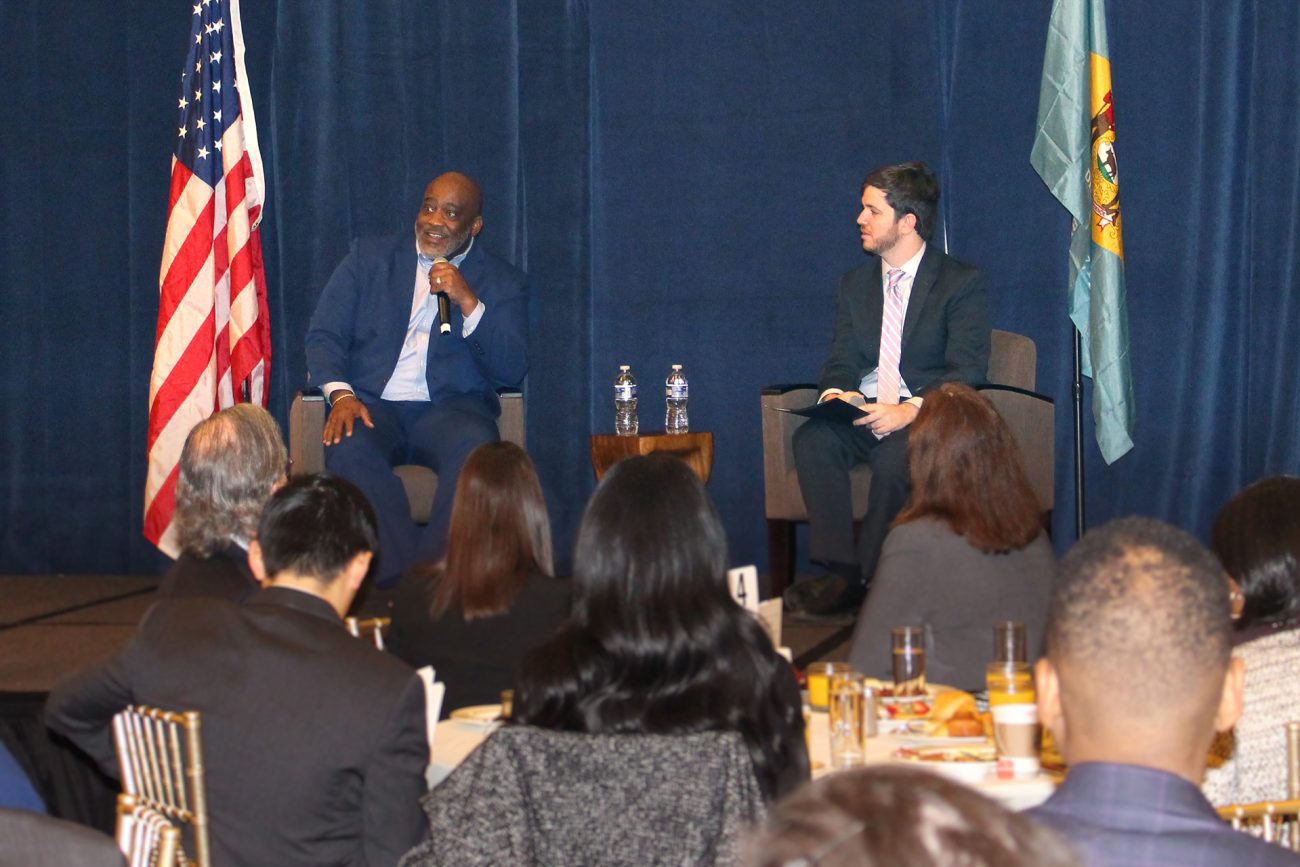
The ruling immediately raised a red flag for voting rights advocates and organizations, including the American Civil Liberties Union (ACLU) of Delaware. Andrew Bernstein, L’23, a fellow at the organization, puts it bluntly: “We believe, and have heard from our client, that the State’s response to the ruling prevents eligible incarcerated voters in Delaware from being able to cast a ballot because they are currently only offered absentee ballots.”
Making a Case, Building a Base
In response, Bernstein and his ACLU team filed for an injunction, requesting that in-person voting be a required provision and provided for eligible incarcerated voters in Delaware. It’s just one of many legal issues he’s been tackling over the past year as part of the Cozen Family Voting Rights Fellowship, established through a gift from Steve, C’62, L’64, and Sandy Cozen in 2021.
Other litigation includes an amicus brief in support of Delaware’s early and permanent absentee voting laws. Under the latter, certain eligible voters—those with disabilities, for example—aren’t required to apply each year for their absentee ballot. Both laws expand voting access for marginalized communities and have the support of voting rights advocates across the state.
“Traditionally, a legal fellow would probably be very focused on the litigation only,” reflects Bernstein. “But because the Cozen Fellowship is specifically for democracy-oriented issues, and because litigation doesn’t fill up all of my time, it has allowed me to venture into work like coalition and campaign building, which has been really wonderful.”
Sandy and I are committed to supporting Penn Carey Law students working to uphold and advance the right to vote in communities across America so that they have meaningful opportunities to contribute their voices to a truly representational democratic process.”Steve Cozen, C’61, L’64
As part of the Fellowship’s purview, Bernstein also convenes the Delaware Voting Rights Coalition, which brings together groups that support expanding voting rights—groups such as Common Cause Delaware, the League of Women Voters of Delaware, and the NAACP of Delaware. “An important part of my Fellowship is building that network and making sure that that coalition is strong and prepared for all the work that has been required and will be required going forward.”
Bernstein isn’t the only person partnering with the ACLU as part of the Cozen Fellowship. Victoria Ochoa, L’22, is working alongside the ACLU National Voting Rights Project ahead of this year’s elections. “I am motivated to work in this area long term, and I want to be excellent—for both my clients and my community,” says Ochoa, who is providing know-your-rights trainings, advocating for policies promoting equal access to the polls, and supporting ongoing voting-rights litigation ahead of the 2024 elections. “These experiences have cemented my love for civil rights litigation, particularly voting rights.”
On the Docket
The Cozen Fellowship provides support for two years; halfway through his fellowship period, Bernstein is eagerly awaiting a ruling on the preliminary injunction in the prison voting lawsuit while preparing an upcoming campaign to amend Delaware’s Constitution. Along with the broader coalition, the ACLU is seeking no-excuse vote by mail, early in-person voting, same-day voter registration, and reforms that would limit felony disenfranchisement to the duration of an individual’s sentence.
For future eligible voters, these initiatives could mean the difference between a democratic voice and disenfranchisement; for the moment, engaging the wheels of justice is enough to keep Bernstein busy.