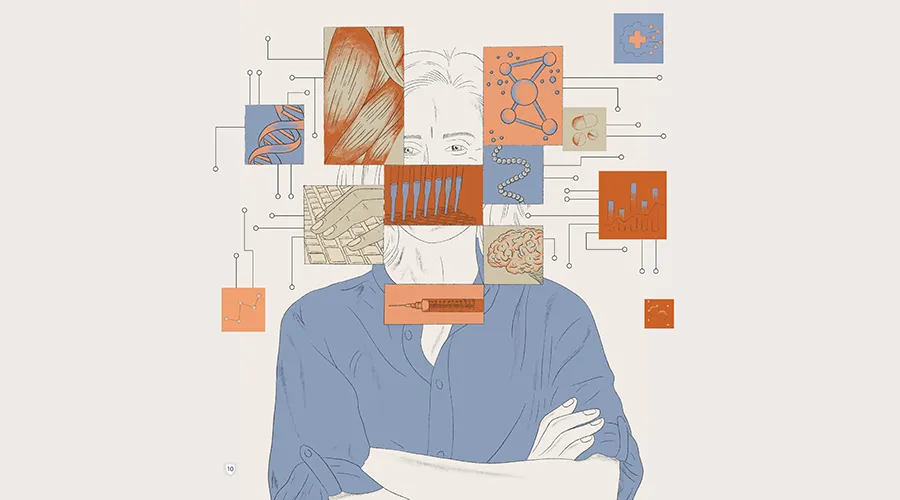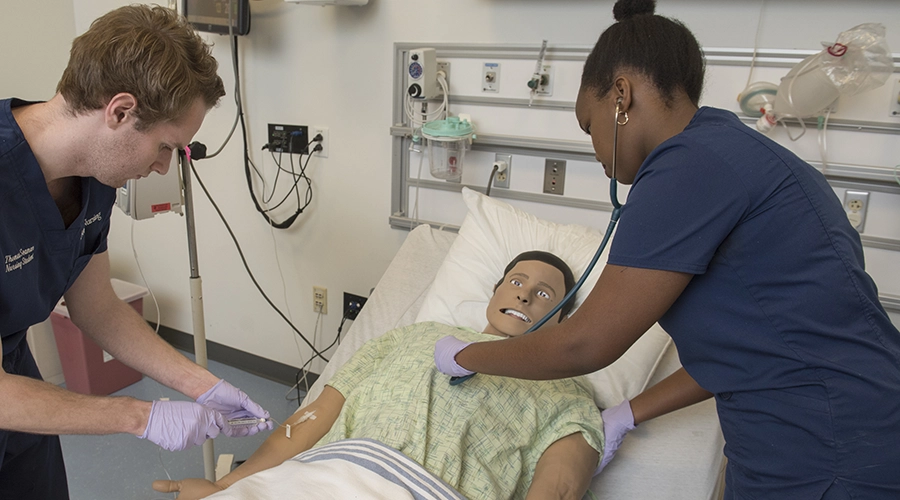
On February 11, more than 40 alumni and friends gathered in the New York office of Kirkland & Ellis LLP to learn how Penn Nursing is advancing innovation within its curriculum and in health care systems near and far.
“Innovation is central to nursing education, research, and practice,” said Margaret Bond Simon Dean of Nursing Toni Villarruel. “We are the masters of the workaround. Fostering innovative thinking is critical to how we’re educating the next generations of nurses.”
The night gave attendees the opportunity to learn about several projects driven by nurses that are sparking innovation in health care delivery.
When you think about health and health care, every product and process that touches a patient goes through a nurse. So we should be at the table when people are designing solutions to health and health care issues.”Dean Toni Villarruel
Delivering Innovation
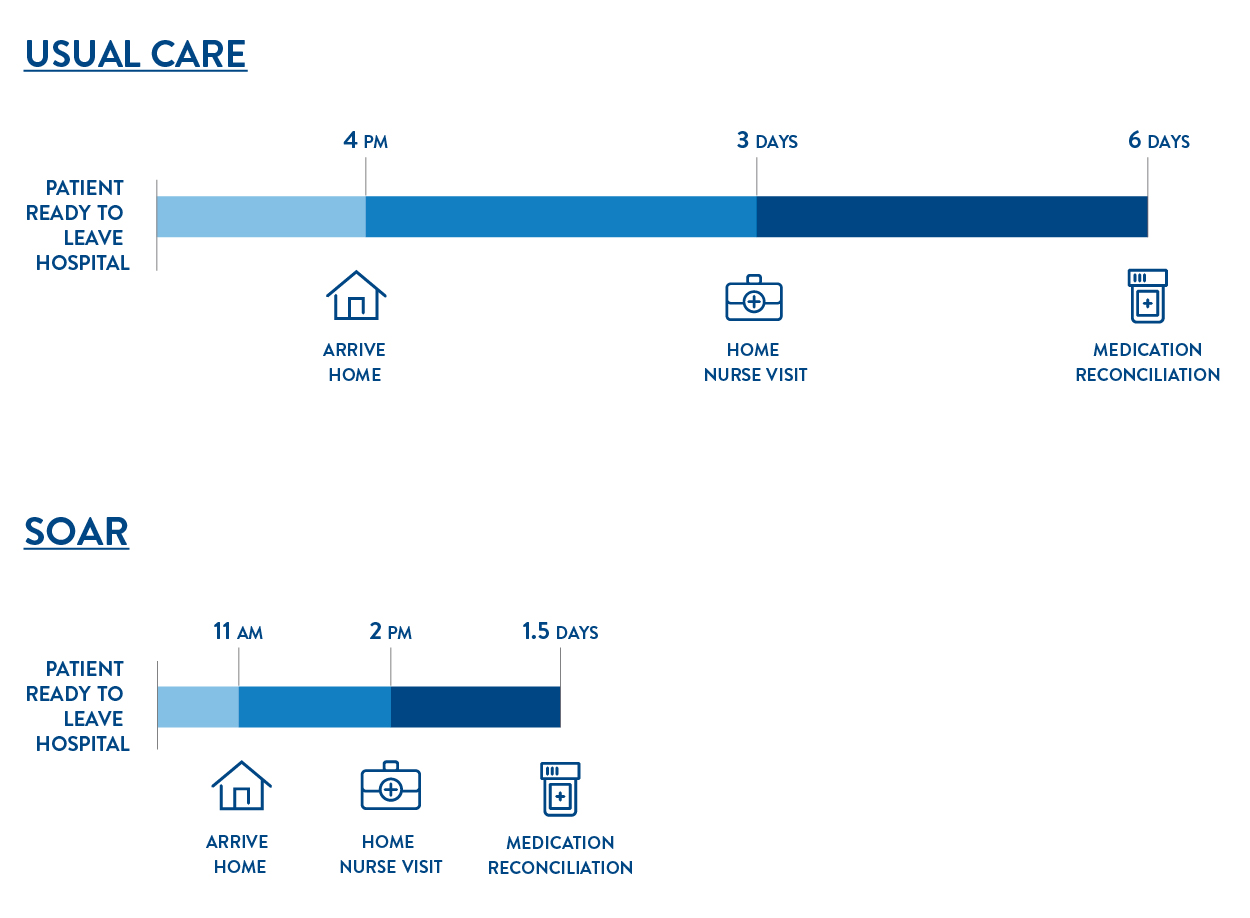
David Asch, GM’87, WG’89, Executive Director of the Penn Medicine Center for Health Care Innovation (CHCI), described the integral role nurses play in developing projects to enhance health care delivery and improve patient outcomes. Examples include SOAR (Supporting Older Adults at Risk), led by Rebecca Trotta, Director of Nursing Research and Science for the Health System, and Penn Cavalry, which reduces frequent hospitalizations among patients with chronic obstructive pulmonary disease, or COPD, by mobilizing nurses to provide home care.
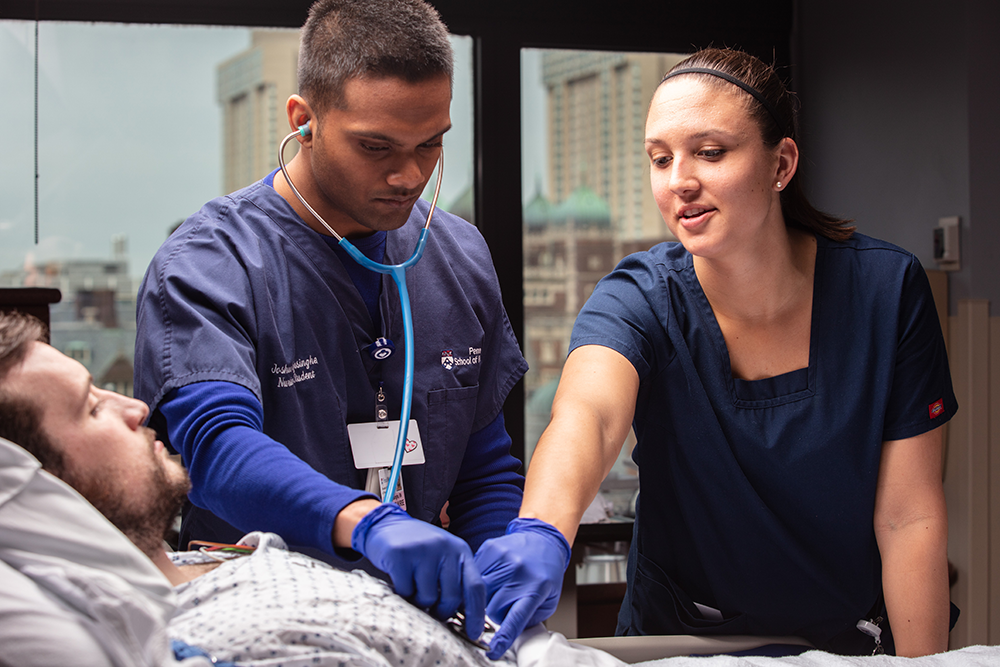
The partnership between Penn Nursing and Penn Medicine enables nursing students and faculty to work directly with designers, developers, and innovation specialists from the CHCI. Penn Nursing Innovation Fellows learn disciplined techniques for testing potentially value-producing ideas faster, less expensively, and more reliably. These skills will enable them to drive change in health care within Penn Medicine and at the local, state, and national levels.
J. Margo Brooks Carthon, Gr’08, Penn Nursing’s second Innovation Fellow, and Emilia J. Flores, Nu’14, GrN’17, a former Hillman Scholar in Nursing Innovation, followed Asch to describe how their experiences at the CHCI helped them devise novel health delivery solutions.
How to THRIVE
Brooks Carthon, Associate Professor of Nursing, talked about how she approached the issue of health care gaps for patients with low material resources or who come from a disadvantaged background.
“These are patients who often have multiple chronic illnesses and lower health literacy,” Brooks Carthon said. “As a result, they tend to do poorly during and following a hospitalization. My research has focused on optimizing nursing care delivery for these patients.”
Brooks Carthon seized the opportunity to put her innovation training to work in designing a solution. “Twice a month,” she said, “our interdisciplinary work-group would bring together a cross-section of health care system physicians, nurses, social workers, and case managers, as well as providers in home care, to figure out how we could improve care outcomes.”
The result was THRIVE, a clinical pathway that provides personalized care coordination to reduce life-threatening outcomes and high hospitalization rates for patients from low socioeconomic backgrounds. For instance, to address the fact that many of these patients do not have a primary care physician, attending hospitalists will continue to supervise care for patients in the THRIVE program for up to a month after discharge, while nurses help them find a primary care physician.
Engineering Solutions
Flores directs the clinical pathways program at the Center for Evidence-Based Practice within the University of Pennsylvania Health System. She detailed her experience transitioning from engineering into nursing. “Nursing has a lot in common with engineering,” she said. “Nurses are very process-oriented and results-driven. It takes a lot of creativity to take care of patients.”
With a background in industrial engineering and computer science, Flores focuses on translating evidence into clinical practice through clinical decision support tools, including electronic health records, and through the development of evidence-based clinical pathways.
Flores noted that Penn Nursing’s emphasis on innovation in the curriculum is meaningful because of the rigor of traditional nursing education. “There’s so much to learn with regards to disease processes and patient care —which are two separate topics,” she said, “that there’s often little time for curiosity and exploration, or for developing skills that are necessary to tackle some of the hard problems that we see in health care today.”
The Time is Now
Flores and Brooks Carthon both noted that traditional research is still vital, but today’s health care challenges require an additional set of tools. Innovation methods are important for exploring the feasibility of different solutions and piloting, which is critical preparation for traditional research methods and grants. Funding through fellowships and Penn Nursing’s Incubator Fund, as well as partnerships forged between Nursing and Penn Medicine, mean initiatives can be accelerated and tested much faster.
“Patients who are seriously ill or have numerous social risk factors don’t have time to spare as we go through business as usual,” Brooks Carthon said.
“I’m happy to see more investment in innovation at Penn Nursing,” Flores said. “Right now, there’s an innovation course as well as simulation models that enable students to refine their caregiving skills before they begin to practice. Being able to expose more students to these kinds of opportunities is very exciting.”
Penn Nursing’s leaders agree. “The Campaign really shows how core innovation is to our ethos going forward,” said Seth Ginns, C’00, a member of Penn Nursing’s Board of Overseers. “We want innovation to be front and center when people think about the Penn School of Nursing.”
The panel gave alumni and friends a chance to discover something new about a place they already held dear—and reasons to be excited for the future.
“I came here tonight because I wanted to see what the evolution of care was like,” said Carla Cohen, Nu’75, GNu’77. “What impresses me most is how coordinated the care is at Penn. It’s a team approach, and it really assures me that older adults like me are going to be taken care of.”
Events like this allow an exchange of ideas, both within and outside the boundaries of our community. It’s great to come out and see the energy and the breadth of our community.“Seth Ginns, C’00
#1 for the World
Fellowships that encourage innovative thinking set Brooks Carthon and Flores on paths to create game-changing solutions in nursing care delivery. Continued investments to cultivate a culture of innovation—such as the recent appointment of Marion Leary as the inaugural Director of Innovation in the Office of Nursing Research—are helping Dean Villarruel execute her vision for Penn Nursing. “Penn Nursing is the number 1 nursing school in the world in QS rankings,” Dean Villarruel said. “But more important for me is that we are number 1 for the world.”
That includes a focus on increasing support for fellowships, programs, and spaces where transformative research is pursued to improve outcomes for all populations—especially the most vulnerable. Visit the Innovating for Life and Living Campaign website to find out how Penn Nursing is driving the future of health care, and how you can contribute to the evolution of nursing education, research, and practice.
Innovating for Life and Living
Marion Leary named Director of Innovation