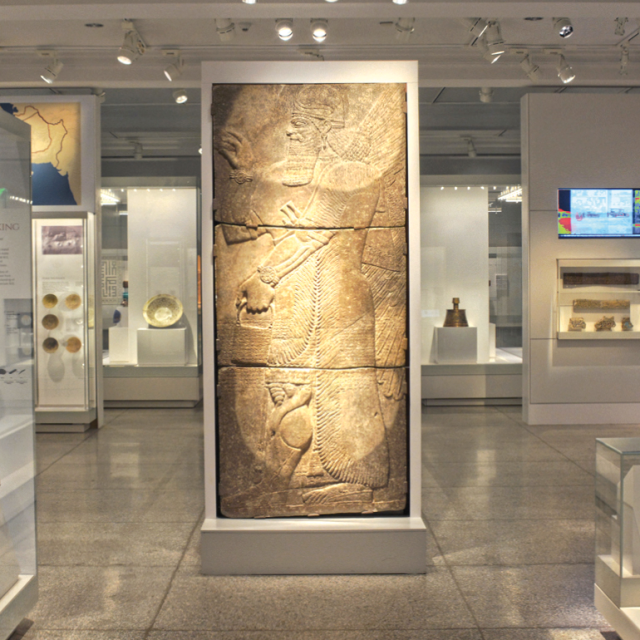
Visitors who cross the Penn Museum’s threshold to embark on global journeys across time and space can now select a new destination: the newly renovated Middle East Galleries showcase more than 130 years of literally groundbreaking exploration and scholarship.
This world-renowned collection of extraordinary scope—much of which has never been on public view—is already thrilling visitors, young and old, from around the region and all over the world.
Thanks to the generosity of Penn donors and the skill and expertise of Museum scholars and conservators, more than 1,200 precious ancient objects are on display in the new Galleries, tripling the number of artifacts available to the public. From the crown jewels of the Sumerian Queen Puabi, to the priceless “Ram in the Thicket” statuette, widely regarded as a masterpiece of Mesopotamian art, the Galleries are peerless sources of universal understanding, knowledge, and wonder. The Middle East Galleries are the first of several to be renovated as part of the Museum’s Building Transformation project.
[tabs] [tab title=”Abdulhadi Al-Karfawi”]Abdulhadi Al-Karfawi | Global Guide*, Middle East Galleries

“Visiting this part of the Museum makes me feel like I’m still living in Iraq, close to my personal history and heritage.
“The exhibition reminds me of my family traditions. I come from a large family—twelve sisters and three brothers. We would get together on the weekends to share our concerns, problems, laughter, and recent events over meals. When my family came together, we shared big meals out of a very large bowl. The dishes on display are so lovely, and they remind me of my sisters serving food.”
*Through the Global Guides Program, funded by a grant from the Barra Foundation, the Museum hires immigrants and refugees to offer gallery tours. They share historical information and interpret objects from their countries of origin, using stories from their own lives to add context. Abdulhadi Al-Karfawi recently moved to the United States after working for the United Nations mission in Iraq. His love of history and experience visiting archaeological sites in Iraq inspired him to become a Global Guide.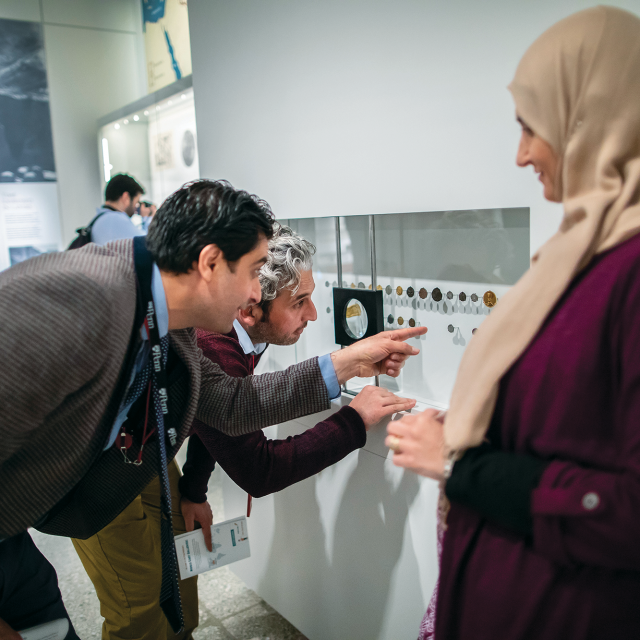
[/tab]
[tab title=”Sarah Folger”]
Sarah Folger | Unpacking the Past Educator, Penn Museum Learning Programs
“In the Museum’s ‘We Are What We Wear’ workshop, part of our Unpacking the Past program, middle school students learn how actual archaeologists might come across a skeleton with grave goods in an ancient tomb. Then they become detectives and conservators, and work ‘in the field,’ recreating ancient jewelry based on their own reasoning. The students quickly become skilled using the essential tools of asking questions and making inferences as they reassemble jewelry fragments made of cardboard, beads, and tubing that they find on a crushed ‘skull.’ As they exercise their creativity, they also learn that there is no ‘right’ answer in archaeology.
“So when the students finally enter the second room of the Middle East Galleries and see the Queen Puabi display, there’s always a big ‘Wow!’ Based on the hands-on experience they’ve just had, they understand the labor and knowledge it takes to recreate the past.”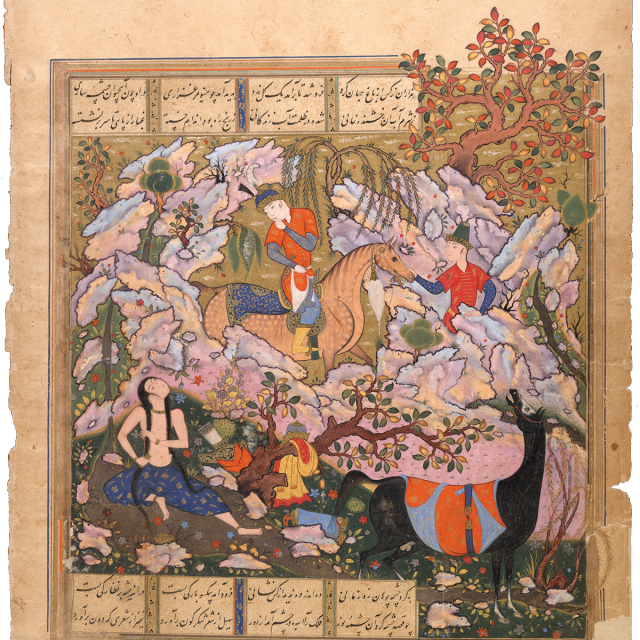
Holly Pittman, Ph.D. | Bok Family Professor in The Humanities and Curator, Near East Section
“These new galleries hold great significance for scholarship. Every room is a rich visualization of the gradual social processes that, over 7,000 years, created today’s urban, interconnected world. Themes of material technology interweave with intellectual achievements, such as the invention of writing and the institutionalization of religion. Intimate details of the lives of regular citizens are captured through objects placed in context. The spectacular wealth interred in the Royal Cemetery of Ur points to the emergence and maintenance of political institutions.
“Scholars in a wide range of disciplines can draw on the wealth of content in these Galleries to reflect on the long arc of change or to consider individual moments along the journey of human development. The Middle East Galleries open a window into the virtually unlimited opportunities that Penn Museum offers for the exploration of the human adventure.”