
On October 30, the greatly anticipated Pavilion at the Hospital of the University of Pennsylvania opened its doors to its first patients.

Grand Opening, Greater Impact
The Penn Medicine Pavilion paves the way for the future of health care
Published: November 19, 2021
The 1.5-million square foot facility expands Penn Medicine’s positive impact on the health of the region and will serve as a global model for personalized care and integrated medicine.
Services moving to the Pavilion include cardiology and cardiac surgery, oncology, neurology and neurosurgery, transplant, and a two-floor emergency department. The transition frees up space in the original HUP building for expanding remaining services and for patient rooms to be updated and become singles.
These photos offer a glimpse of what goes into readying the hospital of the future for our patients of today.
Reimagined Patient Care
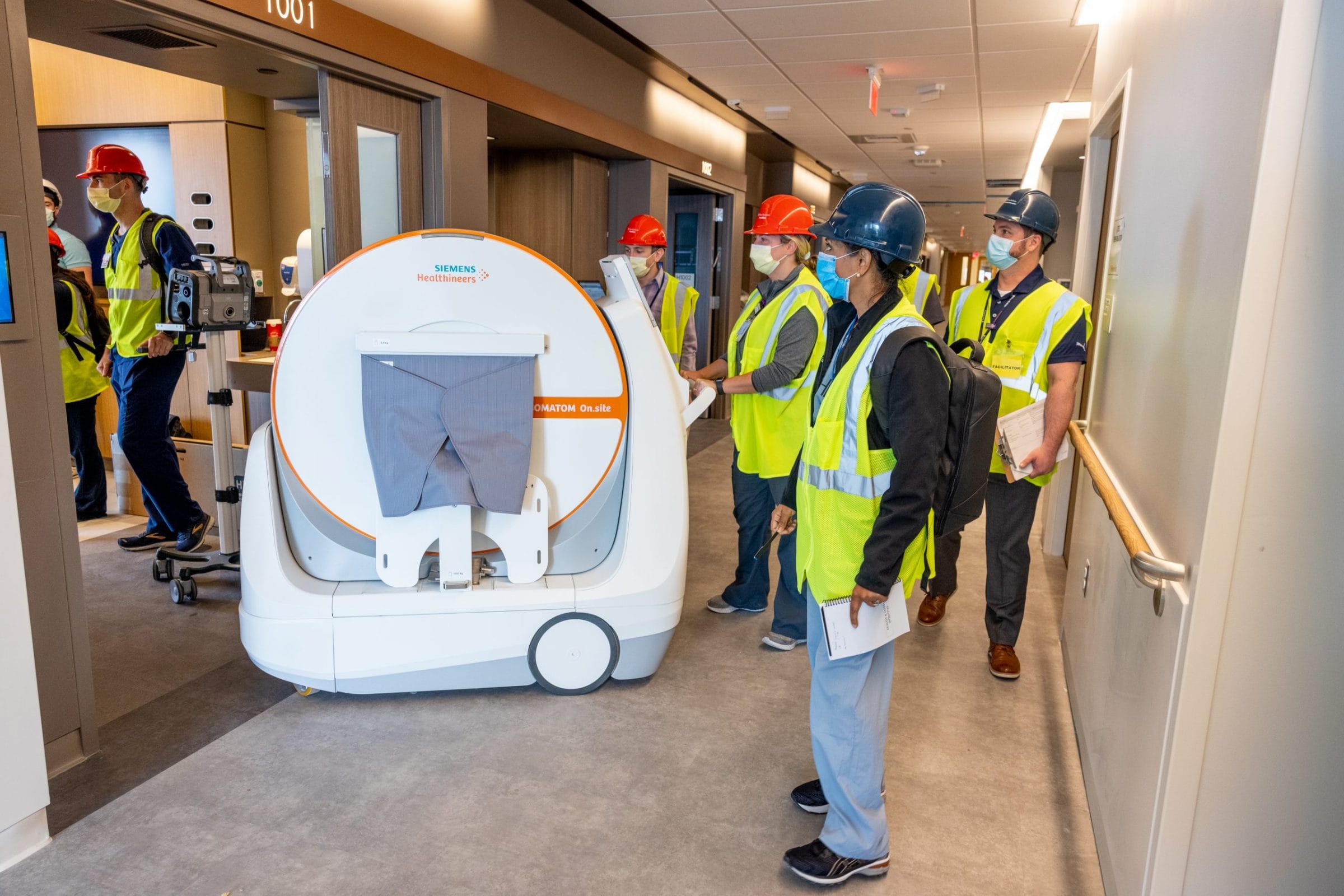
Hundreds of staff took part in simulations and dress rehearsals to develop best practices for bringing patient-centered processes, like bedside imaging, from room to room.

Bedside imaging adds to patient well-being and improves infection control by limiting patient movement throughout the Pavilion, enabling them to remain in comfortable, hygienic surroundings while receiving essential medical care.

The 504 all-private rooms greeting the Pavilion’s first patients include family areas with a pull-out bed for overnight visits. These sections help nurses avoid needing to work around family members or having visitors feel like they are intruding on care. Every inpatient room is designed to also become part of an intensive care unit should the need arise—a need highlighted as the world continues to battle COVID-19. (Photography by Dan Schwalm © 2021 PennFIRST)
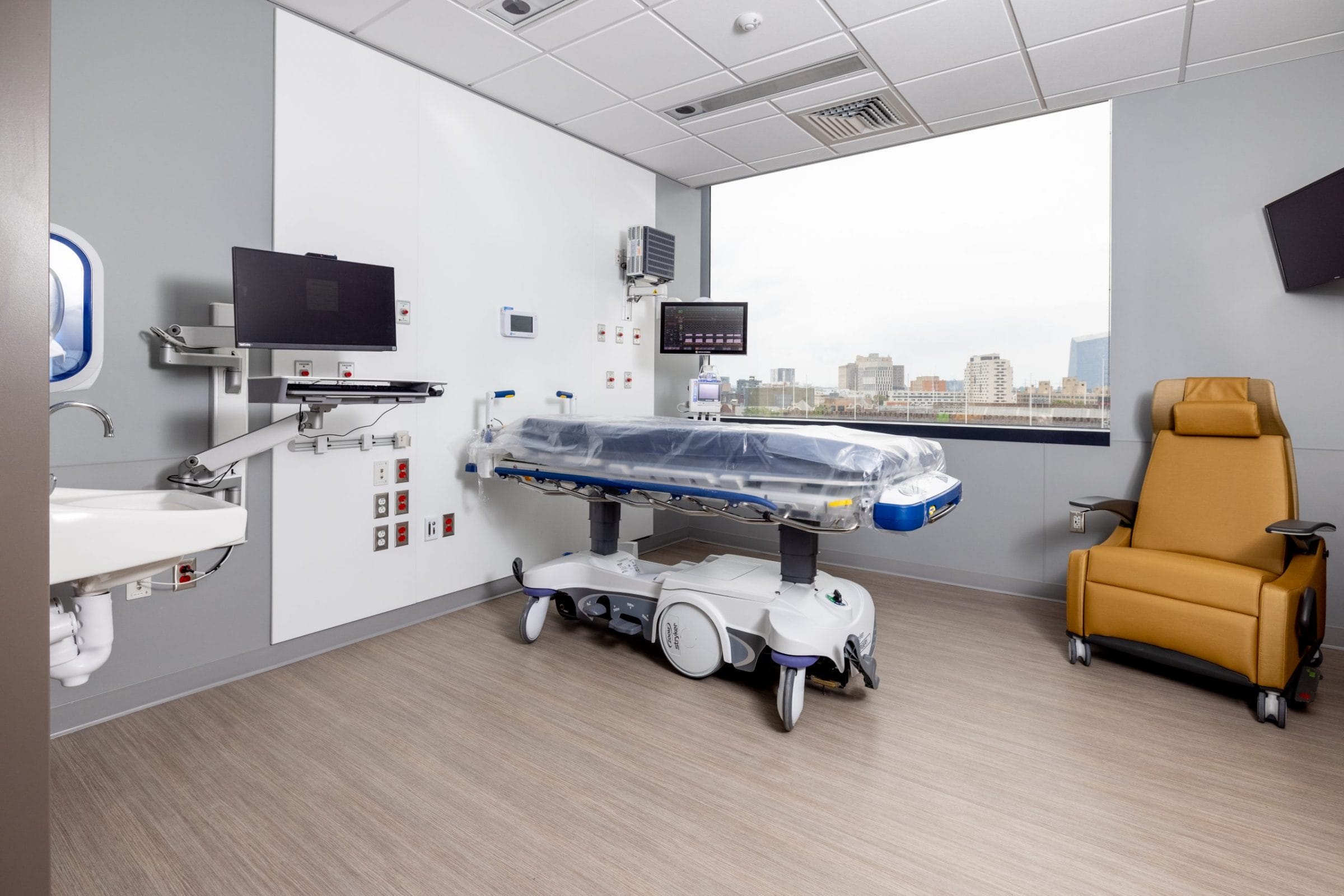
Perioperative care units also are built with families in mind, including plenty of space, large windows for natural light, and comfortable chairs for visitors. Located in the center of each perioperative floor, these rooms break from the model of patient bays, enabling privacy the patient as they recover or prepare for surgery.
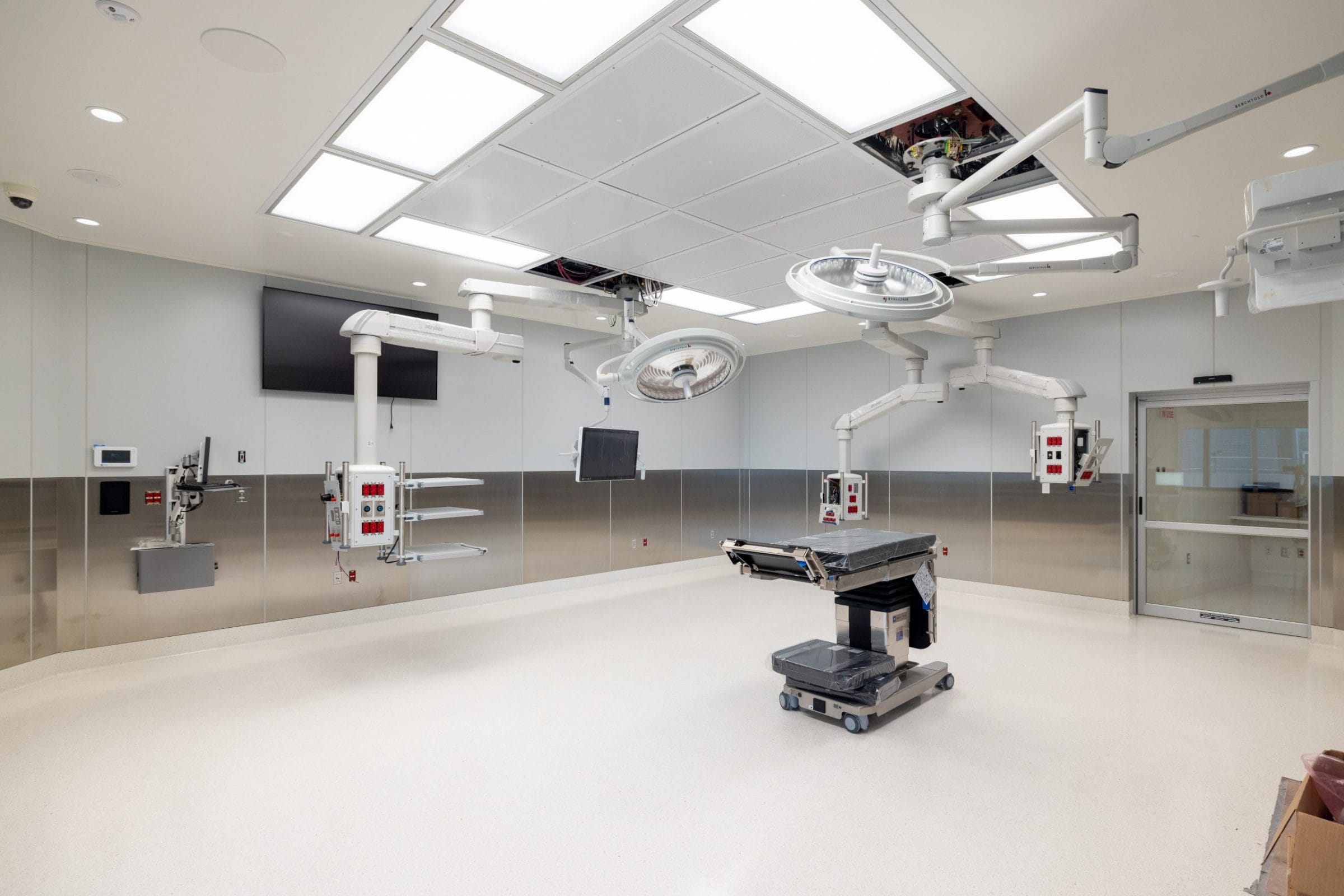
In the Pavilion’s 47 operating and interventional rooms, stainless steel modular walls and equipment mounted to the ceiling—rather than attached to the floor or wheeled into rooms—allow for superior infection control, enhanced mobility and working space for delicate procedures, and easily updatable technology.
Revolutionary Technology
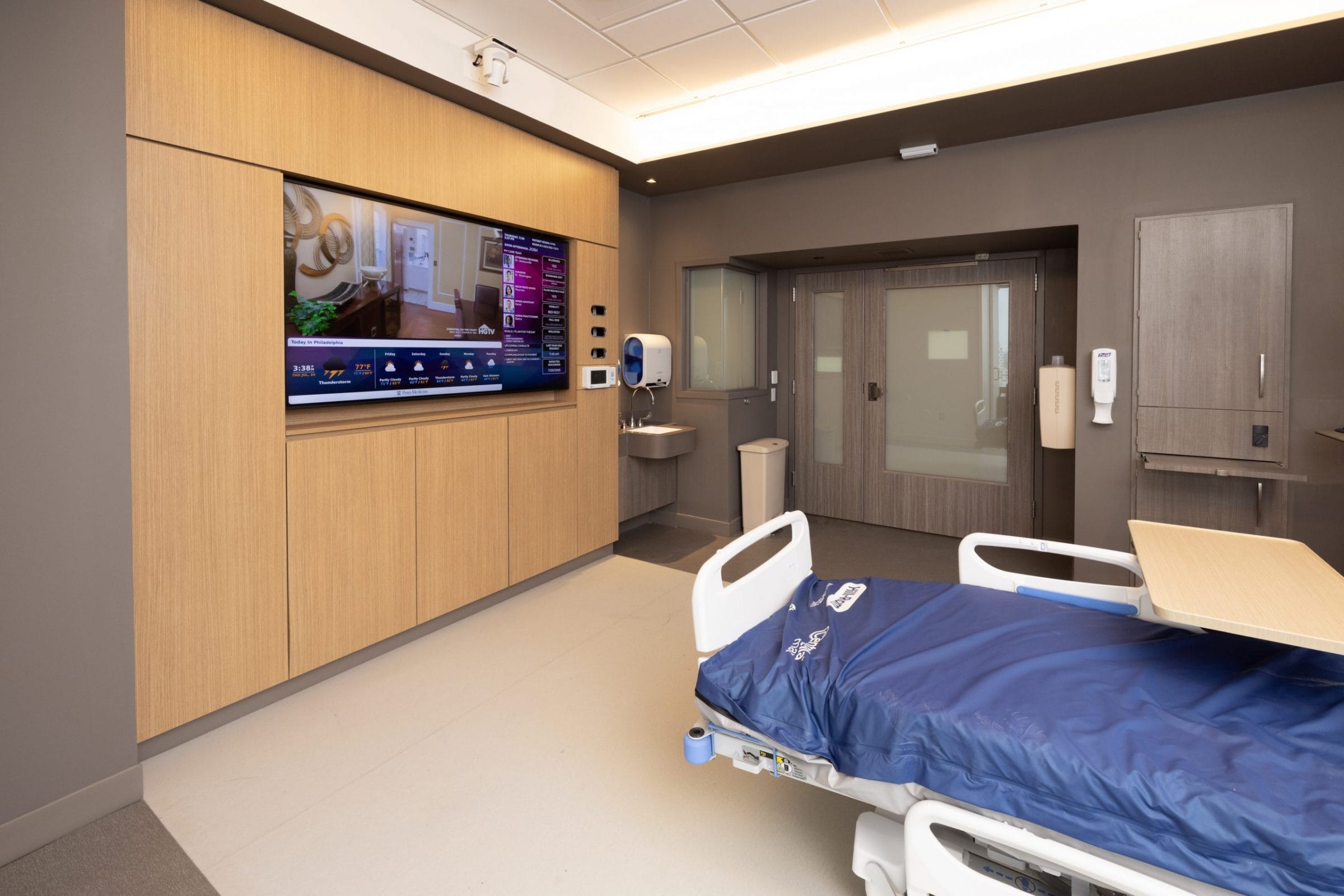
Each patient room is equipped with a 75-inch monitor, nicknamed IRIS. The technology, developed by Penn innovators, is aimed at enhancing the patient experience. In addition to television, the monitors display photos and names of caregivers who enter the room, a schedule of the day’s procedures, expected discharge date, and more vital details for the patient’s peace of mind.

Patients in the Pavilion may be provided a tablet, outfitted with an app that enables them to better engage with and understand their care; adjust their bed, window shades, temperature, or lighting; and activate the nurse call bell.

Sophisticated pharmacy services, including this robotic helper, are processed in off-stage areas. From common medications to personalized cell therapies developed on-site, patients are served with minimal disruption and maximum efficiency.
Creating Healing Environments

Uplifting artwork, including “Field and Sky,” a mural by Philadelphia artist Odili Donald Odita, underscores the role of creating peaceful environments for patients and families in order for recovery and healing to happen. “I wanted to create an exterior space within an interior—to give the idea of being portaled to the outside,” Odita said of his work.
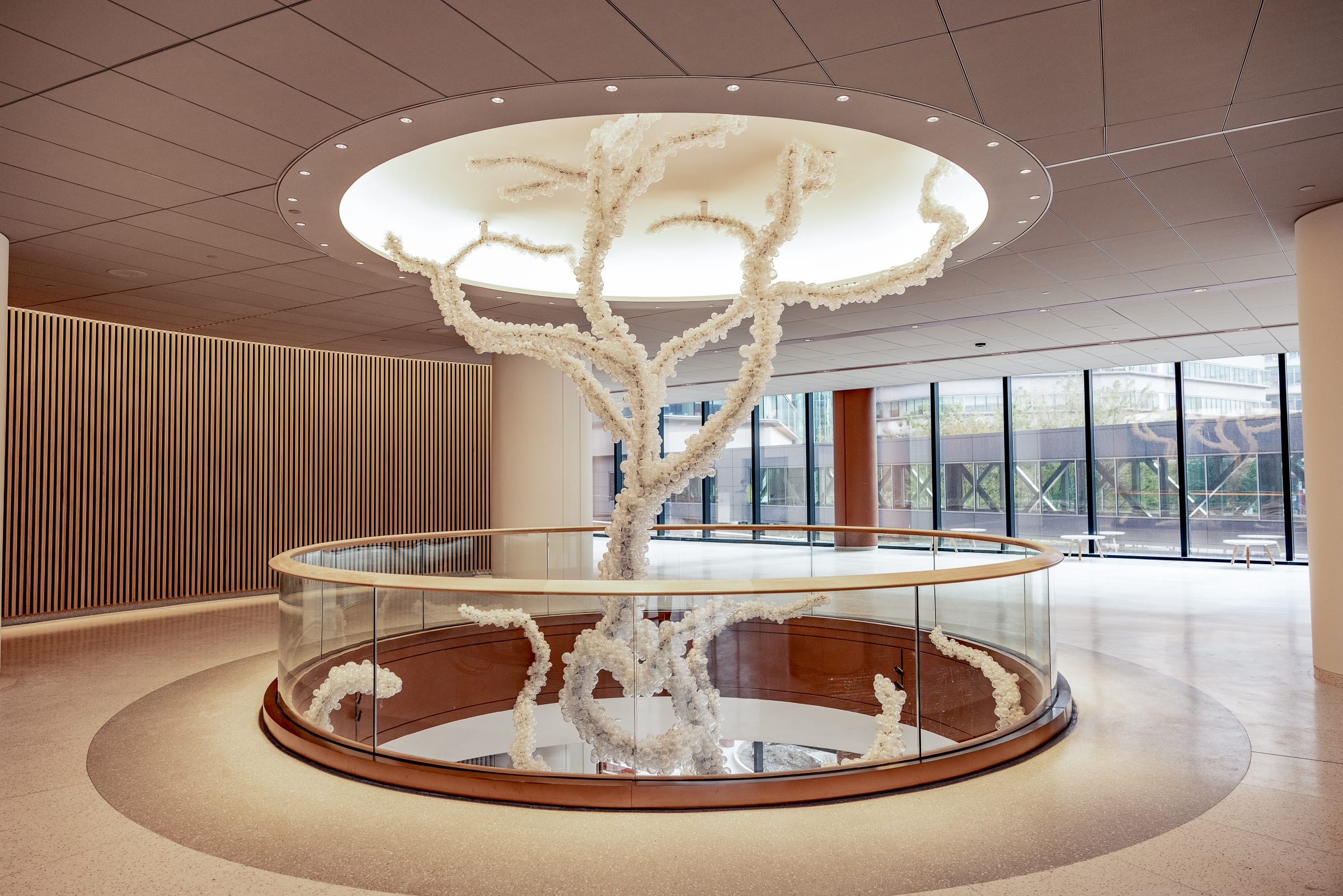
Rising from the ground to the second floor of the Pavilion, Maya Lin’s “Decoding the Tree of Life” sculpture melds medical science, nature, and art to promote a sense of peace and hope.

From break areas where staff can recharge to working spaces and conference rooms, donor support has been integral to building a space designed for highly engaged caregivers to perform high quality work.
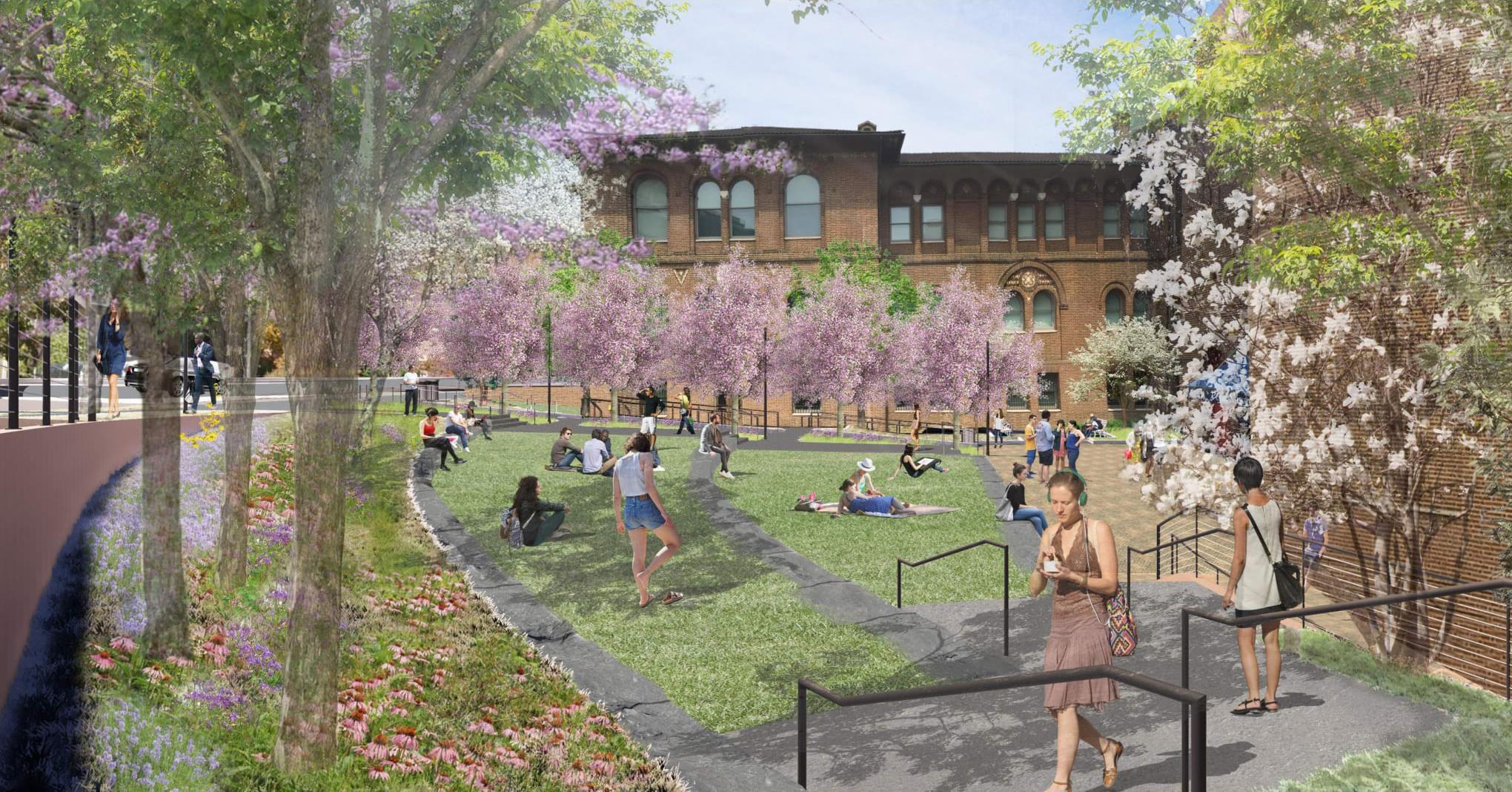
Environmental sustainability is top-of-mind when building a facility that implements energy-intensive, state-of-the-art health care technology. The Pavilion has received Gold LEED Certification thanks to an acre of greenery, green roofs, and an HVAC system that repurposes outside air, rain, and runoff water to maintain temperatures needed for patient comfort.
A variety of naming opportunities are still available to support state-of-the-art clinical areas and patient-centered programs that promote excellence, inclusion, and equity. To learn more about how you can help fuel the future of advanced care in serene surroundings at one of the most innovative hospitals in the world, please contact Kate Griffo, Chief Advancement Officer at kgriffo@upenn.edu.


