In November 2021, Penn announced a $750 million investment to advance pathbreaking contributions to innovative and impactful areas of medicine, public health, science, and technology.
Connecting the Dots
The Eidos LGBTQ+ Health Initiative connects innovators in LGBTQ+ health with Penn knowledge and resources
Published: August 14, 2023
José Bauermeister, Albert M. Greenfield Professor of Human Relations at Penn Nursing, saw an opportunity to address the overlooked area of LGBTQ+ health.
“By many metrics, and my own research on the stigma and discrimination that contribute to health risks faced by people who identify as LGBTQ+, there is a crucial lack of solutions that address risk reduction in an integrative, humanistic way,” Bauermeister says. “As I thought about what an academic research center should look like in the 21st century, I realized that Penn has an abundance of knowledge and talent that can advance social innovation.”
From this match of need and understanding, the Eidos LGBTQ+ Health Initiative was born. Its mission: to cultivate and engage leaders from community, academic, civic, and business spheres to create innovative health solutions for the LGBTQ+ community. “We want to demonstrate that we have the expertise, knowledge, and commitment to help advance their ventures or research,” says Bauermeister, who serves as Founding Faculty Director.

Research from the nonprofit organization Funders for LGBTQ+ Issues highlights the disparity in LGBTQ+-focused funding.
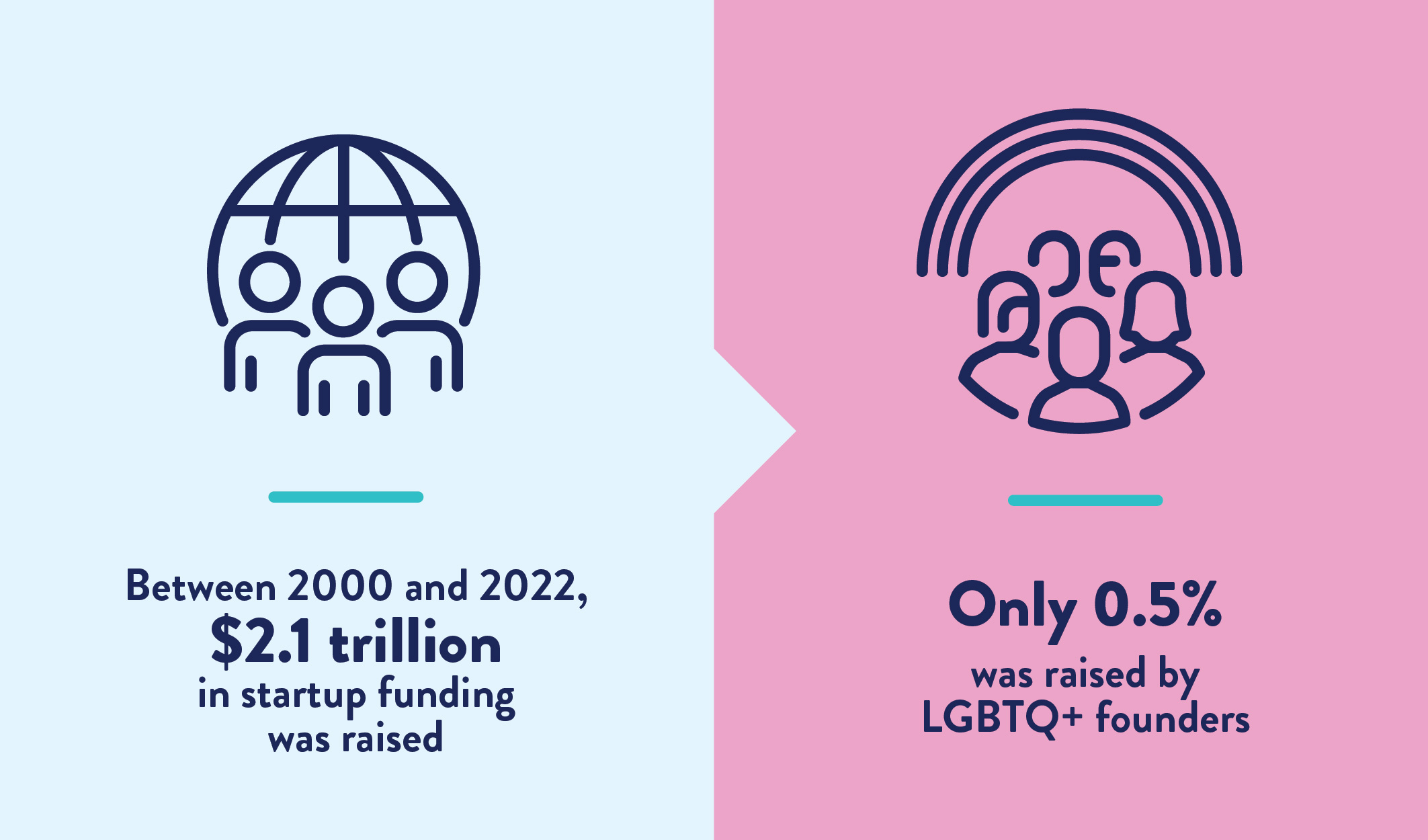
The nonprofit organization StartOut analyzed 142,000 founders and 95,000 high-growth companies in the U.S., revealing the lack of funding for startups by or serving people who identify as LGBTQ+.
Though based in Penn Nursing, Eidos aims to provide access to resources, research, and support from all of Penn’s 12 schools. “Penn has a unique set of minds to tackle these issues,” says Jessica Halem, Senior Director of the Eidos LGBTQ+ Health Initiative. “Startups focused on LGBTQ+ health can benefit from connections to legal scholars, communications scholars, engineers, designers, computer scientists, and businesspeople. We’re here to connect those dots.”
“Sometimes, we take for granted how much knowledge we have, and how Penn people can connect to solve a problem or help an entrepreneur launch a venture,” adds Bauermeister. “After word got out about Eidos, we had many faculty members contact us, eager to share their projects or connect us with students who wanted to work in this space.”

When Julia Votto, GEng’23, and her team in the Integrated Product Design program were deciding on a thesis project, they wanted to focus on health disparities in the LGBTQ+ community. After learning about Eidos from a newsletter during her internship with Johnson & Johnson, she contacted Eidos for a consultation. “We had a conversation with Jessica [Halem], and she gave us a wonderful presentation on the top 10 health disparities in the community,” Votto says. “The one that got our attention was blood pressure.”
Blood pressure checks are standard in health checkups, but some people who identify as LGBTQ+ may feel stigma about visiting a doctor’s office. Home care options can help people take charge of monitoring their health status. As Votto’s team performed research on available blood pressure cuffs, they discovered that there had been no significant innovations since their inception over 30 years ago. “It was astonishing, but also exciting,” she says. During their yearlong thesis project, Votto’s team regularly consulted with Eidos and eventually developed a prototype for Subtext, a home blood pressure testing cuff that updates traditional design for comfort, usability, and function.

An issue faced by one marginalized population can have ramifications for other underserved communities. While Subtext began by focusing on LGBTQ+ health, home testing also provides a solution for people of color and those living without access to health providers.
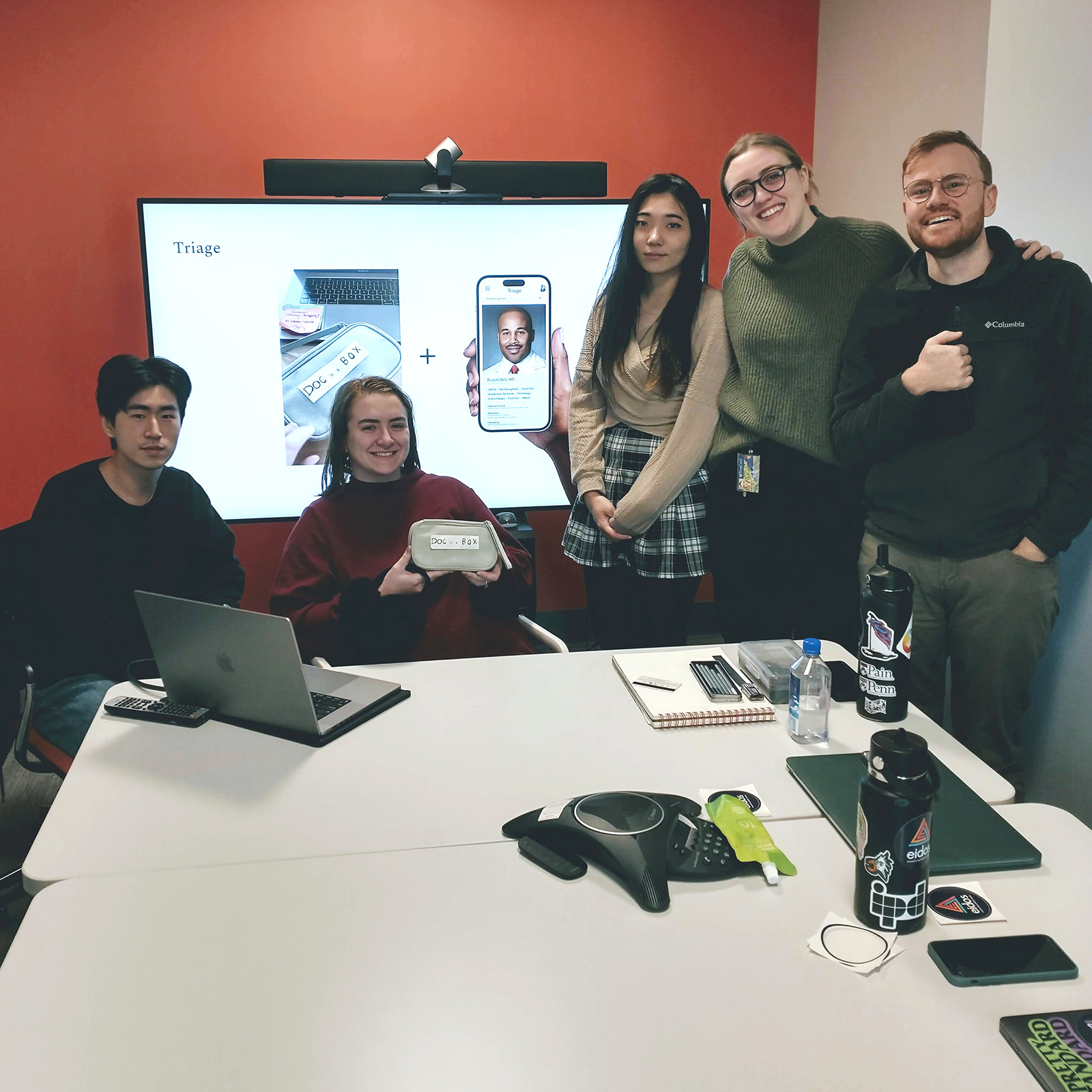
With guidance from Eidos, Votto’s team conducted 25 cardiologist and patient interviews, collected more than 120 patient stories, and held multiple user testing sessions to evaluate initial concepts. Above, the IPD thesis team participates in a co-design and prototyping session facilitated by James Wolfe and Kevin Schott from Eidos.
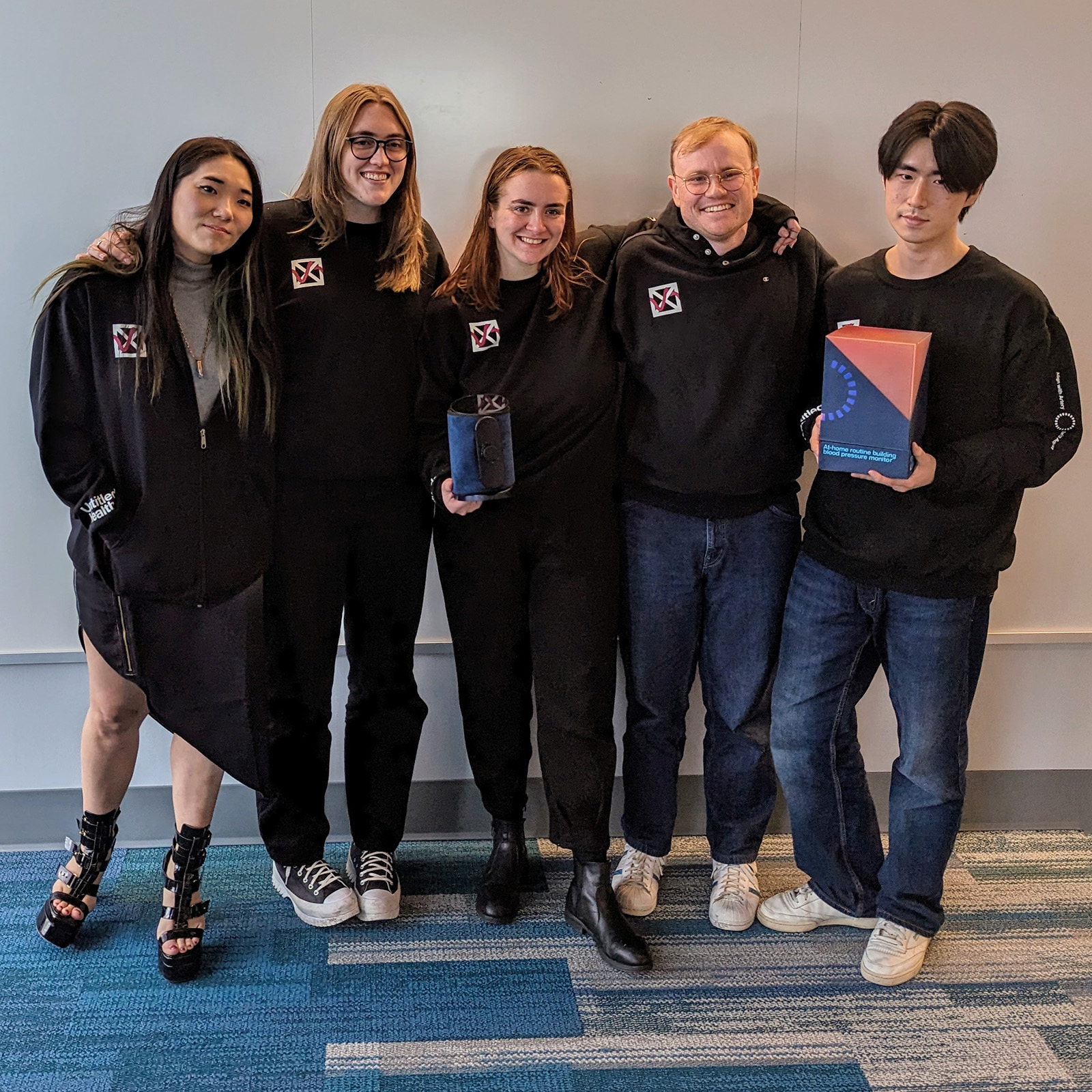
After their final presentation, Votto’s team posed with their final blood pressure cuff, charging dock, and packaging.
Another story that exemplifies the Eidos touch is TRACE, a social media app for transgender people and allies developed by Aydian Dowling. Gaining fame as a social media influencer and model, Dowling sought to create a way to both celebrate the gender transition and build community in a safe place. His three-person team had a prototype, but they needed additional help to bring the vision to fruition.
“We didn’t have access to people with PhDs, or people at Wharton,” Dowling says. “And when you’re an openly transgender person in a meeting with investors, you don’t know if it’s a safe or open space. Having that kind of anxiety can negatively affect your presentation. To be able to connect with like-minded folks who understand and advocate for what we’re trying to build has been a wonderful experience.”
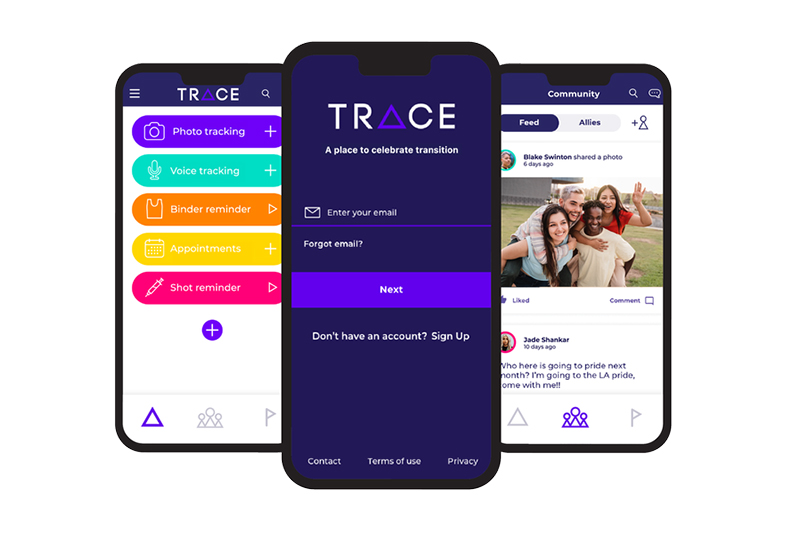
Through Eidos, the team behind TRACE, a social media app for transgender people and allies, was able to connect with Penn Carey Law for help building a terms and conditions policy, with Penn Engineering to conduct penetration tests to ensure site security, and with the Weitzman School of Design for consultation on user experience and user interface. These types of connections, in addition to relationships with LGBTQ+ friendly investors, underscore the range of ways Eidos helps advance ventures aimed at LGBTQ+ health.

Eidos is working alongside Penn Dental Medicine to improve LGBTQ+-friendly dental care, including an in-depth plan for the rationale and best practices for collecting sexual orientation and gender identity information from patients.
The initial investment from the Office of the President helped establish the value of the proof of concept. Now, Eidos is seeking to raise an additional $3 million, which will be matched by the President’s Office, to fuel their mission and help to elevate more ventures and research projects. The initiative also invites investors and subject matter experts to connect to find out how they can extend talent and capital that will take these projects to the next level of reach and impact. Their 2022-23 Annual Report offers a broader view of Eidos’s goals and impact.

In June 2023, Penn Nursing hosted the Summer Innovation Institute at Tangen Hall. The five-day event brought together a range of dreamers and doers working on ventures in health equity, including LGBTQ+ issues.

The week of events included guest speakers from the venture capital world advising on what investors look for, pitch training and practice, collaborative sessions focused on conception and design, and a chance to build connections with like-minded individuals working toward similar and sometimes complementary goals.

“This doesn’t exist anywhere,” says Jose Bauermeister. “Our attendees have expressed so much appreciation for the ability to come in and create networks and think about health equity issues that affect not only LGBTQ lives, but also the wider community.”
“There’s something tangible about supporting an action-based center,” says Halem. “We want people to know that their commitment and other people’s commitment to Eidos means more students can be involved, more projects can be said yes to. We want to reach farther and wider than Penn.”
Eidos welcomes anyone with an interest in entrepreneurship, health care innovation, and social innovation to be part of their pioneering project by offering financial support, counsel, or expertise. Contact Jessica Halem to learn more.