
At Dorit Aviv’s Thermal Architecture Lab, she and her team are rethinking some of the basic assumptions about how our built environment can alleviate the effects of extreme heat. At the Penn Center for Climate Resilience, led by R. Jisung Park, the team is focused on the impacts of climate change that are hidden in plain sight, from the loss of worker productivity to declining student test scores and long-term health effects. At the EconClimate Lab, Heather Boushey is exploring how decarbonizing our energy system can grow the economy equitably. The common thread? Each program exemplifies how Penn is creating innovative, implementable solutions to one of the most significant challenges of our time: climate change.

A Climate of Possibility
How philanthropy is driving Penn’s progress toward climate solutions
Spring 2026
Now, we have launched Penn Climate, a University-wide initiative to mobilize and coordinate our vast experience to address climate and energy concerns. This effort will advance high-impact initiatives and position Penn as a premier hub for climate solutions.
This fall, Sanya Carley was named the University’s Vice Provost for Climate Science, Policy, and Action. Carley is one of the world’s leading experts on energy policy, especially related to affordability, decarbonization, and the impact of changing climate systems. In her new role, she is leading Penn Climate and the work to integrate knowledge from every part of the University to find the climate solutions we need.
One of Penn’s greatest strengths is our talent in applied, translational work. All 12 of Penn’s schools are committed to climate action through solutions that are implementable—meaning that what we develop at Penn can be replicated at scale.”Sanya Carley
Vice Provost for Climate Science, Policy, and Action
Penn Climate brings together the full power of the University to confront the problem of climate change. By uniting climate research, education, policy, and action across disciplines, Penn Climate will support ambitious initiatives that tackle the climate crisis locally, nationally, and globally.
At its core, Penn Climate is built on three keystones:

Cultivating the Next Generation of Climate Leaders
Preparing students to lead in a climate-altered world

Strengthening Interdisciplinary Collaboration
Integrating and amplifying climate scholarship across all 12 of Penn’s schools to accelerate discovery and identify real-world solutions

Advancing Transformational Initiatives Through the Climate Solutions Hub
Launching strategic efforts that tackle our most urgent climate challenges
Across the University, Penn scholars are already turning insight into action, demonstrating how rigorous research, creative thinking, and cross-disciplinary collaboration can drive meaningful climate solutions. Here are just a few examples.

What if we could turn waste into fuel? A clean energy future may depend on it. At Penn Engineering, Anthony Shoji Hall, Associate Professor of Materials Science and Engineering, is developing methods that use electricity to drive chemical reactions, turning substances like carbon dioxide and nitrate into useful products such as sustainable fuels and fertilizers. His lab is also working to improve the performance of fuel cells in order to make them more efficient, affordable, and ready for widespread use.

Climate change is transforming governance, both in the United States and around the world. In her scholarship, Shelley Welton, Presidential Distinguished Professor of Law and Energy Policy with the Kleinman Center and Penn Carey Law, is exploring how energy transitions can be made justly for local populations, how climate change is affecting the governance related to power grid reliability, and much more.
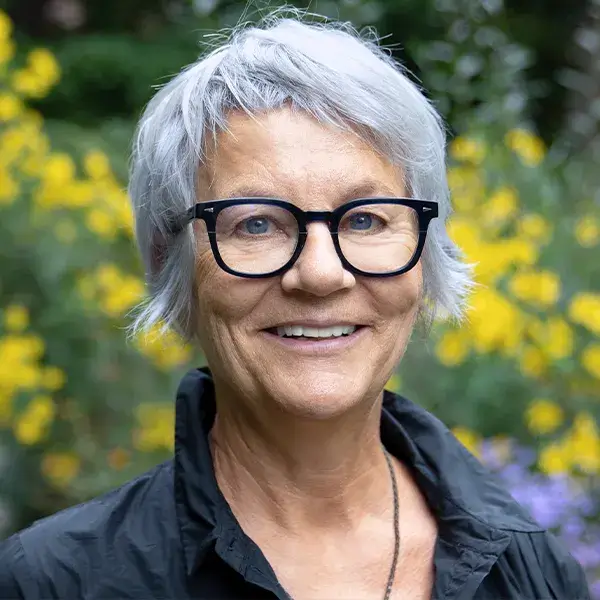
Plants can’t just pick up and move if they don’t like where they are. Understanding how they grow, adapt, and survive in changing environments is critical to understanding how plants respond to climate change. At the Plant Adaptability and Resilience Center at Penn Arts & Sciences, Doris Wagner, DiMaura Professor of Biology and Center Director, is studying how plants adjust to the stresses of climate change, giving us vital insights into protecting the food systems we all rely on.
Philanthropy: A Catalyst for Change
Philanthropy has catalyzed Penn’s leadership in climate and sustainability. Visionary support from key donors has built a foundation of excellence across research, policy, and action, positioning Penn to launch new and impactful work.
“Thanks to the extraordinary generosity and commitment of alumni who care about this critical issue, our researchers and scientists are making breakthroughs that will help shape our climate future,” said Penn President J. Larry Jameson, MD, PhD. “Donor support makes a tremendous impact in accelerating this vital work to develop new climate solutions.”

A Unified Vision
Vagelos Laboratory for Energy Science and Technology
By supporting a 110,000-square-foot, LEED Platinum facility for research on energy science, P. Roy Vagelos, C’50, PAR’90, HON’99, and Diana T. Vagelos enabled Penn scientists to accelerate transformative discoveries that will advance our transition to a clean energy future.
Driven by their belief that science holds the key to solving global problems, the Vageloses have used their philanthropy to enhance graduate education and endow the Vagelos Institute for Energy Science and Technology, now one of the nation’s premier centers for energy research. In addition, their support of the Vagelos Laboratory for Energy Science and Technology has propelled pioneering, interdisciplinary research.
Roy and Diana’s support is advancing breakthrough science for a sustainable energy future and creating an educational environment where tomorrow’s energy science leaders are trained. Their generosity has shown how a clear vision can make a profound impact on research, education, and the world.”Karen Goldberg
Vagelos Professor in Energy Research and Inaugural Director of the Vagelos Institute for Energy Science and Technology
Kleinman Center for Energy Policy
Over a decade ago, Scott Kleinman, C’94, W’94, noticed that young people were eager to talk about energy policy, but didn’t have a vocabulary to engage with energy and the energy transition. In response, Kleinman made a gift to establish the Kleinman Center for Energy Policy. Since then, the Center has elevated the national discourse on energy policy and empowered researchers to translate scholarship into action for policymakers.
Scott Kleinman’s vision and focus set the stage for Penn’s pursuit of a sustainable energy system. Thanks to his philanthropy and continued engagement, the Kleinman Center has brought together some of the top scholars in the field and built a program that offers opportunities to faculty members and students from every one of Penn’s 12 schools—creating an environment that leverages teaching and learning for smart energy policy outcomes.”Cornelia Colijn
Executive Director of the Kleinman Center for Energy Policy
The impact on energy policy has been significant: The Kleinman Center has produced nearly 1,000 publications and nearly 200 episodes of the Energy Policy Now podcast, influencing policy makers around the world; sent delegations to the annual Conference of Parties of the United Nations Framework Convention on Climate Change; and launched the annual Carnot Prize, which recognizes globally distinguished contributions to energy policy. The space that Kleinman envisioned now continues to grow, with even more collaborations and points of impact.
Penn Climate
Alp Ercil, W’95, ENG’95, recognized that confronting climate change requires the knowledge and expertise of researchers from every field. That’s why he made a gift to establish Penn Climate, creating both a hub for climate research and an accelerator for climate solutions.
This kind of philanthropic support is a catalyst—one that advances current initiatives and builds connections across the University that will spur new ideas and innovations. Penn has all the pieces in place, and through Ercil’s gift, Penn Climate is now driving the entire University forward around a charge to generate climate solutions.
Penn Climate brings together the expertise and determination required to meet this moment. Powered by philanthropy, Penn will continue to build on this momentum—uniting disciplines, empowering leaders, and finding the climate solutions our world urgently needs.
Penn’s commitment to climate brings together every part of the University. With Alp’s support, and by marshaling the knowledge and ingenuity of every discipline, we can meet this challenge with solutions that honor Penn’s values and positively impact the future of the planet.”Sanya Carley
Vice Provost for Climate Science, Policy, and Action
To learn more about Penn Climate’s efforts, visit climate.upenn.edu.
To support Penn Climate, contact Kim Grube, Senior Associate Vice President of University Strategic Giving and Partnerships, at (215) 570-2723 or kimgrube@upenn.edu.




