

Knowledge created at Penn has been crucial in the fight against COVID-19. As society looks forward to putting the pandemic behind us, the experience has heightened the importance of supporting scientists at all levels of discovery.
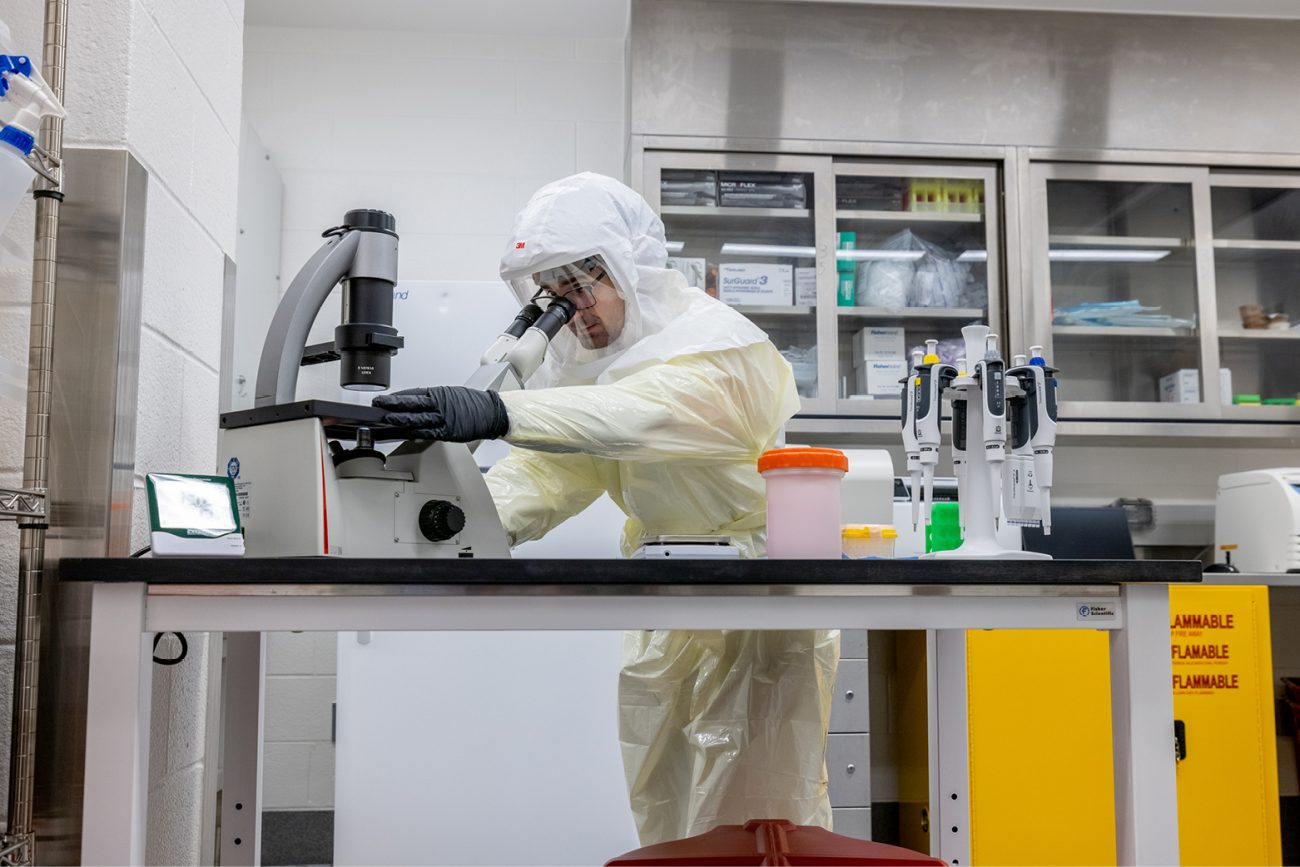
Revolutionizing health has been a core theme from the start of The Power of Penn Campaign, bridging knowledge across disciplines—including emphasizing the connections between human and animal health through research on zoonotic viruses (those transmitted from animals to humans) like SARS-Cov-2, the virus that causes COVID-19. Meeting the demand for research on deadly pathogens now and in the future requires Penn to have facilities where hazardous work can occur safely, including Biosafety Level 3 (BSL-3) laboratories.

“BSL-3 laboratories are pivotal for biological research at Penn,” says Kellie Ann Jurado, Presidential Assistant Professor of Microbiology at the Perelman School of Medicine and the Scientific Director of the Animal BSL-3 (ABSL-3) Core. “Being able to work in a safe, thoroughly regulated space amplifies the level of experimentation we can perform. The knowledge we can create in BSL-3 laboratories might catalyze the development of vaccines, diagnostics, and treatments for many life-threatening infectious diseases, known and unknown.”
Janet Haas, MD, who serves as a University Trustee, Penn Medicine Board member, and Vice Chair of Patient Care for The Power of Penn Medicine Campaign, has been acutely interested in ramping up Penn’s research capabilities across the board, including creating a new ABSL-3 laboratory. Her advocacy and leadership proved decisive in the effort to help bring these unique spaces, and the required training to use them properly, to Penn.
“Familiarity with the fantastic teams of scientists, technicians, and staff fueling Penn’s research endeavors inspires me to do all I can to facilitate their groundbreaking and foundation-setting work,” says Haas, who with her husband John, made a gift to inspire fellow volunteer leaders to join the effort. Many of Penn’s generous friends answered the call, including Larry and Mickey Magid.
“Mickey and I saw firsthand the damage caused by COVID-19,” says Larry Magid, legendary promoter, Broadway producer, and founder of Philadelphia’s iconic Electric Factory concert venue. “We were deeply impressed by the role that Penn doctors and scientists played in the response to this pandemic. With three coronaviruses emerging in the last two decades, we wanted to invest in research at Penn to help prepare for the next infectious disease outbreak.”
Thanks to these and many more gifts, an animal BSL-3 laboratory has been commissioned and certified on the Penn campus. This state-of-the-art space allows for research on highly infectious diseases in live animals, which will be crucial to fighting the next potential pandemic before it erupts.
Penn is embarking on adding more than 5,000 square feet of high containment laboratory space to further enhance the work of science leaders like Jurado and Susan Weiss, who is applying more than forty years of expertise as Co-Director of the Center for Research on Coronaviruses and Emerging Pathogens. Laboratory space of this caliber also provides invaluable experiences for young scientists to contribute to critical research early in their careers. Support for building cutting-edge research facilities during The Power of Penn Campaign is pivotal in Penn Medicine’s ability to finish the fight against COVID-19 and prepare for what the future holds.


