On April 1, Christopher Woods joined the University of Pennsylvania Museum of Archaeology and Anthropology as its Williams Director. Since then, he has focused on creating an accessible, inclusive space where visitors can share in the reverence and re-examination of objects of cultural heritage.

A Warm Welcome
From West Philadelphia to the rest of the world, Christopher Woods wants more people to enjoy the Penn Museum’s galleries, academic offerings, and cultural conversations
Published: November 17, 2021

Christopher Woods, Williams Director of the Penn Museum.
 Penn champions interdisciplinary learning, but few would think to combine physics and ancient languages. Tell us about making that pivot in your career.
 I was always interested in ancient history, but it never seemed practical. I studied physics in college, then worked in a patent law firm before going to graduate school. During lunchbreaks, I studied the ancient Sumerian language, which is still in the early stages of decipherment. It’s a lot like codebreaking, which connects to my passion for science and math. To be the Penn Museum’s Williams Director proves you never know what might happen when you follow your passions.
The University recently concluded The Power of Penn Campaign with great success. What was it like to join the Penn Museum in the final months of the Campaign?
It has been tremendous to witness the exceptional commitment of our donors and to identify the vast potential for even further revitalizing the Museum. We are immensely grateful for the many friends whose loyal and visionary support is driving this exciting time.

The Penn Museum opened its revamped Middle East Galleries to the public on April 21, 2018, 9 days after the public launch of The Power of Penn Campaign. New displays, dynamic touchscreens, and wider spaces underscore the Museum’s intention of making learning more modern and accessible for a variety of audiences.

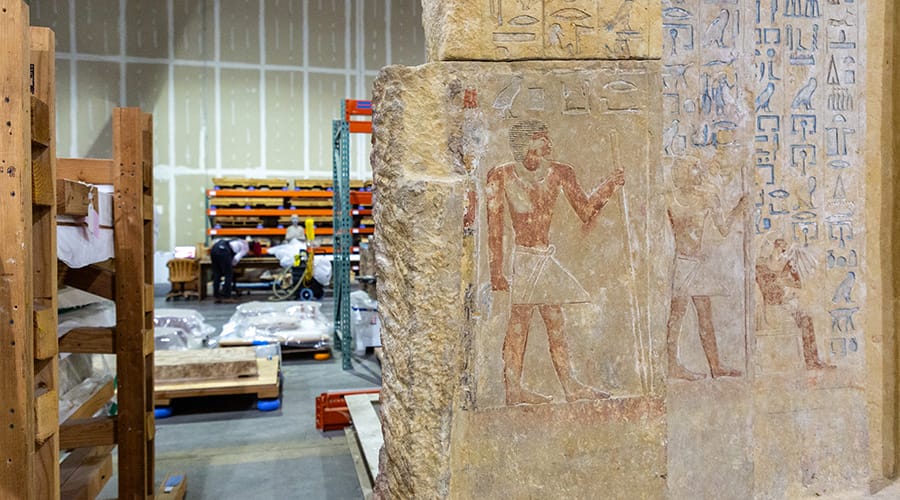
The new-look Africa Galleries, curated by Tukufu Zuberi, Lasry Family Professor of Race Relations and Professor of Sociology and Africana Studies at Penn Arts & Sciences, debuted to the public on November 16, 2019. By tracing the path of artifacts from African makers to the Museum’s displays, the Africa Galleries highlight the incredible histories and diversity of African material culture while advancing a vital, ongoing conversation about museum collections acquired in colonial contexts.

The Middle and Central America Galleries were also widened and reimagined during the Building Transformation Campaign.

The renovations of the Middle East, Africa, and Mexico and Central America Galleries were part of a series of renovations to the Main Level, including the dramatic move of the Sphinx, which now greets visitors at the Museum’s front entrance.
The initiatives that excited me most about the Museum’s Building Transformation Campaign, as part of the overall University-wide campaign, were ones that breathed new life and new energy into our outstanding spaces. We completely reimagined the Main Entrance and the Middle East, Africa, and Mexico and Central America galleries, as well as the famed Harrison Auditorium; created the Sphinx Gallery; and strengthened our academic mission with a new Center for the Analysis of Archaeological Materials and our marquee partnership with the School District of Philadelphia, Unpacking the Past.
Our Building Transformation is still ongoing as we continue the important work of making our signature spaces more accessible and enhancing programming for local schoolchildren. Philanthropy is pivotal to realizing these opportunities. I am proud to be the steward of this next great step in the growth of the Penn Museum.
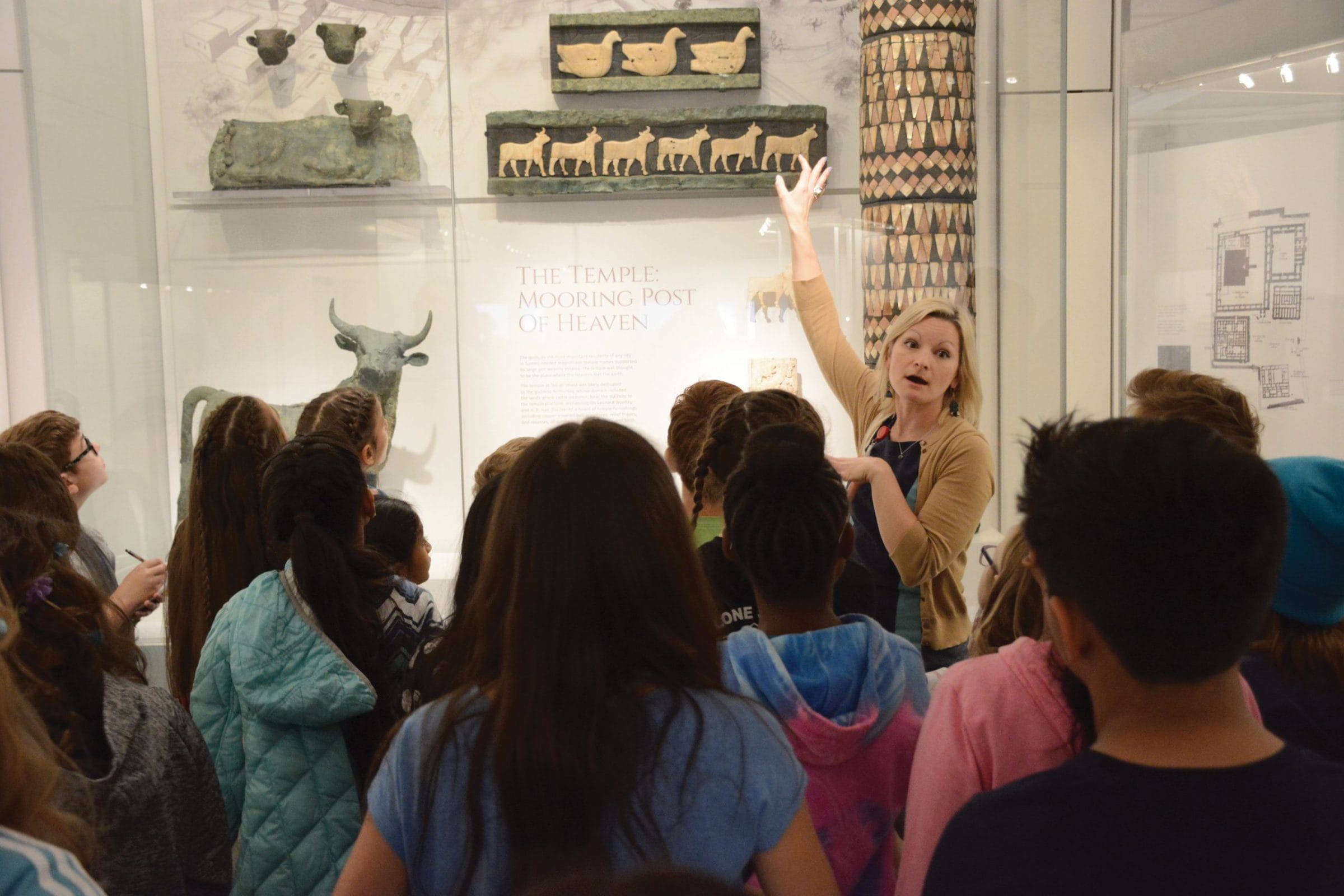
A museum educator leads an “Unpacking the Past” tour for Philadelphia schoolchildren (pre-pandemic photo).
What opportunities have arisen during your first six months for evolving Penn Museum’s mission and impact?
Today, there is a sea change taking place in how people think of and interact with museums as places that share human stories. We want to be a part of those conversations, respectfully, alongside the community in which we coexist.
Since I joined the Penn Museum, I have begun a process of repatriation: returning ancestors to their families and to Black Philadelphian descendant communities for reburial and commemoration—taking steps toward healing with the West Philadelphia community. We are building partnerships that make our Museum a more welcoming environment for all.
Learn more about repatriation of the Morton Crania Collection.
Learn more about Penn Museum’s response regarding individuals from the 1985 MOVE tragedy.

Global Guides like Clay Katonga provide a greater depth of cultural detail in real conversations about lived experiences (pre-pandemic photo).
What comes next in this process?
Community engagement and relationship building is paramount. A great example of this is Heritage West, our West Philadelphia community archaeology project in partnership with the People’s Emergency Center CDC and the Black Bottom Tribe Association. Over the two-year program, participants work toward an excavation at a location determined by the community. In this way, we are collaborating with our neighbors to confront issues of racial and social injustice as they relate to archaeological research.
We are developing a robust new policy that will prioritize human dignity in the stewardship of the collections in our care. We are also making new hires, including a Chief Diversity Officer and a Faculty-Curator in Bioanthropology or Bioarchaeology with a track record of advocacy for Black and Indigenous people.
In addition, we are expanding who tells the stories of the artifacts in our galleries. We have a fantastic program called Global Guides, where immigrants from areas featured in our collections lead gallery tours. And our Resident Artist program invites artists with heritage connected to our collections to provide interpretation through their art form.
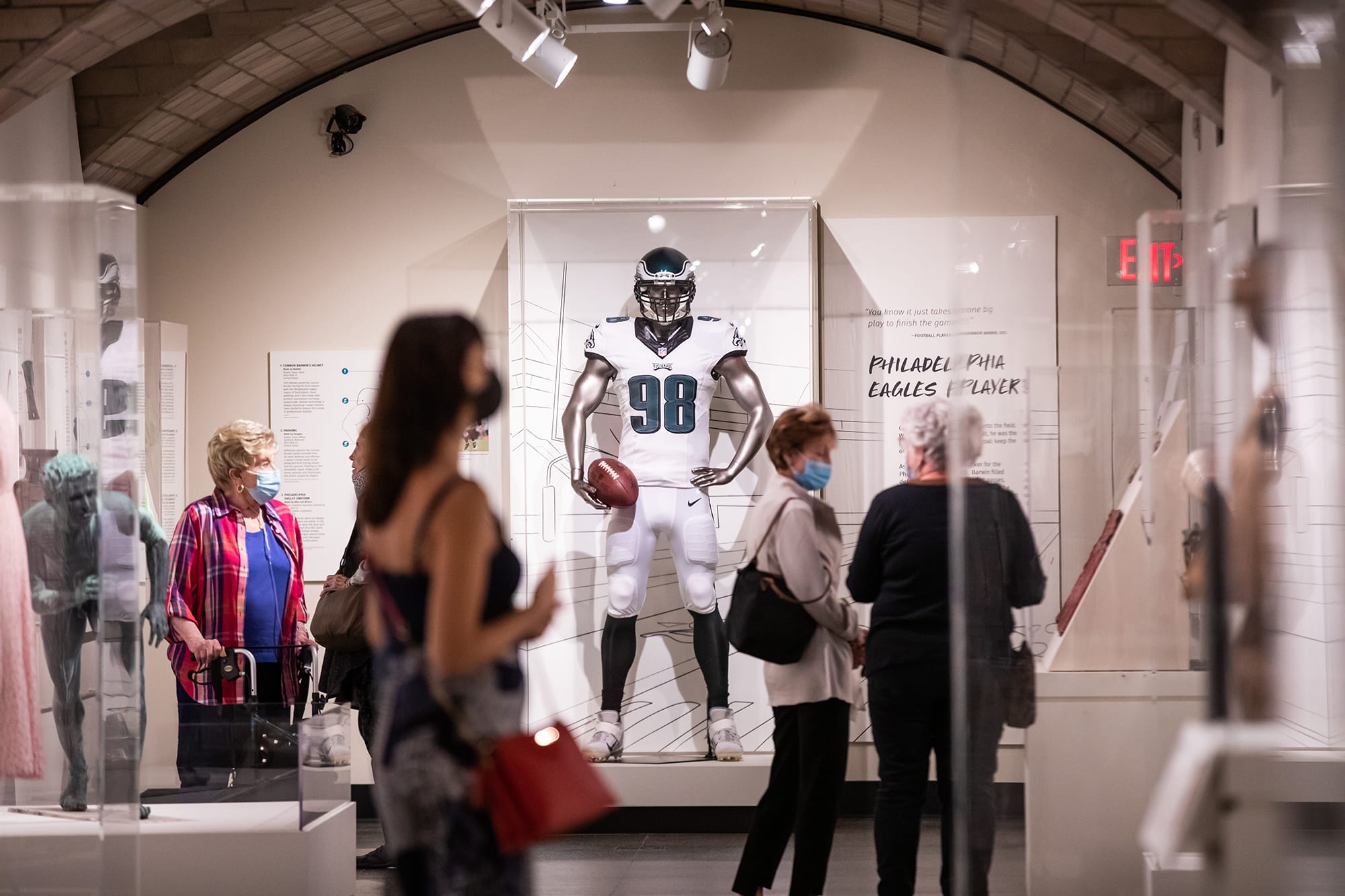
A game-worn jersey from former Philadelphia Eagles linebacker Connor Barwin is one of the items on display in “The Stories We Wear,” an exhibition that examines how clothing and accessories constitute powerful expressions of identity.
What do you want people to know about the Penn Museum?
No matter who you are, there is something here that will reflect your heritage or your interests. Our current exhibition, “The Stories We Wear,” showcases 2,500 years of style and adornment through approximately 250 remarkable objects.
Few other colleges and universities have a globally focused museum of archaeology and anthropology like ours. I hope alumni will visit—admission is free with an alumni PennCard!—and take pride in knowing that this is singular to our University.
“The Stories We Wear” is on view through June 22, 2022. View safety guidelines and purchase tickets here.